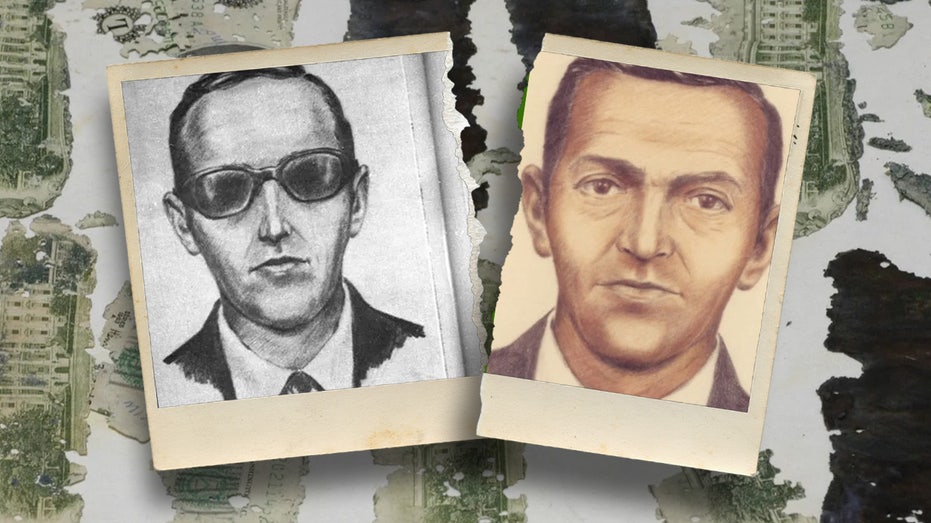
Some crimes are solved in days. Others remain mysteries for decades. But few cases are as legendary as D.B. Cooper—the man who hijacked a commercial airplane, collected ransom money, jumped into the darkness with a parachute, and vanished forever.
Who Was D.B. Cooper?
On November 24, 1971, a calm, well-dressed man bought a one-way ticket for Northwest Orient Flight 305 from Portland to Seattle. He used the name .
Dan Cooper
He appeared ordinary—middle-aged, polite, wearing a suit and black tie. Nothing about him suggested he was about to commit one of the most famous crimes in American history.
The Hijacking Begins
Shortly after takeoff, Cooper handed a note to a flight attendant. At first, she ignored it. Then he quietly told her:
"Miss, you'd better look at that note. I have a bomb."
Inside his briefcase were wires and red cylinders. He demanded:
$200,000 in cash
Four parachutes
Fuel for the aircraft
The crew complied.
Passengers Released
When the plane landed in Seattle, the ransom money and parachutes were delivered. Cooper released all 36 passengers but kept several crew members onboard.
He then ordered the pilots to fly toward Mexico City at low altitude.
The Impossible Escape
At around 8:00 PM, somewhere over the Pacific Northwest during heavy rain and darkness, Cooper lowered the rear staircase of the Boeing 727.
Then he jumped.
He took one parachute and the ransom money.
The aircraft later landed safely, but Cooper was gone.
The Massive FBI Hunt
The FBI launched one of the biggest investigations in its history, code-named NORJAK (Northwest Hijacking).
Agents searched forests, rivers, mountains, and interviewed hundreds of suspects.
Years passed.
No body was found.
No parachute was found.
No confirmed trace of Cooper was found.
The Money Discovery
In 1980, a young boy discovered decaying bundles of cash buried near the Columbia River.
The serial numbers matched Cooper’s ransom money.
It was the first real physical clue in years—and also one of the strangest. The location confused investigators because it did not clearly match expected landing zones.
The Tie Clue
Cooper left behind his black clip-on tie.
Modern forensic analysis reportedly found microscopic industrial particles including rare metals linked to aerospace manufacturing.
This led some investigators to believe Cooper may have worked in aviation, engineering, or a technical field.
Did He Survive?
Two major theories dominate the case.
Theory 1: He Died That Night
Many FBI agents believed Cooper never survived the jump.
Reasons:
Violent weather
Nighttime conditions
Rough forest terrain
Poor clothing and shoes
Basic parachute equipment
Theory 2: He Escaped Perfectly
Others believe Cooper carefully planned everything and knew the aircraft well.
Reasons:
He requested specific parachutes
He understood Boeing 727 rear stairs
He remained calm throughout the hijacking
No body was ever found
Famous Suspects
Over the years, many names surfaced.
Richard Floyd McCoy Jr.
Committed a similar hijacking months later. Often considered a strong suspect but officially ruled out.
Robert Rackstraw
Former military pilot whose background matched many theories. Denied involvement.
Walter Reca
A later suspect promoted by private investigators.
None were conclusively proven.
Why This Case Fascinates People
D.B. Cooper became more than a criminal case. He became folklore.
Why people remain obsessed:
A flawless disappearance
No confirmed identity
No arrest ever made
Bold, cinematic escape
Endless suspects and theories
Some even romanticized him as a gentleman outlaw.
FBI Closes the Case
In 2016, after 45 years, the FBI officially redirected resources away from the investigation.
The mystery was never solved.
Strange Facts About the Case
“D.B.” Cooper was likely a media mistake. He bought the ticket as Dan Cooper.
It remains the only unsolved commercial air piracy case in U.S. history.
The hijacker was calm, polite, and never harmed passengers.
Investigators reviewed hundreds of suspects over decades.
Final Thoughts
What really happened to D.B. Cooper?
Did he die in the wilderness moments after jumping?
Did he land safely and live under a new identity?
Was he an aviation insider, military veteran, or simply lucky?
More than half a century later, nobody knows.
And that uncertainty is exactly why the legend still lives.
Free Download
Get The 2026 Tech Career Roadmap
A free PDF guide — the skills, salaries, and strategies to level up your tech career in 2026.
Drop your email and we'll send it straight to your inbox.