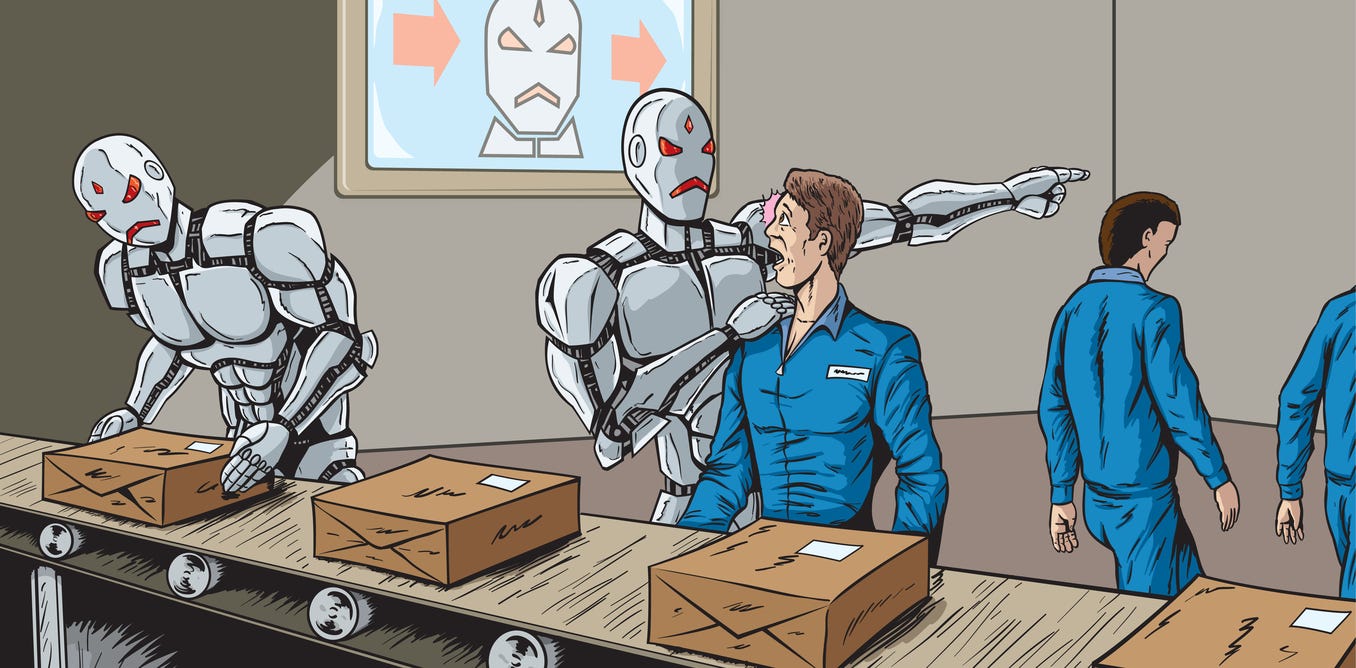
For years, AI job displacement was discussed as a hypothetical — something on the horizon, a decade away, a problem for the next generation. That framing is now obsolete. Generative AI is actively replacing white-collar tasks today, in real companies, with real headcount reductions, and the pace is accelerating faster than most economists predicted.
The Sectors Feeling It First
Corporate law and paralegal work. AI research and document review tools now complete tasks that once required teams of junior associates working overnight. Firms are quietly shrinking entry-level hiring while expanding AI tool budgets.
Marketing and copywriting. Entire campaigns — from ad copy to email sequences to social calendars — are drafted by AI first, with human marketers shifting into editing, strategy, and brand oversight roles rather than raw content production.
Financial analysis. Junior analyst roles focused on modeling, report generation, and data synthesis are shrinking as AI systems complete these tasks in minutes rather than days.
Customer support and operations. This sector has seen some of the most visible cuts, with companies publicly acknowledging that AI chatbots now resolve the majority of routine tickets without human intervention.
The Uncomfortable Truth About Who's Affected
Unlike previous waves of automation that primarily displaced manual and manufacturing labor, this wave is hitting college-educated, white-collar professionals — a demographic that assumed its knowledge work was insulated from automation. That assumption is proving false in real time.
"We spent forty years telling people to go to college so their jobs would be safe from automation. AI just broke that promise for an entire generation of office workers." — Labor economist commentary
The Corporate Incentive Problem
The math is brutally simple for employers: AI tools cost a fraction of a salaried employee, work continuously without breaks, and improve constantly through updates. For any task that AI performs adequately — even if not perfectly — the financial incentive to reduce headcount is overwhelming, especially for public companies under quarterly earnings pressure.
This creates a structural tension: companies benefit individually from replacing workers with AI, but if this happens broadly across the economy, consumer spending power erodes, creating a demand problem that ultimately hurts corporate revenue too. Nobody has solved this collective action problem yet.
What Workers Can Actually Do
Move toward oversight and judgment roles rather than execution-only tasks
Learn to direct AI tools rather than compete with them — the premium is shifting toward people who can supervise, prompt, and validate AI output
Build skills in ambiguity — negotiation, client relationships, ethical judgment calls — areas where AI still struggles
Advocate for transition support — reskilling programs, portable benefits, and policy responses that haven't caught up to the pace of displacement
The debate about whether AI will disrupt white-collar work is over. The debate now is about how fast, how deep, and whether our economic and social systems can adapt quickly enough to absorb the shock without leaving millions behind.
Free Download
Get The 2026 Tech Career Roadmap
A free PDF guide — the skills, salaries, and strategies to level up your tech career in 2026.
Drop your email and we'll send it straight to your inbox.