Technology
Explore the future of technology, innovation, and how it shapes our daily lives.
Deepfakes and the NATO Summit: How Synthetic Media Became a National Security Threat
Entry Editorial
Jul 4, 2026
Deepfakes and the NATO Summit: How Synthetic Media Became a National Security Threat
When Fake Video Becomes a Geopolitical Weapon As world leaders gathered for a high-stakes NATO summit in Ankara, security officials found themselves grappling with a threat that didn't exist in previous decades of military diplomacy: the very real possibility that AI-generated deepfake video or audio could be deployed to manipulate public perception, sow discord among allies, or even influence real-time diplomatic decision-making during the summit itself. Why Military Summits Are Now Prime Deepfake Targets The stakes are uniquely high. A convincing fake statement attributed to a head of state — even one debunked within hours — can move markets, inflame public sentiment, or create diplomatic friction that takes far longer to repair than the fake takes to produce. Trust erosion works both ways. Even genuine footage from sensitive summits now faces increased public skepticism, as audiences become aware that any video could theoretically be fabricated. This creates a corrosive dynamic where both fake and real information become harder to trust. Real-time verification is still immature. Detection technology has improved significantly, but so has generation technology — creating an ongoing arms race where sophisticated deepfakes can circulate widely before verification systems catch up. > "The danger isn't just that people believe a fake. It's that people stop believing anything at all, including the truth." — Disinformation researcher, speaking on synthetic media risks at international security forums The Specific Concerns at Ankara Security officials reportedly implemented enhanced protocols for this summit specifically due to deepfake concerns, including: - Verified communication channels for any official statements issued during summit proceedings, reducing the window for fabricated "leaked" content to gain traction - Rapid-response media verification teams on standby to quickly confirm or debunk viral content related to the summit - Coordinated messaging protocols among allied nations to prevent a fabricated statement from one leader being used to manufacture apparent disagreement among alliance members The Broader Pattern This Represents This isn't an isolated security measure — it reflects a fundamental shift in how governments now have to think about information warfare. Military and diplomatic security used to primarily concern itself with physical security and classified information protection. Now, the perception management layer around major diplomatic events has become an equally critical security concern. What This Means Going Forward Expect deepfake mitigation protocols to become standard practice at major international summits going forward — not as a rare precaution, but as routine security infrastructure alongside physical protection details and cybersecurity measures. The technology enabling synthetic media will only become more sophisticated and more accessible. The institutions responsible for global stability — NATO among them — are now in a permanent race to ensure that the public conversation around their decisions is shaped by reality, not by whoever can generate the most convincing fake first. For ordinary citizens, the lesson is broader than any single summit: in an era of accessible AI-generated media, healthy skepticism toward viral video and audio — especially content designed to provoke strong emotional reactions — isn't paranoia. It's basic digital literacy for the world we now live in.
AI Job Displacement Is Happening Now: The White-Collar Reckoning Nobody Was Prepared For

Entry Editorial
Jul 4, 2026
AI Job Displacement Is Happening Now: The White-Collar Reckoning Nobody Was Prepared For
This Isn't a Future Problem Anymore For years, AI job displacement was discussed as a hypothetical — something on the horizon, a decade away, a problem for the next generation. That framing is now obsolete. Generative AI is actively replacing white-collar tasks today, in real companies, with real headcount reductions, and the pace is accelerating faster than most economists predicted. The Sectors Feeling It First Corporate law and paralegal work. AI research and document review tools now complete tasks that once required teams of junior associates working overnight. Firms are quietly shrinking entry-level hiring while expanding AI tool budgets. Marketing and copywriting. Entire campaigns — from ad copy to email sequences to social calendars — are drafted by AI first, with human marketers shifting into editing, strategy, and brand oversight roles rather than raw content production. Financial analysis. Junior analyst roles focused on modeling, report generation, and data synthesis are shrinking as AI systems complete these tasks in minutes rather than days. Customer support and operations. This sector has seen some of the most visible cuts, with companies publicly acknowledging that AI chatbots now resolve the majority of routine tickets without human intervention. The Uncomfortable Truth About Who's Affected Unlike previous waves of automation that primarily displaced manual and manufacturing labor, this wave is hitting college-educated, white-collar professionals — a demographic that assumed its knowledge work was insulated from automation. That assumption is proving false in real time. > "We spent forty years telling people to go to college so their jobs would be safe from automation. AI just broke that promise for an entire generation of office workers." — Labor economist commentary The Corporate Incentive Problem The math is brutally simple for employers: AI tools cost a fraction of a salaried employee, work continuously without breaks, and improve constantly through updates. For any task that AI performs adequately — even if not perfectly — the financial incentive to reduce headcount is overwhelming, especially for public companies under quarterly earnings pressure. This creates a structural tension: companies benefit individually from replacing workers with AI, but if this happens broadly across the economy, consumer spending power erodes, creating a demand problem that ultimately hurts corporate revenue too. Nobody has solved this collective action problem yet. What Workers Can Actually Do - Move toward oversight and judgment roles rather than execution-only tasks - Learn to direct AI tools rather than compete with them — the premium is shifting toward people who can supervise, prompt, and validate AI output - Build skills in ambiguity — negotiation, client relationships, ethical judgment calls — areas where AI still struggles - Advocate for transition support — reskilling programs, portable benefits, and policy responses that haven't caught up to the pace of displacement The debate about whether AI will disrupt white-collar work is over. The debate now is about how fast, how deep, and whether our economic and social systems can adapt quickly enough to absorb the shock without leaving millions behind.
The Global Telegram Crackdown: Why Governments Are Turning on the World's Most Private App
Entry Editorial
Jul 4, 2026
The Global Telegram Crackdown: Why Governments Are Turning on the World's Most Private App
From Privacy Haven to Political Target Telegram has spent over a decade positioning itself as the internet's refuge for private, encrypted, government-resistant communication. Now that reputation has made it a target. Multiple governments across Europe, Asia, and the Middle East are moving simultaneously to restrict, investigate, or outright ban the platform — citing concerns over encryption, piracy, and its role in organizing everything from protests to criminal enterprises. Why Now? The crackdown isn't happening in a vacuum. Several forces have converged: Encryption as a political flashpoint. Law enforcement agencies worldwide have grown increasingly frustrated with platforms that won't hand over user data, arguing encrypted channels shield criminal networks, terrorism financing, and organized fraud from investigation. Piracy and unregulated content. Telegram's loosely moderated channels have become a haven for pirated media, counterfeit goods marketplaces, and unregulated financial schemes — drawing the ire of regulators and rights holders alike. The Durov precedent. Telegram founder Pavel Durov's high-profile legal troubles in France set a global precedent: platform founders can be held personally liable for what happens on their networks, regardless of encryption or "neutral platform" defenses. > "Telegram built its brand on being the app governments couldn't touch. That era appears to be ending." — Wired The Tech Community's Divide Reactions among developers, privacy advocates, and everyday users are sharply split: - Privacy absolutists argue this is a dangerous precedent — that weakening or banning encrypted platforms sets the stage for broader surveillance overreach against ordinary citizens, not just criminals. - Regulation advocates counter that no platform should operate as an ungoverned space simply because it uses encryption, especially when real-world harms — fraud, child safety violations, extremism — are documented and growing. - Users caught in the middle face the practical fallout: millions rely on Telegram for legitimate business, activism, and personal communication in regions where alternatives are censored or unavailable. What Happens If Telegram Falls If major markets successfully restrict or ban Telegram, the ripple effects could reshape the entire messaging app landscape. Users would migrate — to Signal, WhatsApp, or emerging decentralized alternatives — each with different tradeoffs on privacy, ownership, and government cooperation. It would also send an unmistakable signal to every other platform: encryption alone is no longer a shield against regulatory action. The next battleground for internet freedom isn't just about what you can post — it's about whether truly private communication can survive government pressure at all. This isn't a story about one app. It's a preview of the global fight over digital privacy for the next decade.
iPhone 17 and Apple Intelligence: Is Apple Finally Winning the AI Race?

Entry Editorial
May 30, 2026
iPhone 17 and Apple Intelligence: Is Apple Finally Winning the AI Race?
The Most Important iPhone in a Decade Every year, Apple releases a new iPhone. Most years, the upgrades are incremental — a better camera, a faster chip, a slightly redesigned notch. The tech press dutifully covers each one, and hundreds of millions of people buy them, and the cycle repeats. The iPhone 17 is different. Not because of the hardware — though that's impressive — but because of what's running on the hardware. Apple Intelligence, first introduced in 2024, is now mature enough to fundamentally change what a smartphone does. And with the iPhone 17 lineup, Apple is betting that AI isn't a feature. It's the entire product. This isn't an upgrade. It's a pivot. What Apple Intelligence Actually Does Now When Apple Intelligence launched with iOS 18, it was cautious — almost conservative. Summarize this email. Rewrite this text. Generate a custom emoji. Useful, but hardly revolutionary. A year later, the picture is dramatically different. Here's what Apple Intelligence can do on iPhone 17: 1. On-Device Personal Context Engine. This is the killer feature nobody's talking about enough. Apple Intelligence builds a private, on-device model of your life — your contacts, your habits, your schedule, your photos, your messages, your location patterns — and uses it to anticipate what you need before you ask. Examples that actually work: - You get a text from your partner saying "dinner tonight?" and Siri drafts a reply with the name of the restaurant you were discussing last Tuesday, pulled from a separate conversation thread. - You open Maps at 5 PM on a weekday, and it doesn't show your home address — it shows the dry cleaner, because you mentioned picking up shirts three days ago. - Your alarm adjusts itself because your first meeting tomorrow was moved to 10 AM instead of 9 AM — and it factors in real-time traffic. This isn't generic AI. It's AI that knows you — and it runs entirely on your device. Nothing goes to Apple's servers. Nothing is used for training. The privacy architecture is the moat. 2. Visual Intelligence 2.0. Point your camera at anything — a restaurant, a plant, a math problem, a piece of furniture, a person's outfit — and get instant, contextual information. But unlike Google Lens, Apple's version integrates with your personal data: - Point it at a restaurant → see your friend's review from six months ago, your dietary preferences flagged, a reservation button pre-filled for two people (because your calendar shows you're meeting someone). - Point it at a product → see your past purchases of similar items, price comparisons, and a note you saved about wanting to try a different brand. 3. Siri, Reborn. The running joke about Siri being useless is finally, tentatively, becoming outdated. Apple Intelligence has transformed Siri from a command-line interface with a voice into something approaching a genuine conversational assistant. Siri now maintains context across conversations. You can say "find that Italian place Sarah recommended" and Siri will search your messages, find the recommendation, pull up the restaurant, show reviews, and offer to make a reservation — without you specifying which Sarah, which conversation, or which app. It's not perfect. It still stumbles on complex multi-step requests. But it's usable now in ways it never was before — and the gap between Siri and ChatGPT is closing faster than anyone expected. > "Apple doesn't need to win the AI benchmark wars. They need to win the daily life war — the thousand small moments where your phone either helps you or wastes your time. That's the game Apple Intelligence is playing." — Ben Thompson, Stratechery The Hardware: What's New Apple A19 Pro chip. Built on TSMC's 2nm process, the A19 Pro is the first smartphone chip with a dedicated Neural Engine powerful enough to run large language models entirely on-device. Previous iPhones offloaded complex AI tasks to Apple's Private Cloud Compute servers. The iPhone 17 Pro can handle most of them locally — which means faster responses, offline capability, and even stronger privacy. The thinnest iPhone ever — iPhone 17 Air. Apple has introduced an ultra-slim model (reportedly around 6mm) positioned between the standard iPhone 17 and the Pro models. It sacrifices some camera capability for a form factor that's genuinely striking. It's Apple's statement piece — the phone you buy because it's beautiful, not because you need the best specs. 48MP front camera with cinematic mode. The selfie camera finally gets a massive upgrade, with autofocus, computational photography, and the ability to shoot spatial video for Apple Vision Pro. ProMotion 120Hz on all models. No longer a Pro-exclusive feature — every iPhone 17 model now has a smooth 120Hz display. USB-C with Thunderbolt 5 (Pro models). Transfer speeds up to 120 Gbps, making the iPhone a viable portable production studio for photographers and videographers. The Real Competition Isn't Samsung — It's ChatGPT Here's the strategic picture most coverage misses: Apple's real competitor in the AI space isn't Google or Samsung. It's OpenAI. ChatGPT has over 300 million weekly active users. Many of them use it as a replacement for traditional phone features — writing emails, planning trips, analyzing documents, answering questions. If ChatGPT becomes the primary interface through which people interact with information, the smartphone becomes a dumb terminal. The operating system doesn't matter. The hardware doesn't matter. The app matters. Apple Intelligence is Apple's answer to this existential threat. By embedding AI into the operating system — into Messages, Mail, Photos, Safari, Maps, Calendar, and every first-party app — Apple is ensuring that AI on iPhone is seamless, contextual, and private in ways that a third-party app can never be. The bet is simple: given the choice between an AI that knows everything about the internet and an AI that knows everything about you, most people will choose the personal one. Should You Upgrade? If you have an iPhone 15 or older: Yes. The jump in AI capability, camera quality, and display is substantial. The iPhone 17 will feel like a different category of device. If you have an iPhone 16: Harder to justify. The hardware improvements are incremental. But if you're deeply invested in the Apple ecosystem — AirPods, Apple Watch, Mac, Vision Pro — the improved cross-device Apple Intelligence features make the upgrade more compelling. If you're on Android: This is the most interesting question. Apple Intelligence's privacy-first approach is a genuine differentiator. If you care about AI that works for you without monetizing your data, there's no Android equivalent yet. Google's Gemini is powerful, but Google's business model is advertising. Apple's is hardware. That difference matters. The Bigger Picture The iPhone 17 isn't the most exciting phone Apple has ever made. The iPhone 4 was more revolutionary in form. The iPhone X was bolder in vision. The iPhone 12 was more culturally dominant. But the iPhone 17 might be the most important iPhone since the original — because it's the one where the smartphone stops being a screen you look at and starts becoming a system that understands you. Every technology company on Earth is racing to build AI that feels personal, private, and useful. Apple, for the first time in the AI era, isn't behind anymore. Whether they're ahead — that's what the next twelve months will tell us.
Will AI Take Your Job? The Honest Answer Nobody Wants to Hear

Entry Editorial
May 30, 2026
Will AI Take Your Job? The Honest Answer Nobody Wants to Hear
The Question Everyone's Asking Wrong "Will AI take my job?" has become the defining anxiety of 2025-2026. The question is asked in boardrooms, coffee shops, college dorms, and late-night Google searches. It's on the cover of magazines and in the opening lines of political speeches. But it's the wrong question. The right question is: "Which parts of my job will AI absorb, and what will I do with the time that frees up?" Because AI isn't coming for jobs. It's coming for tasks. And the difference between those two things is everything. What's Already Happened Let's be honest about the current state of affairs. In the past two years alone: - Customer service: AI chatbots now handle 70-85% of routine support queries at companies like Klarna, which reduced its support workforce by 700 roles — not through layoffs, but by not replacing departing employees. - Content creation: Marketing agencies report that AI drafts 40-60% of first-pass copy — social posts, email campaigns, product descriptions. Writers still edit, strategize, and create original concepts, but the raw production is increasingly automated. - Code generation: GitHub Copilot and similar tools now write an estimated 35-45% of new code at companies that adopt them. Developers report spending less time writing boilerplate and more time on architecture, debugging, and system design. - Legal research: AI tools like Harvey AI can review thousands of legal documents in hours — work that previously took junior associates weeks. Law firms are hiring fewer first-year associates and more AI-literate senior staff. - Medical imaging: AI systems now match or exceed radiologists in detecting certain cancers in mammograms, CT scans, and retinal images. They don't replace the radiologist — they serve as a tireless second pair of eyes. > "AI won't replace lawyers. But lawyers who use AI will replace lawyers who don't." — This quote, attributed to various sources, captures the dynamic perfectly. The Task Decomposition Framework Every job is a bundle of tasks. Some tasks are routine, predictable, and data-heavy — these are the ones AI excels at. Others require judgment, creativity, empathy, physical dexterity, or navigating ambiguity — these remain firmly human. High risk of AI automation: - Data entry and processing - Scheduling and calendar management - Basic financial analysis and reporting - Template-based writing and communication - Routine quality assurance and testing - Pattern recognition in large datasets Low risk of AI automation: - Managing people through conflict and change - Building genuine trust with clients - Making ethical decisions with incomplete information - Physical work in unpredictable environments (plumbing, electrical, construction) - Creating original strategy based on deep domain expertise - Caring for humans — nursing, therapy, teaching, social work The critical insight: Most jobs contain tasks from both lists. A financial analyst spends 40% of their time on automatable data work and 60% on human judgment. AI doesn't eliminate the job — it compresses the automatable portion, changing what the job looks like. The Jobs That Are Actually Disappearing Let's be direct. Some roles are genuinely being eliminated or dramatically reduced: - Data entry clerks — already declining; AI accelerates this - Basic bookkeeping — automated by AI-powered accounting tools - Telemarketing — AI voice agents are increasingly indistinguishable from humans - Entry-level translation — for routine documents, AI translation is now adequate - Assembly line QA inspectors — computer vision outperforms human visual inspection If you're currently in one of these roles, the honest advice is: start transitioning now. Not in panic, but with purpose. The change won't happen overnight, but it will happen within 3-5 years for most of these categories. The Jobs AI Is Creating Every technological revolution destroys some jobs and creates others. The automobile eliminated horse-drawn carriage drivers but created an entire ecosystem of mechanics, gas station attendants, highway engineers, truck drivers, and — eventually — the entire suburban economy. AI is already creating demand for: - AI trainers and prompt engineers — teaching AI systems and crafting effective prompts - AI ethics and compliance officers — ensuring AI systems are fair, transparent, and legal - Human-AI collaboration specialists — redesigning workflows to integrate AI tools - Data curators and annotators — cleaning and labeling the data that AI needs - AI-augmented creative directors — using AI as a creative tool while maintaining artistic vision - Explainability engineers — making AI decisions interpretable for humans and regulators What You Should Actually Do 1. Audit your own job. List every task you do in a typical week. For each one, honestly assess: could an AI do this adequately? The tasks that remain are your value proposition. Double down on them. 2. Learn to use AI tools — now. The competitive advantage isn't avoiding AI. It's being the person in your organization who can use it most effectively. Learn prompt engineering. Use Copilot or Cursor for coding. Use Claude or GPT for drafting and analysis. Become the translator between AI capabilities and business needs. 3. Invest in human skills. Empathy, negotiation, persuasion, leadership, creative problem-solving, ethical reasoning — these are appreciating assets in an AI world. Every hour you spend developing these skills is an investment in your long-term irreplaceability. 4. Build a personal brand. In a world where AI can produce generic content at scale, the premium goes to trusted individuals with unique perspectives. Your reputation, network, and point of view are moats that AI cannot cross. 5. Stay adaptable. The people who will struggle most aren't those in "threatened" industries — it's those in any industry who assume their current way of working will persist unchanged. Adaptability isn't a personality trait. It's a practice. The Bottom Line AI is not the apocalypse the doomsayers predict. It's not the utopia the techno-optimists promise. It's a tool — the most powerful tool humanity has ever built — and like every tool before it, it will reward those who learn to use it and challenge those who refuse to adapt. The future doesn't belong to AI. It doesn't belong to humans who ignore AI. It belongs to humans who work with AI — and bring the things that only humans can bring: judgment, care, creativity, and meaning. Your job may change. You don't have to become obsolete.
GTA 6: Why Rockstar's Next Game Could Redefine Open-World Gaming Forever

Entry Editorial
May 30, 2026
GTA 6: Why Rockstar's Next Game Could Redefine Open-World Gaming Forever
Twelve Years of Waiting Grand Theft Auto V released on September 17, 2013. It has since sold over 200 million copies, generated over $8 billion in revenue (largely through GTA Online), and remains one of the most-played games on Earth — across three console generations. No entertainment product in any medium has ever had that kind of longevity. Not a movie. Not an album. Not a TV show. Nothing. And now, after over a decade of anticipation, speculation, leaks, and silence, Grand Theft Auto VI is finally on the horizon — and everything we've seen suggests it will be the most ambitious video game ever created. Leonida: A Living, Breathing Vice City GTA 6 is set in the fictional state of Leonida, Rockstar's version of Florida, with the crown jewel being Vice City — a reimagined Miami that makes the 2002 original look like a postcard. But this isn't just a bigger map. Based on the trailer and confirmed details, Leonida is designed to feel alive in ways no open world has achieved: Dynamic weather and environmental systems. Hurricanes that visibly develop and affect gameplay. Flooding in low-lying areas. Wildlife that reacts to weather and time of day. The Everglades teeming with alligators, birds, and ecological detail that serves both atmosphere and gameplay. A social media ecosystem. NPCs in GTA 6 appear to have social media accounts. Characters post, go viral, react to in-game events. The world doesn't just exist around the player — it comments on itself. This is the logical evolution of GTA's satirical DNA, and it could make the world feel disturbingly close to our own. Unprecedented NPC behavior. Leaked footage and insider reports suggest that NPC routines are far more complex than any previous game. People go to work, eat, shop, argue, and react to dynamic conditions — not on simple loops, but with layered behavioral systems that create emergent scenarios. > "GTA 6 isn't trying to be a bigger game. It's trying to be a more real game — a world that doesn't just surround the player, but exists independently of them." — Jason Schreier, Bloomberg Lucia and Jason: A Bonnie and Clyde Story For the first time in the mainline series, GTA 6 features a female protagonist — Lucia, a Latina woman entangled in the criminal underworld alongside her partner, Jason. Their story draws clear inspiration from the Bonnie and Clyde myth — two people bound by love, ambition, and increasingly desperate circumstances. This is significant for several reasons: Dual protagonists with relationship dynamics. GTA V's three-character system was innovative but mechanical. GTA 6 appears to focus on a genuine relationship between two characters — their trust, their tension, their unraveling. If Rockstar can write this with the nuance they brought to Arthur Morgan in Red Dead Redemption 2, it could be the most emotionally compelling story in the franchise's history. Cultural representation. Lucia appears to be the first Latina lead in a major AAA release of this scale. In a state modeled on Florida — with its massive Latin American population and culture — this isn't tokenism. It's world-building. A grounded tone. The trailer and leaks suggest GTA 6 is less cartoonish than GTA V. The humor is still there, but the story appears to lean more toward Red Dead 2's emotional weight — the consequences of violence, the cost of ambition, the impossibility of escaping your past. The Technical Marvel Rockstar's proprietary RAGE engine (Rockstar Advanced Game Engine) has been rebuilt from the ground up for GTA 6. The technical details that have emerged are staggering: - Ray-traced global illumination that affects everything from neon-lit nightclubs to swamp water at sunset - Physically-based destruction systems — buildings, vehicles, and environments deform realistically - Crowd density that dwarfs any previous open-world game — thousands of individually rendered NPCs on screen simultaneously - Seamless indoor-outdoor transitions with no loading screens, even in massive structures - A map that reportedly dwarfs GTA V's — and it's not empty space. Every neighborhood, every strip mall, every backwater town is detailed to an obsessive degree The Business of GTA 6 GTA Online generated an estimated $1 billion annually for Take-Two Interactive through microtransactions. GTA 6's online component — whatever form it takes — will be designed from day one to replicate and exceed that revenue. This creates a tension that every fan feels: will the single-player experience receive the same attention and post-launch support as the multiplayer cash machine? Red Dead Online's slow death after RDR2 launched is a cautionary tale. Rockstar has stated that GTA 6's single-player story is the priority. Whether that commitment survives contact with quarterly earnings calls remains to be seen. Why It Matters GTA 6 isn't just a video game release. It's a cultural event on the scale of a Marvel film or a new Star Wars trilogy. The first trailer alone broke YouTube records — over 100 million views in 24 hours. In an industry increasingly dominated by live-service games, battle passes, and corporate risk-aversion, GTA 6 represents something rare: a company spending a reported $2 billion and over a decade to build a single creative vision. Whether it delivers on the impossible expectations or buckles under the weight of its own ambition, one thing is certain: there is nothing else like this in gaming. There may never be again.
C++ vs Java: Which Programming Language Should You Learn in 2026?
Ishaan Sharma
May 30, 2026
C++ vs Java: Which Programming Language Should You Learn in 2026?
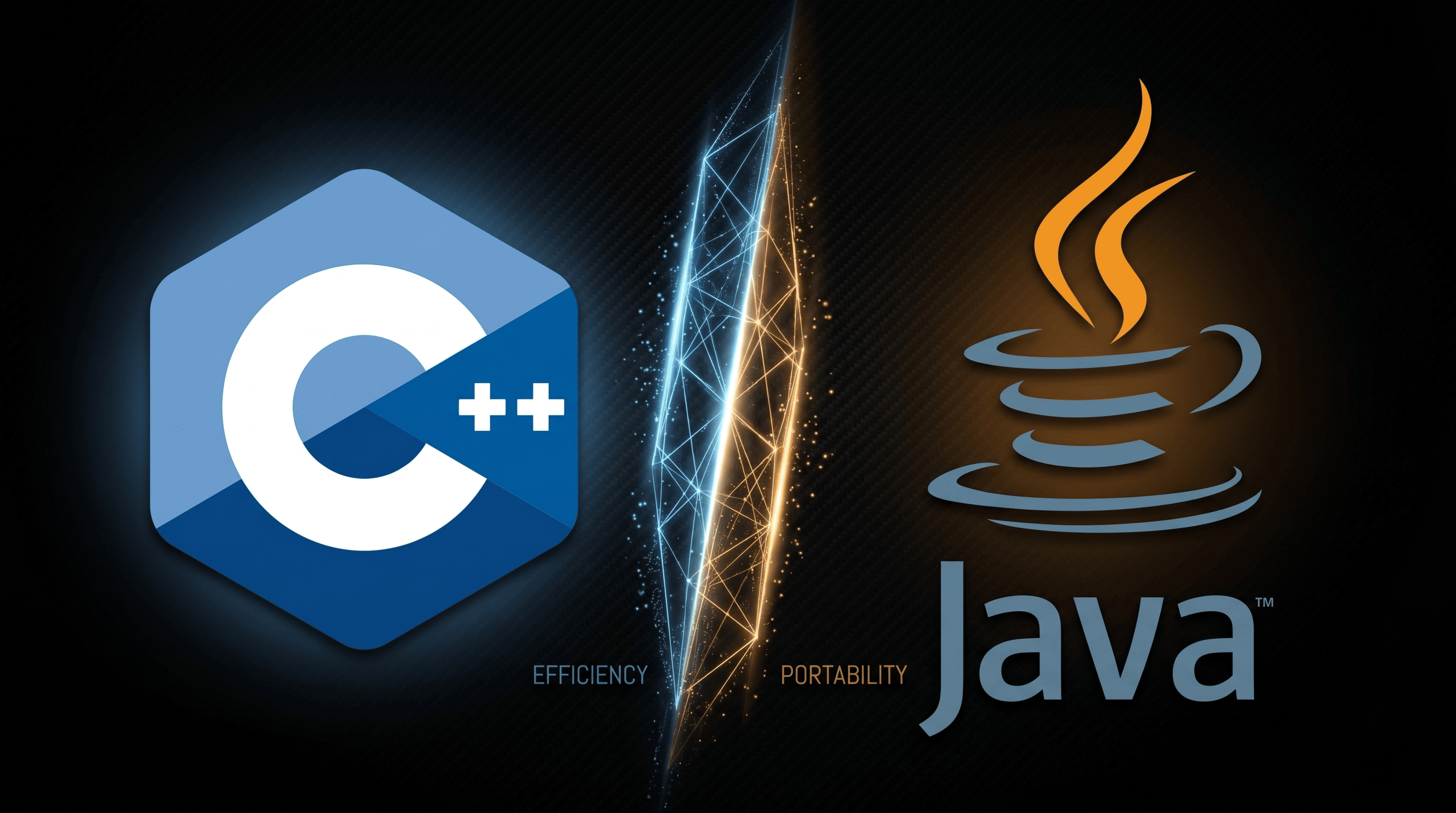
So You Have To Pick One. Which One? You opened a browser. You typed something like "C++ vs Java 2026." You are now reading this. That means you are serious about learning to code — or leveling up — and you do not want to waste months going in the wrong direction. Good. Let us make this simple. Both C++ and Java are powerful, battle-tested, and genuinely worth your time. But they are built for very different worlds. Pick the wrong one for your goals and you will spend a year learning things that do not move your career forward. By the end of this post, you will know exactly which one to choose. First, What Even Are These Languages? C++ — The Language That Talks Directly to the Machine C++ was created in 1985 by a man named Bjarne Stroustrup. He basically took the C language — which was already fast and powerful — and added object-oriented features on top of it. The big idea behind C++ is control. When you write C++, you are in charge of almost everything. How memory is used. How the hardware is accessed. How every tiny operation runs. That control comes with a cost though — C++ is harder to learn. It is unforgiving. Make a mistake with memory management and your program crashes in ways that are genuinely painful to debug. But when you need speed? Nothing beats it. C++ is what powers NASA spacecraft software, the Unreal Engine that runs AAA video games, high-frequency trading systems in finance, and the operating systems you use every day. Java — The Language Built for Everyone Java came along in 1995, created by James Gosling at Sun Microsystems. The philosophy was completely different from C++. Instead of giving you total control, Java said: let us handle the messy stuff so you can focus on building things. Java introduced a famous idea called Write Once, Run Anywhere. You write Java code once, and it runs on any device that has something called the Java Virtual Machine (JVM) installed. Windows, Mac, Linux, Android — the same code works everywhere. Java also handles memory automatically. You do not have to manually clean up after yourself the way you do in C++. That alone makes it far less stressful to work with as a beginner. Today Java powers the backend of enormous companies — LinkedIn, eBay, Spotify — and is the traditional language for Android app development. The Key Differences, Made Simple Speed C++ wins here, and it is not close. C++ code compiles directly into machine code — the raw language your processor understands. There is no middleman. When the program runs, it runs at full hardware speed. Java runs through the JVM, which acts as a layer between your code and the hardware. Modern JVMs are smart — they use something called Just-In-Time compilation to optimize things as they run — but there is still overhead involved. For most real-world applications, you will never notice the difference. But for things like game engines rendering millions of triangles per second, or financial systems executing thousands of trades per millisecond, that gap matters enormously. Memory Management This is probably the biggest practical difference for anyone learning either language. In C++, you manage memory yourself. You decide when to allocate it. You decide when to free it. Get it wrong and you get crashes, leaks, or security vulnerabilities. In Java, a system called Garbage Collection handles this for you. It monitors what memory is being used and automatically cleans up what is not. You almost never have to think about it. For beginners, Java's approach is dramatically less stressful. For experts who need maximum performance, C++'s manual approach gives you more power. Learning Curve Java is easier to learn. This is not really debatable. Java's syntax is clean and consistent. The error messages make more sense. The ecosystem — tools, frameworks, documentation — is extremely beginner-friendly. Most computer science courses around the world teach Java as a first language for exactly this reason. C++ is harder. Not because it is worse — but because it gives you access to things that require real understanding to use safely. Pointers, manual memory, direct hardware interaction. These are powerful features that demand more from the programmer. If you are brand new to coding, Java will get you productive faster. C++ will make you work harder upfront but gives you a deeper understanding of how computers actually work. Syntax Both languages share roots in C, so they look somewhat similar on the surface. Curly braces. Semicolons. Familiar structures. But underneath, they diverge meaningfully. C++ allows pointers — variables that store memory addresses directly. This lets you do things Java simply cannot. It also lets you make mistakes that Java would never allow. Java has no pointers (at least not in the traditional sense). Everything is structured around classes and objects in a stricter, safer way. Less flexible, but far fewer ways to accidentally break things. Multiple Inheritance C++ supports multiple inheritance — meaning a class can inherit features from more than one parent class simultaneously. Java does not support this directly. Instead, it uses interfaces, which achieve something similar but in a more controlled way. Neither approach is wrong. C++'s version is more flexible. Java's version is simpler and safer. It reflects the core philosophy of each language. Quick Comparison Table | Feature | C++ | Java | |---|---|---| | Core Philosophy | Total control over hardware | Write once, run anywhere | | Memory Management | Manual (you handle it) | Automatic (garbage collection) | | Learning Curve | High — complex but rewarding | Moderate — beginner-friendly | | Execution Speed | Ultra-fast (native machine code) | Fast (via JVM with JIT) | | Multiple Inheritance | Supported | Uses interfaces instead | | Dominant Fields | Gaming, Robotics, FinTech, OS dev | Enterprise, Banking, Cloud, Android | Why Pick C++ in 2026? Performance That Nothing Else Matches When your software absolutely cannot afford to be slow, C++ is the answer. High-frequency trading firms execute thousands of transactions per second where milliseconds mean millions of dollars. Game engines render complex 3D worlds in real time. Embedded systems in medical devices and cars run with extremely limited processing power. In all these cases, C++ is not just preferred — it is often the only viable option. Gaming and Graphics Is C++ Territory If you want to work in the games industry, learn C++. Full stop. The Unreal Engine — used to build some of the most visually stunning games in the world — is written in C++. Most major game studios hire primarily for C++ roles. If your dream is to build game engines, graphics pipelines, or performance-critical gameplay systems, this is your language. System-Level Work Requires It Operating systems, device drivers, aerospace software, IoT firmware — these all live at the hardware level. Java simply cannot operate there. C++ can. If you want to understand how computers work at the deepest level — not just how to build apps on top of them — C++ will teach you in ways that no other language can. Still Extremely Relevant According to the 2026 TIOBE Index, C++ consistently ranks as one of the four most popular programming languages in the world. Reports of its death have been greatly exaggerated. It is deeply embedded in industries that are not going anywhere. Why Pick Java in 2026? Enterprise Software Runs on Java Walk into the technology department of a major bank, insurance company, or e-commerce platform. Look at what their backend systems run on. Java is everywhere. Frameworks like Spring have made Java the default choice for building large, scalable, maintainable enterprise applications. If you want a stable, well-paying job at a big company, Java is the fastest path to that outcome. Android Development Java is the traditional language for building Android applications. Android Studio — the official development environment for Android — has first-class Java support built in. With billions of Android devices in use globally, Android development remains a massive job market. Java puts you directly into that market. Safer to Write and Maintain Automatic memory management is not just a convenience — it is a safety feature. Memory-related bugs are some of the most severe security vulnerabilities in software. Buffer overflows, use-after-free errors, memory leaks — these are C++ problems that Java largely eliminates by design. For building software that needs to be rock-solid and secure over years of use, Java's safer approach is genuinely valuable. Easier to Get Your First Job The volume of Java job postings in enterprise software, web backend development, and cloud infrastructure is enormous. For someone who wants to get hired as a software engineer without spending years mastering a complex language first, Java offers a faster route. The learning curve is lower. The job market is huge. The skills transfer widely across industries. C++ vs Java for Specific Goals Game Development C++ wins clearly. Unreal Engine, most AAA game studios, and graphics-intensive applications are built on C++. Java has been used in some games — Minecraft famously started in Java — but for serious, high-performance game development, C++ is the industry standard. Web Development Java wins easily. The Spring framework makes Java one of the best languages for building scalable web backends. C++ is almost never used for web development — it lacks the frameworks and is far too complex for typical web use cases. Android Development Java leads, though Kotlin (which runs on the JVM and is fully compatible with Java) has become increasingly popular. If your goal is Android apps, Java gives you a solid foundation and full compatibility with the entire Android ecosystem. Competitive Programming C++ is the dominant language in competitive programming. It is fast, has an excellent standard library with built-in data structures and algorithms, and is the default choice on most competitive programming platforms. If you are preparing for coding interviews or competitive contests, C++ is the more common choice among top performers. Finance and Fintech C++ is heavily used in quantitative finance, algorithmic trading, and financial modeling. When microseconds matter, C++ is the only language that delivers. Java is also used in banking infrastructure, but for performance-critical financial software, C++ dominates. Cloud and Enterprise Backend Java is extremely well established here. Major cloud platforms have deep Java support. Enterprise companies building scalable microservices frequently choose Java and its ecosystem. What About the Job Market in 2026? Both languages offer strong career paths, but they lead to different types of roles. C++ opens doors in game development studios, defense and aerospace companies, financial trading firms, robotics companies, and embedded systems manufacturers. These roles often pay very well precisely because finding skilled C++ developers is harder. Java opens doors in enterprise software companies, banks, insurance firms, e-commerce platforms, Android app companies, and cloud infrastructure teams. The volume of Java jobs is significantly higher, which means more opportunities — though also more competition. Neither language will leave you unemployed if you are genuinely good at it. So Which One Should YOU Actually Learn? Here is the honest, direct answer: Learn Java if: - You want to get hired as a software engineer as quickly as possible - You are interested in Android app development - You want to work at large enterprise companies, banks, or cloud platforms - You are a beginner and want a language that will not overwhelm you immediately - Your college or bootcamp curriculum already leans toward Java Learn C++ if: - You are serious about game development and want to work on engines or graphics systems - You want to understand how computers work at a fundamental level - You are targeting specialized, high-paying roles in finance, robotics, or aerospace - You enjoy complex problem-solving and want to be challenged by the language itself - You are into competitive programming and want the fastest tool available One Last Thing Neither choice is permanent. Many professional developers know both. Learning one well will make learning the other significantly easier — both share C-style syntax and many fundamental concepts. The real mistake is not choosing C++ over Java or Java over C++. The real mistake is spending six months unable to decide and learning nothing. Pick the one that matches your actual goals. Start today. The language matters far less than the consistency you bring to learning it.
Digital Minimalism: How to Declutter Your Digital Life in 30 Days
Entry Editorial
May 29, 2026
Digital Minimalism: How to Declutter Your Digital Life in 30 Days
Your Phone Contains 80 Apps You Don't Need The average smartphone has 80 installed apps. The average user regularly uses 9. The remaining 71 apps sit there consuming storage, sending notifications, collecting data, and creating a persistent low-grade sense of obligation. Every red badge, every push notification, every "we miss you" email is a tiny claim on your attention — and attention, unlike money, cannot be earned back. Digital minimalism isn't about becoming a Luddite. It's about being intentional with the most limited resource you have. The Philosophy Behind the Practice Cal Newport, in his book Digital Minimalism, defines the approach as: "A philosophy of technology use in which you focus your online time on a small number of carefully selected and optimized activities that strongly support things you value, and then happily miss out on everything else." The key phrase is happily miss out. Digital minimalism isn't deprivation. It's clarity. > Most people treat technology like a buffet — taking a little of everything. Digital minimalists treat it like a curated menu — choosing deliberately, enjoying fully. The 30-Day Digital Declutter Protocol Week 1: Audit and Remove Day 1-2: The App Audit. Open your phone. For each app, ask one question: "Would I reinstall this if my phone were wiped today?" If the answer is no, delete it. Don't archive it. Delete it. Day 3-4: Notification Purge. Go to Settings → Notifications. Turn off all notifications except calls, texts from real humans, and calendar reminders. Everything else can wait until you choose to check it. Day 5-7: Unsubscribe Week. Every time a marketing email arrives, unsubscribe before reading it. By the end of the week, your inbox will feel like a different place. Tools like Unroll.me can accelerate this, but doing it manually builds awareness of just how many companies are claiming your attention. Week 2: Restructure Day 8-10: Single-purpose devices. Can you check email only on your laptop? Social media only on a tablet? Separating activities by device creates friction that prevents mindless scrolling. The goal isn't to make things impossible — just slightly harder. Day 11-14: Time-box digital consumption. Set specific windows for checking email (twice daily), social media (30 minutes, once daily), and news (once daily, from a single trusted source). Outside these windows, those apps don't exist. Week 3: Replace Day 15-18: Fill the voids. Digital clutter often fills voids — boredom, loneliness, anxiety. As you remove digital noise, those voids will surface. Prepare analog replacements: physical books, walks, conversations, hobbies that use your hands. Day 19-21: Rediscover deep leisure. Leisure that requires skill and produces tangible results — woodworking, cooking, drawing, playing an instrument — provides satisfaction that passive consumption cannot. Schedule at least one hour of this daily. Week 4: Solidify Day 22-25: Design your digital environment. Rearrange your phone's home screen to show only tools (maps, camera, calendar). Move social and entertainment apps to a second screen or folder. Out of sight doesn't mean out of mind — but it helps. Day 26-28: Establish rituals. Create phone-free zones (bedroom, dining table) and phone-free times (first hour of the day, last hour before bed). These rituals compound over time into a fundamentally different relationship with your devices. Day 29-30: Reflect and adjust. What did you miss? What didn't you miss? The answers will surprise you. Most people discover they miss far less than they feared. The Compound Effect of Digital Clarity People who complete a digital declutter consistently report: better sleep, reduced anxiety, improved concentration, deeper relationships, and — perhaps most importantly — a feeling of spaciousness in their days that they'd forgotten was possible. You don't need to throw away your phone. You need to make it serve you instead of the other way around.
What AI Actually Cannot Do: The Limits Nobody Talks About

Entry Editorial
May 29, 2026
What AI Actually Cannot Do: The Limits Nobody Talks About
The Hype Machine Is Running Hot Every week brings a new headline: AI can write code, compose music, diagnose diseases, generate photorealistic images. And it's true — these systems are staggeringly capable in narrow domains. But the breathless coverage obscures something important. There are fundamental things that current AI architectures cannot do, and understanding these limits is more valuable than understanding the capabilities. Because the limits tell you where the humans still matter. The Frame Problem In 1969, philosophers John McCarthy and Patrick Hayes identified something called the frame problem — the difficulty of specifying everything that doesn't change when an action is taken. When you move a coffee cup from a table to a shelf, you effortlessly understand that the table still exists, the floor hasn't changed, gravity still works, and your relationship with your roommate remains the same. You don't compute these things. You just know. AI systems don't. Every piece of contextual knowledge that seems obvious to a human must be explicitly encoded, trained on, or inferred. And the real world contains an essentially infinite number of such "obvious" facts. > This is why self-driving cars can navigate highways flawlessly but struggle with a construction worker waving traffic through with an improvised hand signal. Understanding vs. Pattern Matching Large Language Models (LLMs) like GPT-4 produce text that reads as if it understands. But the mechanism underneath is statistical pattern completion — predicting the most likely next token given a sequence of previous tokens. This distinction matters practically: - An LLM can write a poem about grief. It cannot grieve. - An LLM can summarize a legal contract. It cannot understand what justice means to the parties involved. - An LLM can generate a business plan. It cannot feel the weight of risking your savings on an idea. The philosopher John Searle called this the Chinese Room argument: a system can manipulate symbols perfectly without understanding what they mean. What AI Cannot Do (Today) 1. Common-sense reasoning at scale. AI can answer trivia questions but struggles with: "If I put my shoes in the oven, would they be warm or ruined?" 2. Transfer learning across domains. A model trained to play chess cannot use that strategic thinking to negotiate a salary. Humans do this effortlessly — it's called analogy. 3. Genuine creativity. AI generates novel combinations of existing patterns. It doesn't experience the dissatisfaction with the status quo that drives a human to create something genuinely new. 4. Moral reasoning. AI can be trained on ethical frameworks, but it cannot care about the outcome. Ethics without stakes isn't ethics — it's compliance. 5. Knowing what it doesn't know. AI systems hallucinate — they generate confident, fluent, completely fabricated information. They have no internal mechanism for uncertainty about their own outputs. Why This Matters for You The people who will thrive alongside AI are not the ones who learn to use it fastest. They're the ones who understand where the machine ends and the human begins. That boundary is where judgment lives. Where empathy operates. Where meaning is made. AI is a spectacular tool. But a tool is not a mind. And confusing the two will cost us more than any technological failure ever could.
 ·May 24, 2026
GTA 6 System Requirements, Release Date, Trailer Breakdown & Everything We Know So Far

Farhan Abid
May 24, 2026
GTA 6 System Requirements, Release Date, Trailer Breakdown & Everything We Know So Far
GTA 6: The Most Anticipated Game of the Decade After more than 10 years of waiting, Rockstar Games is finally bringing back the biggest gaming franchise in history with Grand Theft Auto VI (GTA 6). Ever since the first official trailer dropped, the internet has exploded with reactions, theories, breakdown videos, and discussions around the game’s story, graphics, map, and system requirements. GTA 6 is not just another game launch. It is a cultural event. From unbelievable graphics and realistic NPC behavior to massive open-world exploration and next-generation ray tracing, Rockstar Games is aiming to redefine what modern gaming looks like. The hype is so massive that many gamers are already upgrading their PCs years before the official PC version launches. What Is GTA 6? Grand Theft Auto VI is the next installment in Rockstar Games’ legendary open-world crime series. The game takes players back to Vice City, Rockstar’s fictional version of Miami, located inside the fictional state of Leonida, heavily inspired by Florida. The game introduces two major protagonists: - Lucia — the first female lead character in GTA history - Jason — her rumored criminal partner The story appears to be inspired by a modern-day Bonnie and Clyde style relationship involving robberies, survival, betrayal, and crime across a huge open world. Rockstar has spent nearly a decade developing GTA 6 using its advanced RAGE 9 engine, which is expected to push graphics, AI systems, physics, and world realism to completely new levels. GTA 6 Release Date Rockstar Games officially confirmed that GTA 6 is scheduled to launch on Official Console Release: - May 26, 2026 Platforms: - PlayStation 5 - Xbox Series X|S At the moment, Rockstar has not officially announced the PC release date. However, based on Rockstar’s previous release patterns: - GTA 5 launched on consoles first - Red Dead Redemption 2 also came to PC later Because of this, experts predict: - GTA 6 PC release may happen in 2027 Can GTA 6 Be Delayed? - Yes, there is still a strong possibility of delay. Rockstar Games is known for delaying games to polish quality and improve performance. Both GTA 5 and Red Dead Redemption 2 faced delays before launch. There are several reasons why GTA 6 could potentially get delayed again: - Massive open-world complexity - Advanced AI systems - Realistic NPC interactions - Performance optimization for consoles - Bug fixing and stability - Multiplayer integration Reports suggest GTA 6 is one of the most expensive games ever developed, with estimated development costs rumored to exceed $2 billion. Rockstar will likely prioritize perfection over rushing the release. Why GTA 6 Is Breaking The Internet The first GTA 6 trailer became one of the biggest gaming trailer launches ever. Within 24 hours: - Millions of likes - Over 90 million views - Record-breaking engagement across YouTube and social media The trailer showcased: - Ultra-realistic lighting - Dense city environments - Beaches filled with NPCs - Realistic traffic systems - Social media integration - Wildlife and swamps - Modern Vice City aesthetics Fans immediately noticed how detailed the world feels compared to previous Rockstar games. GTA 6 Map: Vice City Returns One of the biggest reasons for excitement is the return of Vice City. The map is inspired heavily by: - Miami - Florida Everglades - Florida Keys - Ocean Drive - Venetian Causeway Leaks and trailer analysis suggest GTA 6 could feature: - The largest map in GTA history - Dynamic weather systems - Swamps and wildlife - Dense urban cities - Rural regions - Beaches and islands - Evolving live-world updates Rockstar reportedly scaled down an even larger original concept that included multiple countries and cities. GTA 6 Graphics & Technology GTA 6 appears to be a massive leap in gaming technology. - Expected Features - Advanced Ray Tracing - Realistic reflections - Dynamic shadows - Improved water physics - Dense crowds - Real-time weather systems - Better destruction physics - Smarter NPC AI - Realistic vehicle handling - Social media simulation inside the game The level of environmental detail shown in the trailer is already being compared to cinematic CGI. GTA 6 Expected Download Size Based on modern AAA games and Rockstar’s scale, GTA 6 is expected to require: Estimated Storage - 150GB to 200GB+ An SSD will almost certainly be mandatory because the game world is too large for traditional HDD streaming. GTA 6 PC System Requirements (Predicted) Rockstar Games has not officially released PC specifications yet. However, based on current console hardware and industry expectations, these are the most realistic predicted requirements. GTA 6 Minimum System Requirements (1080p Low Settings) CPU: - Intel Core i7-8700K OR - AMD Ryzen 5 3600 GPU: - NVIDIA GTX 1660 Super OR - AMD Radeon RX 5600 XT RAM: - 12GB RAM Storage: - 150GB SSD OS: - Windows 10/11 64-bit - DirectX - DirectX 12 GTA 6 Recommended System Requirements (1440p High Settings) CPU: - Intel Core i7-12700K OR - AMD Ryzen 7 5800X GPU: - NVIDIA RTX 3070 / RTX 3080 OR - AMD Radeon RX 6800 XT RAM: - 16GB to 32GB RAM Storage: - 150GB+ NVMe SSD OS: - Windows 11 64-bit - DirectX - DirectX 12 Ultimate GTA 6 Ultra Requirements (4K Ray Tracing) CPU: - Intel Core i9-14900K OR - AMD Ryzen 7 7800X3D GPU: - NVIDIA RTX 4090 / RTX 5080 VRAM: - 16GB+ RAM: - 32GB Storage: - 200GB NVMe Gen4 SSD Resolution Target: - 4K Ultra + Ray Tracing Why GTA 6 Will Be Extremely Demanding 1. Massive Open World - The map is expected to be Rockstar’s biggest ever. 2. Advanced AI - NPCs may have realistic schedules, reactions, and behaviors. 3. Real-Time Streaming - Buildings, traffic, weather, and interiors may load dynamically. 4. Ray Tracing - Lighting and reflections require powerful GPUs. 5. Dense City Simulation - The number of active NPCs and vehicles appears significantly higher than GTA 5. Will GTA 6 Require SSD? Almost certainly yes. Traditional HDDs are becoming obsolete for modern AAA games because of slow loading speeds. Rockstar will likely require: - SSD minimum - NVMe SSD recommended Without an SSD: - Texture pop-in - Slow loading - Streaming issues - FPS drops could become major problems. GTA 6 Expected FPS Performance 1080p Low: - GTX 1660 Super → 30–45 FPS 1440p High: - RTX 3070 → 60 FPS 4K Ultra Ray Tracing: - RTX 4090 → 80+ FPS These are estimates based on current predictions and not official benchmarks. Will GTA 6 Come To PS4 or Xbox One? - No. Rockstar has officially confirmed GTA 6 only for: - PS5 - Xbox Series X|S Older consoles likely cannot handle: - The advanced graphics - AI systems - Massive streaming requirements - GTA 6 Facts You Probably Didn’t Know - Rockstar Started Development Around 2014 The game has reportedly been in development for nearly a decade. GTA 6 May Be The Most Expensive Game Ever Rumors suggest development costs crossed: - $2 Billion - Lucia Is GTA’s First Female Main Character This is one of the biggest changes in franchise history: - Social Media Plays A Big Role - TikTok-style and Instagram-style content appears inside the game world. Wildlife Is Much More Advanced The trailer showed: - Alligators - Flamingos - Swamp ecosystems - Realistic animals - Ray Tracing Is Everywhere Water, cars, buildings, and roads all show advanced lighting systems. Should You Upgrade Your PC For GTA 6? If your PC currently has: - GTX 1650 - RTX 2060 - 8GB RAM - HDD storage you may struggle with GTA 6. For a smooth future experience, gamers should ideally target: - RTX 3070 or higher - 16GB RAM minimum - NVMe SSD - Modern Ryzen 7 or Intel i7 CPU - Final Thoughts GTA 6 is shaping up to be more than just a game. It could become the biggest entertainment launch in history. Rockstar Games is clearly aiming to set a new standard for: - Open-world realism - Storytelling - Graphics - NPC intelligence - Immersion While the official PC requirements are still unknown, one thing is obvious: GTA 6 will demand serious hardware power. Whether you are planning to play on console or PC, the wait for GTA 6 feels bigger than any gaming release we’ve seen in years. Now all eyes are on Rockstar Games and May 2026.
The Day the Internet Changed Everything: A Brief History of the World Wide Web

Entry Editorial
May 24, 2026
The Day the Internet Changed Everything: A Brief History of the World Wide Web
A Proposal No One Thought Would Work On March 12, 1989, a quiet British physicist at CERN named Tim Berners-Lee submitted a proposal to his supervisor. The title was "Information Management: A Proposal." His supervisor wrote one word in the margin: "Vague but exciting." That vague proposal became the World Wide Web — and it changed the human species more profoundly than almost any invention in recorded history. From ARPANET to the Web The internet and the web are often conflated, but they're distinct. The internet — a global network of computers — had existed since the 1960s, emerging from the US military's ARPANET project. It could move data between computers, but navigating it required technical expertise. What Berners-Lee invented was a layer on top of the internet: a system of hyperlinks, URLs, and HTML that made information accessible to anyone with a browser. The first website went live on August 6, 1991. It explained what the World Wide Web was. It is still online today. The Cambrian Explosion What happened next was unprecedented. Within a decade, the web had spawned an entirely new economy, new forms of communication, new industries, and new modes of human relationship. By 1995, Amazon was selling books. By 1998, Google was organizing the web's contents. By 2004, social networking was beginning to reshape how humans present themselves to one another. > The web didn't just change what we do. It changed what we think is possible. What We're Still Figuring Out Berners-Lee himself has become one of the web's most vocal critics. In 2018, on the web's 29th birthday, he wrote an open letter expressing concern about its concentration of power, misinformation, and loss of privacy. He has spent recent years working on a project called Solid — an attempt to rebuild the web's architecture around individual data ownership. The inventor trying to fix his invention. Some stories don't have clean endings.
How to Think Clearly in a World Designed to Distract You

Entry Editorial
May 24, 2026
How to Think Clearly in a World Designed to Distract You
The Attention Economy Has a Business Model Your attention is a resource. And unlike oil or timber, it's renewable — it replenishes every morning when you wake up. This makes it the most valuable commodity on the planet. Every app on your phone, every notification badge, every algorithmically-curated feed is part of a trillion-dollar industry built around one singular goal: capturing as many minutes of your day as possible and selling them to advertisers. Understanding this isn't paranoia. It's the first step to thinking clearly. What Distraction Actually Does to Your Brain Research from the University of California, Irvine found that after a single interruption, it takes an average of 23 minutes and 15 seconds to fully return to a task. Most knowledge workers are interrupted every 3 minutes. The math is grim: if you're interrupted 10 times before noon, you've potentially lost the entire morning to recovery. But it's not just productivity. Constant context-switching degrades your ability to think deeply — to hold complex ideas in working memory long enough to synthesize them into insight. > Cal Newport calls this "deep work." Attention is the medium. Depth is the product. Practical Protocols for Reclaiming Focus 1. Device-free mornings. Give your brain 60–90 minutes before consuming any external information. Let your own thoughts arrive first. 2. Single-tab browsing. The urge to open another tab is almost always anxiety in disguise — a desire to escape the discomfort of sitting with a hard problem. 3. Scheduled input windows. Check email and messages at fixed times (9am, 1pm, 5pm). Between those windows, you're unavailable. This is not rudeness. This is thinking. 4. Write to think. Typing or writing by hand forces your brain to sequence thoughts. It's the single most underrated thinking tool available. The goal isn't to opt out of technology. It's to stop being its product.
10 Free AI Websites That Feel Illegal to Use in 2026

Ishaan Sharma
May 20, 2026
10 Free AI Websites That Feel Illegal to Use in 2026
AI Tools Have Become Unreal in 2026 A few years ago, creating professional content, coding apps, editing videos, or doing deep research required expensive software and hours of work. Now? Some AI tools can do it in minutes. The crazy part is that many of these websites are still free or offer generous free plans. Some feel so powerful that they honestly feel illegal to use. Here are 10 AI websites in 2026 that are changing how people work, learn, create, and make money online. 1. ChatGPT What It Does ChatGPT helps with: - Writing - Coding - Research - Brainstorming - Learning - Productivity - AI workflows Why It Feels Unreal You can replace hours of work with a few smart prompts. People are using it to: - Write emails - Generate business ideas - Debug code - Study faster - Create content - Build side hustles Free Plan? Yes Best For Students, creators, developers, freelancers, business owners. 2. Perplexity AI What It Does Perplexity is like Google mixed with AI. Instead of showing endless links, it gives direct answers with sources included. Why It Feels Unreal Research that used to take 30 minutes now takes 30 seconds. No more opening 15 tabs just to find one answer. Free Plan? Yes Best For Research, fact-checking, summaries, quick learning. 3. Claude AI What It Does Claude is an advanced AI assistant made for deeper thinking and long conversations. It can: - Read huge documents - Summarize books - Analyze code - Write naturally - Help with strategy and ideas Why It Feels Unreal It feels less like a chatbot and more like talking to a calm, intelligent assistant. Free Plan? Yes Best For Writers, students, researchers, developers. 4. Gamma AI What It Does Gamma creates: - Presentations - Documents - Simple websites - Visual reports All from a single prompt. Why It Feels Unreal It builds beautiful slides faster than most people can open PowerPoint. No design skills needed. Free Plan? Yes Best For Students, founders, presentations, business pitches. 5. Bolt.new What It Does Bolt.new can build full web apps directly inside your browser using AI. You describe what you want and it starts creating the project instantly. Why It Feels Unreal It feels like having an AI software engineer working beside you 24/7. Free Plan? Yes (Limited) Best For Developers, startups, MVPs, indie hackers. 6. ElevenLabs What It Does ElevenLabs creates ultra-realistic AI voices. You can: - Generate narration - Clone voices - Create voiceovers - Dub content Why It Feels Unreal Some AI voices sound almost impossible to distinguish from real humans. Free Plan? Yes (Limited) Best For YouTubers, storytellers, creators, podcasts. 7. Runway ML What It Does Runway helps generate and edit AI videos. It can: - Create clips from prompts - Remove backgrounds - Add effects - Generate cinematic scenes Why It Feels Unreal It puts movie-like editing tools directly into a browser. Free Plan? Yes (Limited Credits) Best For Filmmakers, creators, social media videos. 8. Ideogram What It Does Ideogram is an AI image generator that is especially good at creating text inside images. Perfect for: - Logos - Posters - Thumbnails - Typography art Why It Feels Unreal Most AI image tools struggle with text. Ideogram somehow gets it right surprisingly often. Free Plan? Yes Best For Designers, social media creators, branding. 9. Opus Clip What It Does Opus Clip turns long videos into short viral clips automatically. It can: - Find interesting moments - Add captions - Resize videos - Create social media shorts Why It Feels Unreal It cuts hours of editing into a few clicks. Free Plan? Yes (Limited) Best For YouTubers, podcasters, short-form creators. 10. TinyWow What It Does TinyWow offers dozens of free tools for: - PDF editing - Image conversion - Background removal - Video tools - File conversion Why It Feels Unreal Many websites charge money for tools like these. TinyWow gives most of them away for free. Free Plan? Yes Best For Students, office work, quick editing tasks. Why Everyone Is Suddenly Using AI AI tools are helping people: - Finish work faster - Start businesses alone - Learn skills quicker - Create content daily - Automate repetitive tasks - Save money on software One person using AI properly can now compete with entire teams from a few years ago. Best AI Tool by Category Best Overall AI Assistant: ChatGPT Best Research Tool: Perplexity AI Best Coding AI: Bolt.new Best Voice Generator: ElevenLabs Best Presentation Tool: Gamma Best Video AI: Runway ML Best Viral Clip Tool: Opus Clip The Biggest Shift Happening Right Now The internet is changing from: People doing everything manually to People directing AI systems to do the heavy work. The people winning in 2026 are not avoiding AI. They are learning how to use it better and faster than everyone else. And honestly? We are probably still only seeing the beginning of what these tools will become.
Neuroscience and Virtual Reality: Hacking the Brain’s Perception

Ishaan Sharma
May 1, 2026
Neuroscience and Virtual Reality: Hacking the Brain’s Perception
The Illusion of Presence Why does your heart race when you stand on a digital ledge, even though your feet feel the solid floor? This is the power of the intersection between neuroscience, psychology, and technology. Virtual Reality (VR) doesn't just show you a movie; it tricks your brain into a state of "Presence"—the psychological sense of being in a world other than your physical one. Why Your Brain Believes the Lie 1. Sensory Integration & Proprioception Your brain constantly gathers data from your eyes, ears, and inner ear (vestibular system) to understand where you are in space. When VR technology syncs your head movements with visual updates in less than 20 milliseconds, the brain accepts the digital input as reality. Truth: The brain is plastic; it prioritizes visual data over physical logic. 2. The Proteus Effect This is a psychological phenomenon where a person’s behavior conforms to their digital avatar. - Tall avatar → more confident negotiation - Athletic avatar → increased physical effort This is not just a game—it is identity shifting through tech. 3. Neuroplasticity in Virtual Spaces Scientific research shows that VR can trigger the same neural pathways as real-world experiences. This is why surgeons can train in VR and see improved performance in real operating rooms. How Technology Hacks Psychology 1. Zero Latency The primary technological hurdle for psychology is "Motion-to-Photon" latency. If the tech lags, the psychological "Presence" breaks, and biology responds with nausea. 2. Spatial Audio Science tells us that 50% of immersion is sound. Technology uses HRTF (Head-Related Transfer Functions) to simulate how sound waves interact with your specific ear shape. 3. Haptic Feedback By adding touch, we move from "seeing" to "feeling," closing the loop between the digital and the biological. Scientific Foundations: The Vestibular Conflict When you "walk" in VR using a controller but sit still in a chair, your eyes see movement while your inner ear senses stillness. This is Vestibular-Ocular Conflict. Rule: To maintain immersion, tech must align visual cues with biological expectations. Practical Applications Today Step 1: Pain Management VR is used in hospitals to distract the brain during painful procedures. The brain has limited bandwidth; if the VR is engaging enough, it "ignores" pain signals. Step 2: Phobia Treatment Exposure therapy in VR allows users to face fears in a safe, simulated environment. Step 3: Skill Acquisition From flight simulators to complex coding environments, VR speeds up the "Muscle Memory" phase of learning. Why This Matters Because we are moving from the Information Age to the Experience Age. - Technology provides the medium. - Science provides the mechanics. - Psychology provides the impact. Common Myths “It’s Just a Screen on Your Face” No—it is a sophisticated neural-interface that bypasses traditional perception. “It’s Only for Gamers” VR is becoming a primary tool for mental health, education, and remote engineering. “You Can’t Learn Real Skills in VR” Neuroscience proves the brain encodes VR memories similarly to real-world memories. Final Verdict The intersection of psychology and VR technology isn't just about entertainment. It’s about understanding the limits of human perception and using technology to expand those limits. When we hack the brain’s sensory inputs, we can heal trauma, learn faster, and experience worlds previously impossible to reach. One-Line Summary Virtual Reality is the ultimate psychological tool because it treats the brain as the software it is.
Why 90% of Developers Will Struggle in the AI Era (And How to Be the 10%)

Ishaan Sharma
Apr 30, 2026
Why 90% of Developers Will Struggle in the AI Era (And How to Be the 10%)
The Harsh Reality of the AI Era The developer landscape is changing faster than ever. Tools that once took weeks to build can now be generated in minutes. Entire features, APIs, and even full applications can be scaffolded by AI. This shift is not removing developers—but it is dividing them. Some will become dramatically more powerful. Others will become replaceable. The difference will not be coding ability alone. It will be how you think, adapt, and use AI. Why Many Developers Will Struggle 1. Coding Is No Longer the Bottleneck For years, writing code was the core skill. Now: - AI can generate boilerplate instantly - Debugging is partially automated - Documentation is summarized - UI components are templated If your value is only “writing code,” you are competing with machines. 2. Low-Level Tasks Are Getting Automated Tasks disappearing fastest: - CRUD APIs - Basic frontend pages - Simple database schemas - Repetitive bug fixes - Standard integrations Developers stuck here will feel the pressure first. 3. AI Rewards Clarity, Not Just Skill The best developers are no longer those who code fastest—but those who: - Ask better questions - Structure problems clearly - Guide AI effectively Prompting is not magic—it is structured thinking. 4. Speed Alone Is No Longer a Differentiator If everyone can build fast, speed is average. New differentiation comes from: - Judgment - Architecture decisions - Product thinking - System design - Trade-off awareness 5. Most Developers Avoid Learning New Paradigms Many developers: - Stick to one stack - Avoid system design - Ignore AI tools - Resist change That mindset is dangerous in a rapidly shifting ecosystem. What the Top 10% Will Do Differently 1. Think Like Builders, Not Coders Top developers focus on: - Solving real problems - Building products, not just features - Understanding users - Connecting tech with outcomes They are closer to founders than coders. 2. Master AI as a Tool, Not a Threat Winning developers: - Use AI daily - Automate repetitive work - Build faster prototypes - Improve decision-making They don’t fear AI—they leverage it. 3. Learn System Design Early AI can write code, but it cannot fully replace: - Architecture decisions - Scalability planning - Trade-offs between performance and cost - Designing reliable systems System thinking is the new superpower. 4. Build Real Projects, Not Just Tutorials Tutorials create familiarity. Projects create competence. Focus on: - Full-stack apps - Real-world problems - Production deployments - User feedback loops That is what companies and clients value. 5. Develop Taste and Judgment AI can generate options. But you must decide: - What to build - What to remove - What matters - What scales Good taste is rare—and extremely valuable. 6. Communicate Clearly Top developers can: - Explain complex ideas simply - Write clean documentation - Collaborate effectively - Align with business goals Communication multiplies your technical value. 7. Build Leverage, Not Just Skills Leverage means: - Creating reusable systems - Building tools others use - Writing content or open-source - Automating your own workflow This separates average developers from impactful ones. The New Developer Stack (2026+) To stay competitive: - AI tools (OpenAI, Groq, copilots) - Full-stack frameworks (Next.js, Node) - Databases (PostgreSQL / MongoDB) - Cloud basics (deployment, scaling) - APIs and integrations - System design fundamentals - Product thinking The stack is no longer just tech—it is mindset + tools. Biggest Mistakes to Avoid - Depending only on one framework - Ignoring AI tools - Avoiding backend or system design - Copy-pasting without understanding - Building nothing real - Waiting for “perfect time” to start The market rewards action, not intention. The Opportunity Most People Are Missing This is not just disruption—it is leverage. A single developer can now: - Build SaaS products - Launch startups - Automate businesses - Create income streams - Compete globally This was not possible at this scale before. What You Should Do Right Now - Start using AI tools daily - Build 3–5 real projects - Learn system design basics - Focus on problem-solving, not syntax - Document your work publicly - Think like a creator, not just an employee Final Verdict The AI era will not eliminate developers—it will expose them. Those who adapt will become faster, smarter, and more valuable than ever. Those who don’t will struggle to stay relevant. One-Line Summary In the AI era, the winners are not the best coders—they are the best thinkers.
React Native vs Flutter in 2026: Which One Is Better for Jobs, Performance, and Future Growth?

Ishaan Sharma
Apr 25, 2026
React Native vs Flutter in 2026: Which One Is Better for Jobs, Performance, and Future Growth?
The Mobile App Battle Is Bigger Than Ever In 2026, companies want apps faster, cheaper, and across multiple platforms. Startups need one team to build for Android and iOS. Businesses want lower costs. Developers want skills that lead to jobs, freelance income, and long-term relevance. That is why React Native vs Flutter remains one of the hottest debates in tech. Both frameworks let developers build cross-platform apps, but they win in different categories. If your focus is jobs, performance, freelancing, startup speed, or future growth, your best choice depends on your goals. Quick Verdict in 2026 Choose React Native If You Want: - More job opportunities - Easier transition from web development - JavaScript ecosystem power - Faster hiring chances - Shared code with React web teams - Better freelance opportunities for MERN developers Choose Flutter If You Want: - Better custom UI control - Smooth animations - Strong cross-platform consistency - Excellent startup MVP speed - Web + desktop + mobile expansion - Pixel-perfect branded experiences What Is React Native? React Native is a mobile framework created by Meta. It uses: - JavaScript / TypeScript - React concepts - Native device APIs - Shared business logic across platforms It is especially popular with web developers who already know React. What Is Flutter? Flutter is Google’s UI toolkit. It uses: - Dart language - Own rendering engine - Custom widgets - One codebase for multiple platforms Flutter is known for beautiful UI and consistent performance. 1. Jobs and Hiring Demand React Native Wins for Jobs React Native still has broader hiring demand in many markets because: - JavaScript dominates tech hiring - Many companies already use React - Easier migration from web to mobile - Large pool of developers For MERN or React developers, React Native is the natural next step. Flutter Jobs Are Growing Fast Flutter demand continues rising in: - Startups - Agencies - Product teams - Global outsourcing companies - MVP-focused businesses Estimated Job Demand Split (Cross-Platform Mobile Roles) - React Native: 58% - Flutter: 36% - Others: 6% 2. Performance Comparison Flutter Wins Slightly Flutter uses its own rendering engine which gives advantages in: - Smooth animations - Consistent frame rates - Graphics-heavy interfaces - UI precision - Better custom transitions React Native Is Strong Enough for Most Apps Modern React Native performs very well for: - Ecommerce apps - Dashboards - Social apps - Booking apps - Marketplaces - Business apps For most commercial apps, performance difference is minor. 3. Learning Curve React Native Easier for Web Developers If you know: - JavaScript - React - Components - Hooks Then React Native feels natural. Flutter Easier for Some Beginners Flutter has structured tooling and documentation, but Dart is an extra language to learn. 4. Ecosystem Strength React Native Benefits: - Massive npm ecosystem - Huge global community - Easy backend/full-stack path - Shared knowledge with web developers Flutter Benefits: - Strong official tooling - Clean docs - Stable UI libraries - Great developer experience 5. UI and Design Freedom Flutter Wins Clearly Best for: - Highly customized apps - Brand-heavy apps - Rich animations - Unique design systems React Native Great UI is possible, but often needs extra packages or native tweaks. 6. Future Growth in 2026+ React Native Future Strong because: - Backed by Meta - JavaScript remains dominant - React ecosystem is massive - AI coding tools understand JS deeply Flutter Future Strong because: - Backed by Google - Multi-platform vision - Startup adoption rising - Strong international growth Both likely remain relevant for years. 7. Best for Freelancers React Native Better if you already build websites and want to upsell mobile apps. Flutter Great for clients wanting polished apps quickly. 8. Best for Startups Depends on team skill: - Existing React team = React Native - Design-heavy app = Flutter - Need web + mobile + desktop = Flutter - Need faster hiring = React Native 9. Salary Potential Both can pay very well. Salary depends more on: - Experience - Real projects - Communication - Product sense - System design - Market location Approx Senior Global Salary Range - React Native: $120k–$170k - Flutter: $130k–$180k 10. Best Choice by Developer Type MERN / React Developer React Native UI-Focused Builder Flutter Freelancer Either depending on niche Startup Founder Whichever helps ship fastest Beginner Wanting Jobs React Native often safer Other Major Competitors in 2026 Cross-platform mobile is bigger than just two players. Estimated Cross-Platform Framework Market Share (2026) | Framework | Estimated Share | Usage Trend | |---|---|---| | Flutter | 44% | Strong growth | | React Native | 34% | Stable + strong jobs | | .NET MAUI / Xamarin Legacy | 9% | Enterprise use | | Ionic / Capacitor | 6% | Web-heavy apps | | Kotlin Multiplatform | 4% | Growing modern teams | | NativeScript | 1% | Niche | | Others | 2% | Small | How Much They Are Used Flutter Popular for startups, agencies, custom UI products, global outsourcing. React Native Popular in product companies, SaaS apps, social apps, companies with React web teams. .NET MAUI Used mainly in enterprise companies already using Microsoft stack. Ionic / Capacitor Used when teams want web technologies and lightweight mobile wrappers. Kotlin Multiplatform Used by modern Android-first companies wanting shared logic. Biggest Mistakes Developers Make - Choosing based on hype only - Ignoring local job demand - Learning framework without fundamentals - Watching tutorials only - Never publishing apps - Avoiding real projects My Honest 2026 Recommendation If you are already in web development, especially MERN: Choose React Native first. If you love mobile UI and custom design: Choose Flutter first. If ambitious: Master one deeply and understand the other. Final Verdict There is no universal winner. React Native wins for jobs, ecosystem leverage, and web developer transition. Flutter wins for UI beauty, rendering smoothness, and multi-platform ambition. One-Line Summary React Native may get you hired faster. Flutter may help you build prettier apps faster. Both can win your career if you build real products.
Why 90% of MERN Stack Developers Will Be Replaced by AI (and How to Be the 10%)

Ishaan Sharma
Apr 22, 2026
Why 90% of MERN Stack Developers Will Be Replaced by AI (and How to Be the 10%)
The Brutal Truth Nobody Wants to Hear The MERN stack once felt like a golden ticket. Learn MongoDB, Express, React, and Node.js, build a few projects, apply for jobs, and enter tech. That era is ending fast. AI tools can now generate dashboards, CRUD apps, APIs, authentication systems, responsive frontends, bug fixes, and deployment-ready code in minutes. The uncomfortable reality: average MERN developers are becoming replaceable. Why 90% Are at Risk Most developers operate in a low-value zone: - Copying YouTube tutorials - Building clone projects - Repeating boilerplate code - Using libraries without understanding internals - Depending on AI for every fix - Having zero product thinking If your job is just assembling common patterns, AI will outperform you. What AI Already Does Better Than Most Developers Modern AI tools can already: - Generate React components instantly - Build Express routes in seconds - Create MongoDB schemas - Write JWT auth systems - Debug common errors - Refactor messy code - Convert UI designs into frontend code - Write tests and documentation This means many junior-level tasks are already automated. Why Companies Will Replace Average Developers Businesses do not hire emotion. They hire results. They care about: - Speed - Cost efficiency - Reliability - Faster shipping If one skilled engineer using AI can do the work of three average developers, hiring changes immediately. That shift has already started. The MERN Stack Is Now a Foundation, Not an Advantage Knowing React + Node in 2026 is useful. But it is no longer rare. It is like knowing Excel in a finance job — expected, but not enough to stand out. Who Will Be the Top 10% The winners will be developers who move beyond coding into leverage. 1. Product Thinkers Developers who understand users, retention, monetization, and growth become dangerous. 2. System Designers Architecture, scalability, caching, databases, performance, and security still require judgment. 3. AI-Augmented Builders The best developers use AI as force multiplication. 4. Problem Solvers Real business problems are messy. AI struggles when context is unclear. 5. Communicators Clients pay people who understand goals and explain solutions clearly. How to Become the 10% Master Fundamentals Deeply Stop memorizing syntax. Learn: - JavaScript internals - Async flows - APIs - Databases - Security - State management - Performance optimization Learn Serious Backend Engineering Most frontend-heavy developers avoid depth. Master: - Queues - Caching - WebSockets - Microservices - Auth systems - Rate limiting - Distributed systems basics Build Real Products Stop making Netflix clones. Build: - SaaS tools - Internal business dashboards - Automation apps - Niche marketplaces - AI-powered tools Products teach what tutorials never can. Learn AI Integration Every modern app will include AI somewhere. Learn: - OpenAI APIs - LangChain workflows - AI agents - Vector databases - Semantic search - AI UX design Become Business-Aware Know how companies make money. Developers who increase revenue become hard to replace. The New Career Paths for Smart MERN Developers - AI Full Stack Developer - Technical Product Engineer - SaaS Founder - Automation Consultant - Growth Engineer - Niche Freelancer The Biggest Mistake Developers Make They think: More tutorials = more success. Wrong. The real formula is: - Build - Ship - Solve pain points - Learn sales - Use AI faster than others 12-Month Survival Plan Month 1-3 Master JavaScript and backend depth. Month 4-6 Build two real products. Month 7-9 Learn AI APIs and workflows. Month 10-12 Monetize something online. Final Verdict No, AI will not eliminate all MERN developers. But it will eliminate many average ones. The future belongs to developers who combine coding + systems thinking + product sense + communication + AI leverage. One-Line Summary 90% may compete with AI. The top 10% will command AI.
10 SaaS Ideas Developers Can Build This Month (And Start Making Money)

Ishaan Sharma
Apr 20, 2026
10 SaaS Ideas Developers Can Build This Month (And Start Making Money)
Introduction Want to build a profitable SaaS but keep overthinking the perfect idea? Stop waiting. The best SaaS products in 2026 are not massive startups. They are small tools solving painful problems for specific users. If you're a developer, you can launch one of these ideas this month with a simple MVP. Why Micro SaaS Wins in 2026 - Faster to build - Lower competition - Easier to market - Recurring monthly income - Can grow solo Instead of building "the next unicorn," build something useful people happily pay for. 1. AI Content Repurposing Tool Turn one blog, podcast, or YouTube video into: - LinkedIn posts - Twitter threads - Instagram captions - Shorts scripts - Email newsletters Target Users: Creators, marketers, agencies 2. Freelance Client Portal A dashboard for freelancers to manage clients with: - File sharing - Project updates - Payments - Chat - Invoices Target Users: Designers, developers, agencies 3. Resume Optimizer for Job Seekers Upload resume + job description. Tool gives: - ATS score - Missing keywords - Better bullet points - AI improvements Target Users: Students, professionals, job hunters 4. Review Management SaaS One dashboard for: - Google reviews - Facebook reviews - Yelp reviews With AI reply suggestions. Target Users: Local businesses 5. Developer Demo URL Tool Better version of ngrok. Features: - Persistent URLs - Password protection - Custom domains - Client sharing links Target Users: Developers, agencies 6. Meeting Notes to Tasks App Upload transcript or Zoom recording. Get: - Summary - Action items - Assigned tasks - Deadlines Target Users: Teams, startups, managers 7. Invoice Follow-Up Tool Automatically reminds clients to pay overdue invoices politely. Features: - Email reminders - Payment tracking - Late payment reports Target Users: Freelancers 8. Niche Appointment Booking SaaS Booking tool for: - Salons - Coaches - Gyms - Tutors - Clinics Include deposits + reminders. Target Users: Small businesses 9. Subscription Cleanup SaaS Connect emails or bank data. Find forgotten subscriptions and wasted SaaS spending. Target Users: Startups, remote teams, freelancers 10. AI Website Audit Tool Enter any URL. Get report on: - Speed issues - SEO mistakes - Mobile problems - Conversion suggestions Target Users: Agencies, founders, marketers Best SaaS Ideas for Developers in 2026 If you're solo: - Resume Optimizer - Invoice Follow-Up - Website Audit Tool If you're strong in AI: - Content Repurposer - Meeting Notes App - Resume Tool If you know B2B sales: - Review Management - Client Portal - Subscription Cleanup How to Validate Before Building Before coding: Step 1 Create landing page. Step 2 Collect emails. Step 3 DM 20 target users. Step 4 Ask for pre-orders or waitlist signup. If nobody wants it, pivot early. Smart Developer Strategy Don't build for everyone. Build for: - dentists - coaches - agencies - creators - freelancers - local stores - developers Specific problems sell faster than generic tools. Final Verdict The best SaaS idea is not the most complex one. It's the one that solves a painful problem quickly. Pick one idea, ship MVP in 14 days, get first users, improve from feedback. That is how real SaaS businesses start. FAQs How much can a micro SaaS make? Anywhere from $100/month to $50,000+/month depending on niche and execution. Which SaaS is easiest to build? Resume tools, invoice tools, and niche dashboards. Should I use AI in SaaS? Yes, but only where it saves users time or makes results better.
The AI Agent Revolution: How to Build Your First Personal Assistant in 2026

Ishaan Sharma
Apr 20, 2026
The AI Agent Revolution: How to Build Your First Personal Assistant in 2026
The AI Agent Revolution Has Already Begun In 2026, the internet is shifting from apps to agents. Instead of opening ten tools to finish one task, people now use AI assistants that can think, plan, automate, research, write, organize, and execute actions in seconds. The next wave of opportunity belongs to people who know how to build them. A personal AI assistant is no longer science fiction. It is a real product, a business opportunity, and one of the smartest projects you can build this year. What Is an AI Agent? An AI agent is more than a chatbot. It can: - Understand goals - Break tasks into steps - Use tools - Search information - Remember preferences - Automate repetitive work - Improve outputs over time Think of it as a digital employee that works 24/7. Why AI Agents Matter in 2026 Traditional apps wait for user input. AI agents proactively help users get results. Examples: - Schedule meetings automatically - Manage emails - Research competitors - Generate content daily - Handle customer support - Book travel plans - Track habits and goals This shift creates massive demand for builders who understand agent systems. Why You Should Build One Now The market is still early. That means: - Less competition than saturated SaaS markets - Viral growth potential - High-value subscriptions - Businesses willing to pay for automation - Strong portfolio credibility for developers Building an AI agent today is like building a mobile app in the early smartphone era. Your First AI Agent Idea Start simple. Build a personal productivity assistant that can: - Create to-do lists - Summarize emails - Plan your day - Generate reminders - Research topics - Draft messages - Track habits This solves a real pain point and is achievable for solo builders. Step 1: Define One Clear Problem Most beginners fail because they build too much. Choose one painful problem: - Busy founders need email summaries - Students need study planners - Freelancers need lead generation help - Creators need content systems Solve one problem extremely well. Step 2: Choose Your Build Path In 2026, there are three smart ways to build agents. No-Code Platforms Best for beginners and fast launches. Use: - Lindy - Dify - Flowise Role-Based Agent Frameworks Great for prototyping multi-agent systems. Use: - CrewAI - AutoGen Developer Frameworks Best for serious products and scale. Use: - LangGraph - LangChain - Custom Node.js workflows Step 3: Build the Brain Use an LLM as the reasoning engine. Popular choices: - GPT models for versatility - Claude for long reasoning tasks - Gemini for speed and multimodal tasks Your assistant should: - Understand commands - Ask follow-up questions - Generate outputs - Maintain context - Make decisions using rules Prompt engineering matters heavily here. Step 4: Add Memory Memory creates personalization. Store: - User goals - Preferences - Previous tasks - Communication style - Frequent requests Use: - MongoDB - PostgreSQL - Pinecone - ChromaDB Without memory, assistants feel dumb. With memory, they feel useful. Step 5: Give It Tools Tools make agents powerful. Connect abilities like: - Search the web - Send emails - Read calendars - Create documents - Manage tasks - Call APIs - Generate reports An agent with tools becomes action-oriented. Step 6: Use the Agent Loop The best assistants follow a repeating loop: Perceive Read user input and context. Plan Break goals into smaller tasks. Act Use a tool or generate an action. Evaluate Check if the result solved the task. Then continue or stop. This is where assistants start to feel intelligent. Example Workflow User says: “Plan my week and prioritize important tasks.” Agent actions: - Reviews calendar - Checks deadlines - Groups priorities - Creates schedule - Sends summary That feels magical and valuable. Recommended Tech Stack Use a practical stack: - Frontend: React / Next.js - Backend: Node.js / Express - Database: MongoDB / PostgreSQL - AI Layer: OpenAI / Claude / Gemini APIs - Authentication: Clerk / Firebase Auth - Hosting: Vercel / Railway - Automation: Zapier / Make / n8n This lets you launch quickly. Build Great UX or Lose Users Most AI products fail because of bad user experience. Focus on: - Clean dashboard - Fast responses - Clear suggestions - Chat + task view - Mobile-friendly design - Human-like tone People stay for usefulness, not hype. How to Monetize It Business models: - Freemium with limits - Monthly subscriptions - Team plans - White-label for companies - Niche assistants for industries Examples: - AI assistant for lawyers - AI assistant for recruiters - AI assistant for creators - AI assistant for students Niche often beats generic. Mistakes Beginners Make - Building too many features - Ignoring user pain points - No memory system - Weak prompts - Slow interface - No monetization plan - Copying ChatGPT instead of solving real needs Skills You Gain by Building Agents - Full-stack development - APIs - Prompt engineering - Product design - Automation systems - Startup thinking - Growth marketing This is why AI agents are elite portfolio projects. The Future Is Multi-Agent Systems Soon one assistant will manage multiple specialist agents: - Research agent - Writing agent - Finance agent - Sales agent - Scheduling agent That creates digital teams for individuals and businesses. Your 7-Day Launch Plan Day 1 Choose one painful niche problem. Day 2 Design UI and user flow. Day 3 Connect AI API. Day 4 Add memory + database. Day 5 Add one tool integration. Day 6 Polish design and onboarding. Day 7 Launch publicly. Final Verdict AI agents are not a trend. They are the next interface layer of software. People who learn to build them now will have an unfair advantage in careers, freelancing, startups, and online income. One-Line Summary In 2026, the smartest app you can build is one that works like an employee.
Tech Salary Leak Report 2026: Real Developer, PM & Designer Salaries Revealed

Ishaan Sharma
Apr 18, 2026
Tech Salary Leak Report 2026: Real Developer, PM & Designer Salaries Revealed
The 2026 tech salary market is sending one clear message: specialized talent gets paid heavily. While mass hiring has slowed compared to the boom years, compensation remains strong for engineers, product managers, designers, and AI-focused professionals. Across India, the USA, and global markets, salary gaps are growing based on location, company type, experience, and niche skills. A developer in one city can earn 3x more than someone with similar skills elsewhere. This report breaks down leaked and real-world salary trends for Developers, PMs, and Designers in 2026. 1. Global Tech Salary Snapshot (2026) Tech remains one of the highest-paying industries worldwide. Top Global Markets - United States: $120K – $180K average - Senior US Engineers: $180K – $350K+ - Switzerland: $97K+ average - Canada: $61K+ average - UK: $55K+ average - Germany: $52K+ average Key Insight Companies are paying premiums for people who can build revenue-driving systems, scale products, or lead teams. 2. India Developer Salaries: Product vs Service Companies India’s salary market is now sharply divided. Product-Based Companies Examples: Google, Amazon, Uber, Atlassian, Microsoft - ₹18 LPA – ₹45 LPA+ - Top packages with stock can cross ₹1 Cr+ Service-Based Companies Examples: TCS, Infosys, Wipro, HCL - ₹5 LPA – ₹12 LPA What This Means Two engineers with similar degrees may earn massively different salaries depending on where they work. 3. Developer Salaries by Experience (India 2026) Freshers (0–1 Year) - Standard roles: ₹3 LPA – ₹8 LPA - Top firms: ₹15 LPA – ₹25 LPA Mid-Level (3–5 Years) - ₹10 LPA – ₹25 LPA Senior (6–10 Years) - ₹25 LPA – ₹45 LPA+ Staff / Principal Engineers - Can exceed ₹60 LPA to ₹1 Cr+ 4. Highest Paying Tech Companies in India Some firms are paying at global-level standards. Reported Compensation - Meta: ~₹2.41 Crore - Apple: ₹32.5 Lakh – ₹1 Cr+ - Uber: ₹34.3 Lakh – ₹68.3 Lakh - Amazon: Strong base + stock - Microsoft: Premium mid and senior pay bands Reality Check Most top compensation includes: - Base salary - Joining bonus - Performance bonus - ESOPs / RSUs 5. Highest Paying Developer Skills in 2026 General coding is valuable. Specialized coding is far more valuable. Top Paying Skills - AI / Machine Learning Engineer: ₹18L – ₹32L+ - DevOps / Cloud Engineer: ₹16L – ₹28L+ - Golang Developer: Premium demand - Security Engineer: High premium globally - Data Engineer: Fast-growing pay band Why They Pay More These roles directly impact scale, automation, infrastructure, and revenue. 6. Product Manager Salaries (India 2026) Product Management remains one of the best-paying non-coding careers. Entry Level (0–3 Years) - ₹10L – ₹18L Mid-Level (3–6 Years) - ₹19L – ₹45L Senior / Director (9+ Years) - ₹65L – ₹1 Cr+ Top PM Employers - Amazon: ₹22L – ₹43L - Microsoft: ₹25L – ₹42L - Paytm: ₹20L – ₹27L Why PMs Earn Big They own roadmap, growth, metrics, teams, and business outcomes. 7. Designer Salaries (India 2026) Design is no longer underpaid in strong companies. UI/UX Designers (Mid-Level) - ₹10L – ₹20L Senior Designers - ₹20L – ₹35L+ Product Designers in Startups Can receive salary + ESOP upside. Why Demand Is Rising Great UX directly improves conversions, retention, and customer trust. 8. Indian City Salary Leak Report This is where things get emotional. Average Software Engineer Salaries - Bengaluru: ₹33.65 LPA - Hyderabad: ₹30.26 LPA - Delhi NCR: ₹21.38 LPA - Pune: ₹19.54 LPA - Mumbai: ₹18.42 LPA - Chennai: ₹18.29 LPA - Kolkata: ₹9.15 LPA - Ahmedabad: ₹8.97 LPA The Brutal Truth Same country. Same degree. Same hard work. But difference in pay can exceed ₹24 lakh per year. 9. Why Everyone Moves to Bengaluru or Hyderabad People are not moving for traffic, rent, or crowded PG rooms. They move because: - Better job density - More product companies - Stronger tech culture - Better mentors - Faster growth - Higher salary ceilings Talent Is Everywhere. Opportunities Are Not. That is the real problem. 10. Salary Trends Defining 2026 AI Premium AI/ML talent can command 30%–50% more pay than general roles. Total Compensation Matters Stock grants and bonuses can add 20%–100% extra beyond base salary. Pay Transparency Rising New global regulations are pushing companies to disclose salary ranges. India Wage Code Changes Higher basic pay may reduce in-hand salary but improve PF contributions. 11. How to Increase Your Salary Fastest If You’re a Fresher - Build projects - Learn DSA + system basics - Focus on product companies If You’re Mid-Level - Switch strategically - Learn cloud / backend / AI tools - Improve interview depth If You’re Senior - Leadership + architecture + business understanding = premium pay 12. What India Must Fix If India wants to become a global tech powerhouse: - More product companies outside Tier-1 cities - Fair pay based on skill, not pincode - More remote opportunities - Better startup ecosystems in Tier-2 and Tier-3 cities - Stronger local innovation hubs Final Verdict The 2026 salary market rewards impact, specialization, and geography. A great engineer in a low-opportunity city may still be underpaid. A decent engineer in the right ecosystem may out-earn them. That should change. Because students from smaller cities do not lack talent. They often lack access. And in tech, access can be worth crores over a career.
The 2026 Tech Stack: Top 10 Web Technologies Dominating the Industry

Ishaan Sharma
Apr 17, 2026
The 2026 Tech Stack: Top 10 Web Technologies Dominating the Industry
The web development industry has evolved dramatically by 2026. Businesses are no longer satisfied with websites that simply look good on mobile devices. Today, they demand platforms that are intelligent, lightning-fast, scalable, secure, and deeply personalized. Modern applications combine artificial intelligence, edge infrastructure, high-performance programming languages, and real-time data systems. The result is a new generation of products that feel less like websites and more like intelligent operating systems for business and consumers. Whether you are a developer, startup founder, product manager, or enterprise leader, understanding the technologies shaping this shift is essential. This guide explores the Top 10 Web Technologies Dominating 2026, why they matter, and how they are transforming the future of digital experiences. 1. Next.js 15 & React 19: The Full-Stack Standard React remains the most widely adopted frontend library, but in 2026 it has matured into a complete full-stack ecosystem through Next.js 15. React 19 introduces the powerful React Compiler, reducing the need for manual optimization techniques like useMemo and useCallback. This allows developers to write cleaner code while maintaining performance. Next.js 15 has strengthened its position through the App Router, Server Components, streaming, and Partial Prerendering (PPR). Why It Matters Businesses need websites that load instantly while staying interactive. Next.js solves this by combining server rendering with modern frontend experiences. Key Benefits - Faster load speeds - Better SEO rankings - Reduced frontend complexity - Full-stack development in one framework - Improved scalability for startups and enterprises Common Use Cases - SaaS dashboards - Ecommerce stores - Marketing websites - AI applications - Content platforms 2. AI-Agentic Workflows: Beyond Chatbots The AI revolution has moved beyond simple chatbots. In 2026, intelligent systems can now take action on behalf of users. This is known as Agentic AI. Instead of only answering questions, AI agents can: - Book meetings - Search data sources - Generate reports - Send emails - Analyze documents - Manage workflows - Automate repetitive tasks Frameworks like LangGraph, CrewAI, AutoGen, and OpenAI tools are leading this movement. Why It Matters Every business wants automation. AI agents reduce human workload and improve speed. Real Examples - HR agents screening candidates - Sales agents generating leads - Finance agents reconciling invoices - Support agents solving customer tickets - Ecommerce agents managing orders AI agents are becoming the digital workforce of modern companies. 3. Vector Databases & RAG: The Memory Layer of AI Large language models are powerful, but without private data they remain generic. That is why Retrieval-Augmented Generation (RAG) has become a core architecture in 2026. RAG allows AI systems to fetch relevant business data before generating responses. This is powered by vector databases such as: - Pinecone - Weaviate - Supabase pgvector - Qdrant - Milvus Why It Matters Companies need AI trained on their own documents, not just public internet data. Common Use Cases - Internal company knowledge bots - Legal document search - Medical knowledge systems - Ecommerce product assistants - Enterprise analytics copilots RAG is now considered essential for production-grade AI apps. 4. TypeScript 5.5+: Type Safety as a Requirement JavaScript still powers the web, but TypeScript has become the default choice for serious projects. TypeScript improves code reliability by catching errors during development rather than after deployment. By 2026, TypeScript includes: - Faster compiler performance - Better inference - Improved developer tooling - Stronger large-scale maintainability Why It Matters As applications grow, bugs become expensive. TypeScript reduces risk and improves team productivity. Best For - Large React apps - APIs - Node.js backends - Enterprise software - Startups scaling quickly Today, many companies treat TypeScript as mandatory. 5. Edge-Native Computing: Zero-Latency Infrastructure Users expect fast experiences globally. Traditional centralized servers create latency. That is why Edge Computing has become mainstream. Platforms such as: - Cloudflare Workers - Vercel Edge Functions - Netlify Edge - Fastly Compute allow code to run closer to the user. Why It Matters A user in India, Europe, or the USA can experience low latency without businesses managing multiple data centers. Advantages - Faster page loads - Lower latency APIs - Better global reach - Reduced server costs - Improved reliability Edge is replacing many traditional server setups. 6. Rust for Web: The Performance Revolution Rust has become one of the most respected languages in modern development. Known for memory safety and speed, Rust is increasingly used in: - Backend systems - Dev tools - High-performance APIs - Browser engines - WebAssembly apps Why It Matters Companies need speed without sacrificing safety. Rust provides both. WebAssembly Growth Rust integrates strongly with WebAssembly (Wasm), enabling near-native performance in browsers. Real Use Cases - Video editors in browser - Gaming engines - Simulation software - Heavy analytics dashboards - Crypto systems Rust adoption continues growing rapidly in 2026. 7. Tailwind CSS 4.0: The Modern Styling Engine Tailwind CSS remains the most influential styling framework. Version 4.0 introduces a new Rust-powered engine that dramatically improves build performance. Why Developers Love Tailwind - Faster styling workflow - Utility-first consistency - Easy responsive design - Better maintainability - Smaller CSS bundles New 2026 Features - Native container queries - Improved theme tokens - Faster rebuilds - Better design systems support Tailwind is now the default styling choice for startups and product teams. 8. Headless CMS & Composable Architecture Traditional CMS systems bundled content and frontend together. Modern businesses now prefer Headless CMS solutions like: - Sanity - Contentful - Strapi - Hygraph - Payload CMS These systems manage content separately and expose APIs to any frontend. Why It Matters Companies can redesign websites without migrating years of content. Ideal For - Blogs - Ecommerce stores - Multi-language sites - Marketing teams - Enterprise content operations Composable architecture gives businesses flexibility and future-proofing. 9. Progressive Web Apps (PWA) 2.0: The App Store Alternative PWAs have matured significantly. By 2026, Progressive Web Apps offer: - Offline support - Push notifications - Home screen install - Background sync - Native-like speed Why It Matters Businesses can build one app that works across: - Android - iPhone - Desktop - Tablet This reduces development cost compared to separate native apps. Best Use Cases - Ecommerce - Delivery apps - News apps - Booking platforms - SaaS dashboards PWAs are now a practical alternative to app stores. 10. GraphQL & tRPC: Precision Data Fetching As applications become more complex, data fetching strategy matters. GraphQL Still dominant for enterprise systems requiring flexible APIs and multiple clients. tRPC Rapidly growing among TypeScript teams because it provides end-to-end type safety without schema duplication. Why It Matters Modern apps need efficient communication between frontend and backend. Benefits - Faster development - Cleaner APIs - Better scalability - Reduced over-fetching - Stronger developer experience Both technologies remain highly relevant in 2026. Comparative Evolution: 2023 vs. 2026 | Feature | Web Tech (2023) | Web Tech (2026) | | Core Intelligence | Simple Prompting | Agentic Workflows | | Rendering | CSR / SSR | Server Components + PPR | | AI Data Layer | Basic APIs | RAG + Vector Search | | Performance | Bundled JS | Rust + Wasm | | Deployment | Centralized Cloud | Edge Global Network | | Styling | CSS Modules / Sass | Tailwind 4 | | Apps | Native Preferred | PWAs Competitive | Key Trends Defining 2026 1. Intelligence Everywhere AI is embedded inside products, workflows, and interfaces. 2. Performance Matters More Than Ever Users expect instant load times and seamless responsiveness. 3. Smaller Teams Build Bigger Products Modern tools allow startups to compete with larger companies. 4. Full-Stack Efficiency Wins Teams prefer unified frameworks over fragmented stacks. 5. Personalization Is Standard Users now expect apps tailored to their behavior. Final Conclusion The web technologies dominating 2026 revolve around two forces: Intelligence and Performance. Websites are no longer static pages. They are dynamic platforms powered by AI, edge infrastructure, modern frontend systems, and real-time data. For developers, this means learning how to build systems rather than pages. For businesses, it means adopting tools that move faster, scale globally, and automate intelligently. The future of the web belongs to those who combine speed, usability, and intelligence into one seamless experience.
Will Frontend Developers Survive AI? The Future of Tech Jobs in 2026

Ishaan Sharma
Apr 17, 2026
Will Frontend Developers Survive AI? The Future of Tech Jobs in 2026
Every developer is asking the same question in 2026: Will AI replace frontend developers? The short answer is No. The real answer is more interesting: frontend developers who evolve will become more valuable than ever. Those who stay stuck in old workflows will struggle. AI is not deleting frontend jobs. It is rewriting them. The future belongs to engineers who combine coding, product thinking, UX understanding, and AI productivity into one skill set. 1. Frontend Developers Are Not Dying — The Role Is Changing For years, many frontend roles focused on: - Building UI screens - Writing repetitive components - Styling layouts - Connecting APIs - Fixing responsiveness issues Now AI tools can handle much of that boilerplate faster. That means the low-value parts of frontend work are being automated. But the high-value parts are growing. What Still Needs Humans - Complex user experiences - Product decisions - Architecture planning - Debugging real production issues - Performance optimization - Accessibility - Design systems - Business logic understanding - Cross-team communication Frontend developers are not disappearing. They are becoming frontend engineers. 2. AI Is Your Co-Pilot, Not Your Replacement Tools like GitHub Copilot, Cursor, ChatGPT, Claude, and internal company copilots are now standard. Developers using AI well can: - Build faster - Refactor faster - Debug quicker - Learn new frameworks quicker - Generate tests instantly - Ship MVPs in days The New Rule The best developer is no longer the one who types fastest. It is the one who can think best and use AI efficiently. 3. Why Frontend Still Matters More Than Ever Every product still needs an interface. Customers do not interact with backend servers. They interact with screens. That means frontend remains critical for: - SaaS dashboards - Ecommerce stores - Fintech apps - Healthcare portals - AI products - Consumer mobile web apps - Internal enterprise tools No matter how powerful AI becomes, businesses still need products users enjoy using. And that is frontend territory. 4. What Skills Will Keep Frontend Developers Safe in 2026 The old stack alone is not enough. Knowing only HTML, CSS, and basic JavaScript is risky. High-Value Skills in 2026 - React / Next.js - TypeScript - Tailwind / modern styling systems - Performance optimization - API architecture understanding - AI integrations - Prompt engineering - Product thinking - Accessibility - Testing automation The Biggest Skill Understanding why the UI exists, not just how to code it. 5. Tech Hiring Is Rising Again After cautious hiring phases in 2023–2025, 2026 is showing recovery. Reports indicate overall tech hiring may rise 12%–15% as companies scale digital transformation. Why Hiring Is Returning - AI deployment is moving from pilots to production - Cybersecurity is now mandatory - Data engineering demand is exploding - Cloud modernization continues - Companies need product rebuilds with AI features This creates opportunity for adaptable developers. 6. AI Roles Are Growing Fastest The biggest demand is not generic coding anymore. It is specialized talent. Fastest Growing Roles - AI Engineer - Prompt Engineer - ML Engineer - Data Engineer - Security Engineer - Cloud Architect - Product Engineers - AI Product Managers What This Means for Frontend Devs If you can build interfaces for AI products, you become highly valuable. 7. The Frontend Developer of 2026 Looks Different Old frontend mindset: - Take Figma file - Convert to page - Wait for tasks New frontend mindset: - Understand users - Design better flows - Use AI to accelerate delivery - Own product outcomes - Improve conversion rates - Optimize retention - Solve business problems That difference determines salary growth. 8. Why Juniors Feel Pressure Many entry-level developers are scared because AI can generate beginner-level code. That fear is understandable. Reality Check AI can write code. AI cannot: - Take ownership - Understand messy business context - Handle ambiguous requests - Prioritize tradeoffs - Lead product decisions - Manage stakeholders How Juniors Win Become AI-native early. Use tools daily. Build projects faster than previous generations ever could. 9. What Companies Actually Want Now Employers are moving beyond “tool familiarity.” They want people who can think. Hiring Priorities in 2026 - Problem solving - Communication - Speed with AI tools - Judgment - Code quality - Product sense - Collaboration - Learning ability The market rewards thinkers using AI, not people hiding from it. 10. Future Salary Outlook for Frontend Developers Frontend salaries may split into two groups. Low-End Roles Commodity UI tasks with little ownership may get cheaper. Premium Roles Engineers who own systems, performance, growth metrics, and AI experiences may earn more than ever. This is similar to what happened in many industries: average work gets pressured, top work gets rewarded heavily. 11. How to Future-Proof Yourself Right Now If You Are a Student - Learn React + Next.js - Build 3 real projects - Use AI tools daily - Learn deployment If You Are Working - Learn system design basics - Improve product thinking - Use AI to 2x output - Understand analytics and business KPIs If You Are Senior - Lead architecture - Mentor teams - Drive outcomes, not tasks 12. The Bigger Truth About Jobs in 2026 AI is not just changing frontend jobs. It is changing all jobs. Marketing, HR, finance, design, operations — all roles now require AI literacy. The winners will be people who adapt fastest. Final Verdict Will frontend developers survive AI? Yes — but not the old version of the role. The future frontend developer is: - Part engineer - Part product thinker - Part UX strategist - Part AI operator - Part business problem solver If you only write components, AI is a threat. If you solve outcomes, AI is your leverage. And in 2026, leverage wins.
The Agentic Shift: How AI Agents are Replacing Apps in 2026

Ishaan Sharma
Apr 17, 2026
The Agentic Shift: How AI Agents are Replacing Apps in 2026
The era of clicking through multiple apps to complete a single task is coming to a close. We are currently witnessing the most significant shift in computing since the invention of the smartphone: the transition from Generative AI to Agentic AI. While 2023 was the year of the chatbot, 2026 is the year of the Agent. These are autonomous entities capable of reasoning, planning, and executing complex workflows without constant human prompting 1. What Exactly is an AI Agent? Unlike a standard LLM that simply predicts the next token in a sentence, an AI Agent uses a reasoning loop. It looks at a goal, breaks it down into sub-tasks, and uses external tools—like web browsers, code interpreters, and APIs—to finish the job. The Reasoning Loop Modern agents operate on a cycle of observation, thought, and action. They don't just give you a recipe; they can check your smart fridge for ingredients, order what's missing, and preheat your oven. Tool Use and Autonomy The true power of an agent lies in its ability to interact with the real world. By utilizing Retrieval-Augmented Generation (RAG) and semantic search, agents can pull from your private data to make decisions that are hyper-personalized and context-aware. 2. The Impact on the Workforce The integration of AI agents is fundamentally altering how professional work is structured. We are moving from a "doing" economy to an "oversight" economy. Software Development In the dev world, agents are moving beyond simple autocomplete. They can now ingest an entire repository, identify a bug across multiple files, write the fix, run the tests, and submit a PR. This allows developers to focus on architecture and high-level logic rather than syntax. Marketing and Content Agents are now capable of running entire programmatic SEO campaigns. They can analyze competitor gaps, generate thousands of high-quality landing pages, and adjust meta-tags in real-time based on live search trends. 3. Top 5 AI Agent Frameworks Leading the Charge The landscape is currently dominated by a few key frameworks that allow developers to build these autonomous systems: 1. CrewAI: Best for orchestrating role-playing agents that collaborate on a single goal. 2. AutoGPT: The pioneer in autonomous objective-reaching. 3. LangChain (LangGraph): The industry standard for building complex, stateful agentic workflows. 4. Microsoft AutoGen: Excellent for multi-agent conversations and complex task solving. 5. SuperAGI: An open-source infrastructure for building and deploying useful autonomous agents. 4. The Socio-Economic Evolution of Computing | Era | Primary Interface | Key Technology | Socio-Economic Impact | | 1990s - 2000s | Desktop / Web | Personal Computers | Access to information and the birth of e-commerce. | | 2010s - 2020 | Mobile / Apps | Smartphones & Cloud | The "On-Demand" economy and constant connectivity. | | 2023 - 2025 | Chat / Prompting | Large Language Models | Democratic access to creative and analytical power. | | 2026 - Future | Agentic / Intent | Autonomous AI Agents | Automation of cognitive labor and the "Individual Startup" era. | 5. The "Recession-Proof" Nature of Automation In times of economic uncertainty, businesses and solo founders look for efficiency. AI agents represent a massive deflationary force. A single developer using an agentic workflow can now achieve what previously required a small agency. Why It Matters Now As ticket prices for traditional software seats rise, the cost of running local, open-source models (like Llama 3 or Mistral) on agentic frameworks is plummeting. This democratization allows a student in a dorm room to build a profitable, solo-run company with the same "horsepower" as a mid-sized firm. The question is no longer "What can AI tell me?" but rather "What can my AI do for me today?"
Frontend vs Backend vs Full Stack: Which Path Pays More in 2026?
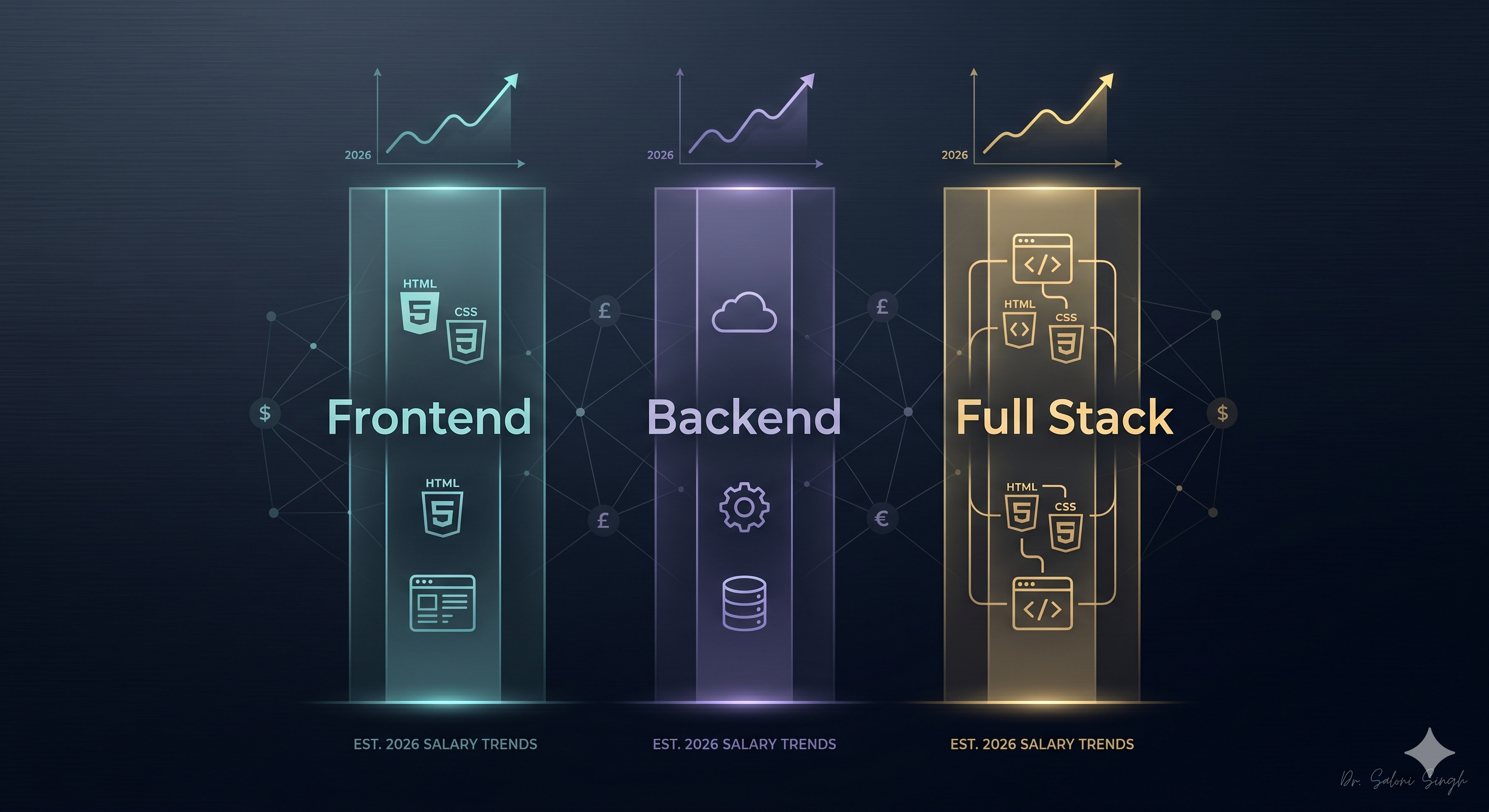
Ishaan Sharma
Apr 16, 2026
Frontend vs Backend vs Full Stack: Which Path Pays More in 2026?
Choosing between Frontend, Backend, and Full Stack development is one of the biggest career decisions for developers in 2026. All three paths offer strong opportunities, but salaries, demand, and long-term growth can vary depending on your skills, location, and specialization. So which path pays more in 2026? Let’s break it down honestly. Understanding the Roles Frontend Developer Frontend developers build the part of websites and apps users interact with. They focus on: - Layouts - Responsive design - UI components - Animations - Accessibility - Performance - User experience Common Frontend Technologies - HTML - CSS - JavaScript - TypeScript - React - Next.js - Vue - Tailwind CSS Backend Developer Backend developers build the systems powering applications behind the scenes. They handle: - APIs - Databases - Authentication - Server logic - Security - Performance - Scalability Common Backend Technologies - Node.js - Express.js - Python - Java - Go - PostgreSQL - MongoDB - Redis - Docker Full Stack Developer Full Stack developers work across both frontend and backend. They can build complete products from idea to deployment. Common Full Stack Skills - React / Next.js - Node.js - Databases - REST APIs - Deployment - Cloud tools - Git Which Path Pays More in 2026? 1. Backend Developers Often Earn the Highest Salaries Backend development usually commands strong salaries because it involves business-critical systems. Companies pay more for developers who can manage: - System architecture - Databases - Security - High traffic scaling - Performance optimization - Cloud infrastructure Large companies especially value backend specialists. 2. Full Stack Developers Have the Best Opportunity-to-Pay Ratio Full Stack developers are highly valuable because they reduce hiring needs. Instead of hiring two people, startups often hire one strong Full Stack developer. That means: - More job openings - Faster promotions - Freelance opportunities - Startup demand - Product ownership roles Experienced Full Stack developers often earn as much as backend developers. 3. Frontend Developers Earn Very Well Too Frontend salaries have grown massively because modern interfaces are harder than ever. Top frontend developers who specialize in: - React / Next.js - Design systems - Accessibility - Web performance - Advanced animations - UX implementation can earn excellent salaries in 2026. Salary Comparison in 2026 This varies by country and company, but generally: India (Approximate) - Frontend: ₹5 LPA to ₹18+ LPA - Backend: ₹6 LPA to ₹22+ LPA - Full Stack: ₹6 LPA to ₹25+ LPA Global Remote Roles - Frontend: Strong pay - Backend: Often premium pay - Full Stack: Best balance of demand + pay Which Path Is Best for You? Choose Frontend If You Enjoy: - Design and visuals - Interactive interfaces - Immediate visible results - Creative problem solving - UI polish Choose Backend If You Enjoy: - Logic - Databases - APIs - Architecture - Security - Solving deep technical problems Choose Full Stack If You Enjoy: - Building complete products - Variety in daily work - Startups - Freelancing - Fast career growth Best Path for Freelancing in 2026 Full Stack usually wins. Clients often want one person who can build: - Website - Admin panel - Backend - Deployment - Maintenance That makes Full Stack developers highly profitable freelancers. Best Path for Enterprise High Salary Jobs Backend often leads in: - FinTech - SaaS infrastructure - Banking - Large-scale products - Security-heavy systems Best Path for Fast Entry Into Web Development Frontend is often the easiest entry path. You can start learning HTML, CSS, JavaScript, React, then expand later. The Smartest Strategy in 2026 Many successful developers use this route: Start Frontend → Learn Backend → Become Full Stack → Specialize Later This gives: - Faster job entry - More opportunities - Better salary growth - Flexibility Biggest Mistake Developers Make They choose based only on salary. Better questions: - What do you enjoy building? - What can you become elite at? - Which work can you do for years? High income usually follows deep skill. Final Verdict If your goal is highest technical salaries, Backend often wins. If your goal is more opportunities + flexibility, Full Stack wins. If your goal is quick entry + creative work, Frontend is excellent. My Honest Advice for 2026 Learn Frontend first. Then learn Backend. Then become Full Stack. After that, specialize where your strengths naturally grow. That is the strongest long-term career path in modern web development.
How to Get Freelance Web Development Clients Without Upwork

Ishaan Sharma
Apr 15, 2026
How to Get Freelance Web Development Clients Without Upwork
Freelancing platforms like Upwork can help beginners start, but they also come with intense competition, bidding wars, and platform fees. The better long-term move is learning how to get clients directly. Direct clients usually pay more, trust you more, and often become repeat customers. If you're a web developer, here is how to consistently get freelance clients without relying on Upwork. Why Avoid Upwork Only Dependence Many developers stay stuck because they depend only on one platform. Problems include: - High competition - Lower pricing pressure - Platform fees - No brand ownership - Unstable lead flow Direct client acquisition gives you control. 1. Build a Strong Portfolio Website Your portfolio is your online sales machine. Include: - Best 3 to 5 projects - Services you offer - Tech stack (React, Next.js, MERN, Shopify, WordPress etc.) - Testimonials - Contact form - WhatsApp / Email CTA Pro Tip Show results, not just screenshots. Instead of saying Built website, say: Built landing page that increased conversions by 27%. 2. Use LinkedIn Daily LinkedIn is one of the best places for freelance web developers. Optimize Your Profile Use a headline like: Freelance Web Developer | React & Next.js | Helping Businesses Get More Leads Daily Actions - Add 10 new founders/business owners - Comment on posts - Share your projects - Post case studies - Send warm DMs Example DM Hi, I checked your website and noticed a few areas that could improve speed and conversions. I help businesses build faster websites. Happy to share ideas if useful. 3. Cold Email Businesses With Bad Websites This still works extremely well. Find businesses with: - Old design - Slow loading site - Broken mobile version - No booking system - Weak SEO Then send a short personalized email. Example Subject: Quick idea for your website Hi, I visited your site and noticed it loads slowly on mobile. I help businesses redesign websites that convert better and load faster. I’d be happy to share a few ideas if you're interested. 4. Join Communities Where Business Owners Hang Out Many developers stay only in coding groups. Join places where buyers are: - Facebook business groups - Startup communities - Discord founder servers - Slack groups - Reddit entrepreneur communities Help first. Sell later. 5. Pick a Niche Generalists struggle more. Specific offers win faster. Instead of: I build websites Say: - Websites for gyms - Websites for dentists - Websites for coaches - SaaS landing pages - Shopify stores for brands Niche positioning builds trust instantly. 6. Use Twitter / X Founders often post things like: - Need developer - Looking for freelancer - Need landing page ASAP - Need MVP built Search these terms daily and reply fast. 7. Partner With Agencies Many agencies need developers but don’t hire full-time. Contact: - Marketing agencies - SEO agencies - Branding agencies - Designers Pitch If you ever need white-label development support, I’d love to help with overflow projects. This can create recurring work. 8. Ask Existing Contacts Your first clients may come from people already around you. Tell everyone: - Friends - Ex-colleagues - Classmates - Family contacts - Internship network Simple awareness creates referrals. 9. Build Content That Attracts Clients Post content like: - 5 Website Mistakes Killing Sales - Why Your Website Loads Slowly - Before/After Redesign Case Study - How Fast Sites Get More Leads Clients hire visible experts. 10. Use Referrals After delivering a project: If you know anyone who needs a website, I’d appreciate a referral. One happy client can bring multiple clients. Best Niches for Web Developers in 2026 These often pay well: - SaaS startups - Clinics - Lawyers - Coaches - Ecommerce brands - Local service businesses - Real estate - Agencies Best Offers for MERN / Full Stack Developers Instead of selling coding hours, sell outcomes. Examples: - MVP in 14 Days - SaaS Dashboard Build - Startup Landing Page + Backend - Admin Panel Development - Business Automation Web App 30-Day Client Plan Do this daily: - 10 LinkedIn messages - 10 Cold emails - 5 Twitter replies - 1 Content post - Improve portfolio weekly Consistency matters more than luck. Mistakes to Avoid - Sending generic spam DMs - Talking only about code - No portfolio - Charging too low - Depending on one source - Waiting for clients to come automatically Sell Results, Not Tech Wrong: I build React websites Better: I build fast websites that help businesses get more leads and sales. Clients buy outcomes. Final Thoughts You do not need Upwork to succeed as a freelance web developer. You need visibility, trust, and consistent outreach. Build authority, show proof, contact prospects daily, and focus on solving business problems. That is how direct clients are won.
7 Skills That Will Dominate Tech by 2027

Ishaan Sharma
Apr 13, 2026
7 Skills That Will Dominate Tech by 2027
The tech industry is changing faster than ever. By 2027, many current jobs will look different, some roles will disappear, and entirely new careers will emerge. The biggest winners will not be people who know one language or one tool. They will be people who understand where technology is heading and build skills around that direction. The next era of tech will be shaped by AI integration, cloud-native systems, cybersecurity pressure, data intelligence, and product-focused engineering. Companies are no longer asking only “Can we build this?” They are asking “Can we scale it, secure it, automate it, and make it profitable?” That shift is creating a new skill economy. If you want to stay valuable, earn more, or future-proof your career, these are the 7 skills most likely to dominate tech by 2027. 1. Applied Artificial Intelligence & Generative AI Artificial Intelligence is moving beyond experimentation and into daily business operations. By 2027, nearly every company will use AI in some form—customer support, coding, automation, analytics, search, sales, HR, and operations. The biggest demand will not only be for researchers building models from scratch. It will be for professionals who can apply AI to real business problems. High-Value Capabilities - Prompt engineering - Retrieval-Augmented Generation (RAG) - Vector databases - AI chatbot systems - AI workflow automation - AI agents - Fine-tuning models - AI API integrations Why It Will Dominate Companies want results, not experiments. People who can deploy AI into products and workflows will be highly paid. Best Tools to Learn - OpenAI API - LangChain - Pinecone / Weaviate - n8n - Python - Next.js AI integrations 2. Cloud-Native Development & Platform Engineering The cloud era is no longer about simply hosting servers online. It is now about building scalable, distributed, resilient systems that run globally. Every serious company relies on cloud infrastructure. By 2027, businesses will need engineers who can manage speed, uptime, cost, security, and scale. High-Value Capabilities - AWS / Azure / GCP - Docker - Kubernetes - Terraform - CI/CD pipelines - Infrastructure as Code - Serverless systems - Monitoring & observability Why It Will Dominate Modern products need reliable systems. Cloud engineers and platform engineers keep companies alive. Career Impact Cloud talent often commands premium salaries because downtime costs money. 3. Cybersecurity & AI Security As technology grows, attacks grow with it. Cybersecurity is no longer optional. It is now a board-level priority. By 2027, the rise of AI-generated phishing, deepfake fraud, prompt injection attacks, and cloud vulnerabilities will create massive demand for security talent. High-Value Capabilities - Cloud security - Zero Trust Architecture - Threat detection - IAM (Identity Access Management) - Secure coding - LLM security - Compliance systems - Incident response Why It Will Dominate One major breach can cost millions and destroy trust. Security professionals will remain essential. Smart Angle Even developers who understand secure coding will stand out. 4. Data Engineering & Analytics AI runs on data. Businesses run on decisions. That means data professionals will become even more important. Raw data is useless unless someone can clean it, move it, organize it, and turn it into insight. High-Value Capabilities - SQL - ETL / ELT pipelines - Apache Kafka - Spark - Data warehousing - Dashboards - Data quality systems - Real-time analytics Why It Will Dominate Companies with faster insights move faster than competitors. Hidden Opportunity Many people chase flashy AI roles while ignoring data engineering—the foundation behind them. 5. Technical Product Management & System Design The best companies do not win because they build more features. They win because they build the right features. That requires professionals who understand technology and business at the same time. High-Value Capabilities - Product strategy - Roadmapping - User research - Growth thinking - Metrics analysis - System design - API ecosystem thinking - Prioritization Why It Will Dominate As products become more complex, companies need builders who understand users, engineering, and revenue together. Future Reality Technical Product Managers and Product Engineers will become extremely valuable hybrid roles. 6. Agentic AI & Workflow Automation The next stage of AI is not chatbots. It is autonomous systems that complete tasks. By 2027, AI agents will: - Qualify leads - Handle support tickets - Research markets - Schedule workflows - Write reports - Automate repetitive operations High-Value Capabilities - Multi-step AI agents - Tool calling systems - Workflow automation - API chaining - Human-in-the-loop systems - AI ops monitoring Why It Will Dominate Businesses want fewer manual processes and faster execution. Massive Opportunity Small teams using AI agents may outperform much larger teams. 7. Learning Agility (The Meta Skill) Many people focus only on tools. But tools change constantly. The real superpower by 2027 will be the ability to learn quickly, adapt quickly, and stay relevant continuously. High-Value Capabilities - Fast self-learning - Reading docs efficiently - Experimentation mindset - Problem solving - Unlearning outdated habits - Curiosity Why It Will Dominate The half-life of technical knowledge keeps shrinking. What is hot today may be outdated in two years. Truth The most dangerous phrase in tech is: “I already know enough.” Bonus Skills That Will Also Rise Fast Communication Engineers who explain ideas clearly get promoted faster. UX Thinking Good products win because users enjoy them. Sales Awareness People who understand revenue become valuable across every company. Remote Collaboration Global teams need async communication and ownership. What Students Should Learn in 2026-2027 If you are starting now: - Learn Python - Learn SQL - Learn React / Full Stack basics - Use AI tools daily - Learn cloud fundamentals - Build projects - Improve communication What Working Professionals Should Learn If already employed: - Add AI to your workflow - Learn automation - Learn system design - Build leadership skills - Understand business metrics What Skills May Decline These areas may lose value if done at a basic level: - Repetitive manual coding - Simple content creation - Low-level data entry - Basic testing without automation - Generic tool-only roles Final Verdict The tech winners of 2027 will not be the people who memorize syntax. They will be the people who can combine AI + engineering + business understanding + adaptability. If you learn only one thing, you risk replacement. If you build a stack of valuable skills, you become hard to ignore. The future does not belong to one technology. It belongs to people who keep evolving with it.
Beyond Chatbots: How AI Agents are Automating Our Daily Lives

Ishaan Sharma
Jan 15, 2026
Beyond Chatbots: How AI Agents are Automating Our Daily Lives
Beyond Chatbots We are moving past the era where we "talk" to AI. We are entering the era where AI "acts" for us. Autonomous agents are no longer just science fiction; they are becoming our personal assistants, researchers, and developers. The Shift to Action-Oriented AI Standard LLMs can explain a concept, but AI Agents can execute a workflow. Imagine an agent that doesn't just find a flight but monitors prices, books the seat when it hits your budget, and updates your calendar—all without you lifting a finger. This is the "Agentic Workflow" shift. What This Means for Developers For the builders of today, the challenge isn't just training models—it's building the "rails" for these agents to run on. Semantic search, vector databases, and RAG (Retrieval-Augmented Generation) are the tools that give these agents their memory and reliability.