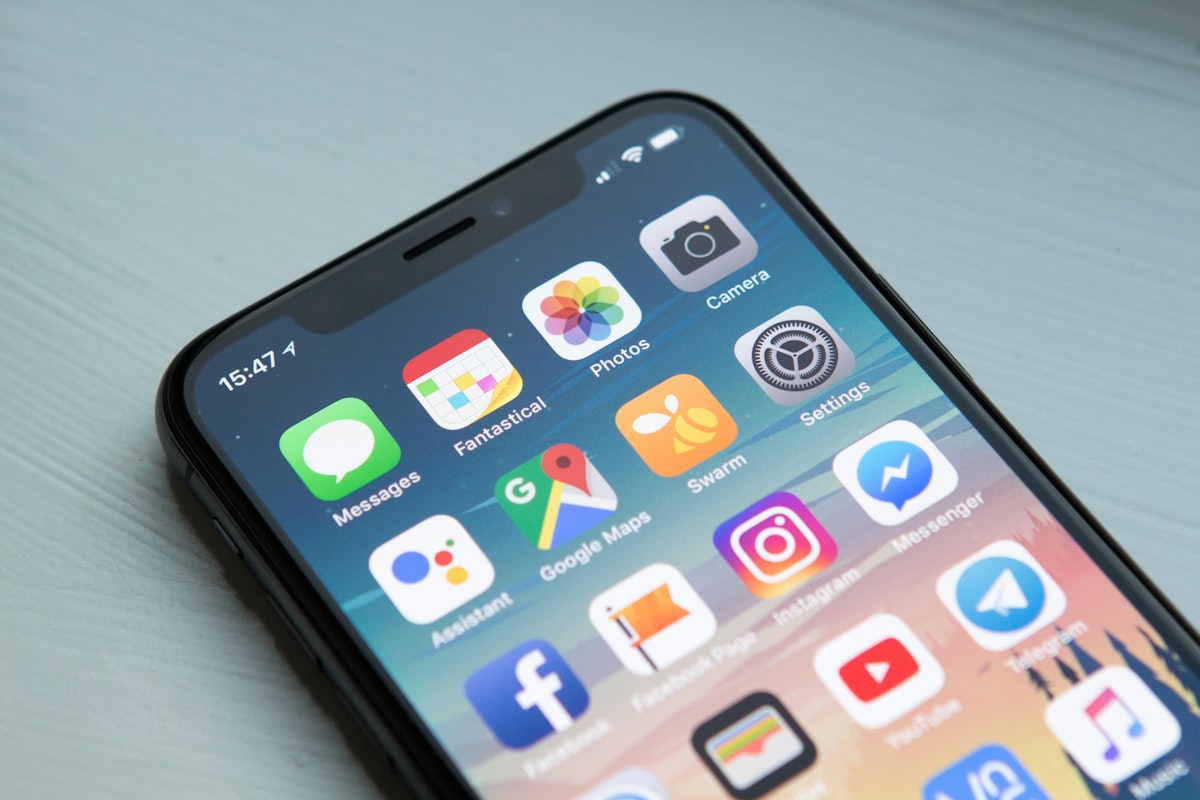
The average smartphone has 80 installed apps. The average user regularly uses 9.
The remaining 71 apps sit there consuming storage, sending notifications, collecting data, and creating a persistent low-grade sense of obligation. Every red badge, every push notification, every "we miss you" email is a tiny claim on your attention — and attention, unlike money, cannot be earned back.
Digital minimalism isn't about becoming a Luddite. It's about being intentional with the most limited resource you have.
The Philosophy Behind the Practice
Cal Newport, in his book Digital Minimalism, defines the approach as: "A philosophy of technology use in which you focus your online time on a small number of carefully selected and optimized activities that strongly support things you value, and then happily miss out on everything else."
The key phrase is happily miss out. Digital minimalism isn't deprivation. It's clarity.
Most people treat technology like a buffet — taking a little of everything. Digital minimalists treat it like a curated menu — choosing deliberately, enjoying fully.
The 30-Day Digital Declutter Protocol
Week 1: Audit and Remove
Day 1-2: The App Audit. Open your phone. For each app, ask one question: "Would I reinstall this if my phone were wiped today?" If the answer is no, delete it. Don't archive it. Delete it.
Day 3-4: Notification Purge. Go to Settings → Notifications. Turn off all notifications except calls, texts from real humans, and calendar reminders. Everything else can wait until you choose to check it.
Day 5-7: Unsubscribe Week. Every time a marketing email arrives, unsubscribe before reading it. By the end of the week, your inbox will feel like a different place. Tools like Unroll.me can accelerate this, but doing it manually builds awareness of just how many companies are claiming your attention.
Week 2: Restructure
Day 8-10: Single-purpose devices. Can you check email only on your laptop? Social media only on a tablet? Separating activities by device creates friction that prevents mindless scrolling. The goal isn't to make things impossible — just slightly harder.
Day 11-14: Time-box digital consumption. Set specific windows for checking email (twice daily), social media (30 minutes, once daily), and news (once daily, from a single trusted source). Outside these windows, those apps don't exist.
Week 3: Replace
Day 15-18: Fill the voids. Digital clutter often fills voids — boredom, loneliness, anxiety. As you remove digital noise, those voids will surface. Prepare analog replacements: physical books, walks, conversations, hobbies that use your hands.
Day 19-21: Rediscover deep leisure. Leisure that requires skill and produces tangible results — woodworking, cooking, drawing, playing an instrument — provides satisfaction that passive consumption cannot. Schedule at least one hour of this daily.
Week 4: Solidify
Day 22-25: Design your digital environment. Rearrange your phone's home screen to show only tools (maps, camera, calendar). Move social and entertainment apps to a second screen or folder. Out of sight doesn't mean out of mind — but it helps.
Day 26-28: Establish rituals. Create phone-free zones (bedroom, dining table) and phone-free times (first hour of the day, last hour before bed). These rituals compound over time into a fundamentally different relationship with your devices.
Day 29-30: Reflect and adjust. What did you miss? What didn't you miss? The answers will surprise you. Most people discover they miss far less than they feared.
The Compound Effect of Digital Clarity
People who complete a digital declutter consistently report: better sleep, reduced anxiety, improved concentration, deeper relationships, and — perhaps most importantly — a feeling of spaciousness in their days that they'd forgotten was possible.
You don't need to throw away your phone. You need to make it serve you instead of the other way around.
Free Download
Get The 2026 Tech Career Roadmap
A free PDF guide — the skills, salaries, and strategies to level up your tech career in 2026.
Drop your email and we'll send it straight to your inbox.