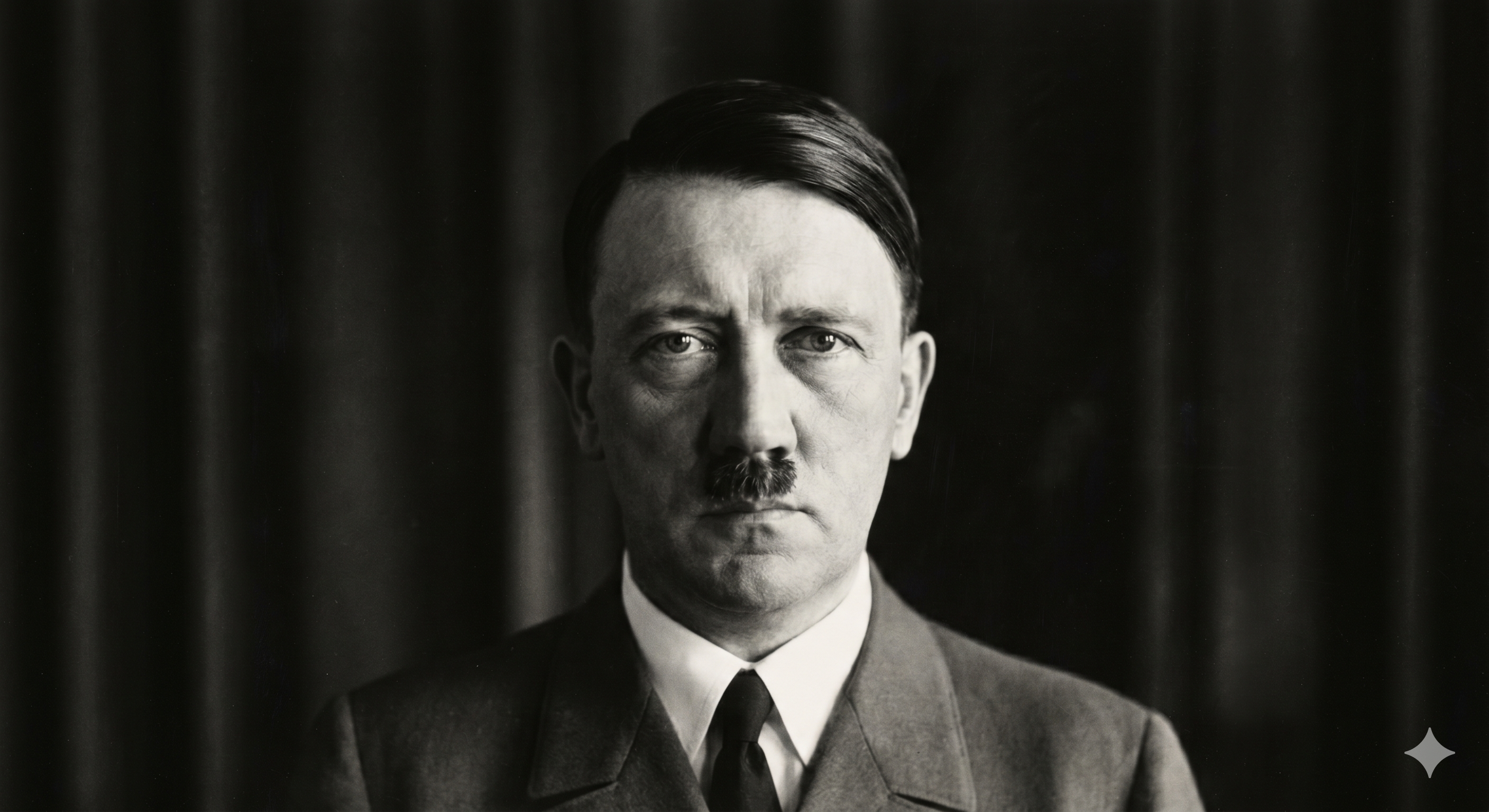
Adolf Hitler was the dictator of Nazi Germany whose rule led to World War II, the Holocaust, and one of the deadliest periods in human history. His rise from political outsider to totalitarian ruler remains a major warning about propaganda, extremism, and unchecked power.
Quick Facts
Full Name: Adolf Hitler
Born: April 20, 1889 (Braunau am Inn, Austria-Hungary)
Died: April 30, 1945 (Berlin, Germany)
Family: Father Alois Hitler; Mother Klara Pölzl; Partner Eva Braun
Nationality: Austrian-born, became German citizen in 1932
Field of Influence: Politics, Military, Ideology
Occupation: Dictator, Politician, Former Soldier
Known For: Nazi rule, World War II, Holocaust
Golden Era: 1933–1945
Net Worth: Not clearly defined; controlled state power and resources
Primary Influences: Pan-German nationalism, antisemitic ideology, extremist movements of the era
Famous Quote: "The victor will never be asked if he told the truth."
Early Life
Hitler was born in Austria and spent much of his youth in Linz and Vienna. He wanted to become an artist but was rejected twice by the Academy of Fine Arts Vienna. During these years, he lived in hardship and absorbed radical nationalist and racist ideas that later shaped his politics.
Education
He completed basic schooling but did not pursue university education or formal professional training.
Career Beginning
During World War I, Hitler served in the Bavarian Army and received military decorations. After Germany’s defeat, he entered politics through the German Workers' Party, later transforming it into the Nazi Party.
Rise to Power
Germany’s economic crisis, political instability, and public anger after World War I created conditions that helped extremist politics grow.
Key Turning Points
Great Depression weakened Germany
Nazi propaganda expanded support
Appointed Chancellor in 1933
Enabling Act allowed dictatorship
Opposition parties and freedoms were crushed
Rule Over Germany
Once in power, Hitler established a totalitarian regime based on censorship, fear, militarization, and racial ideology.
Major Actions
Rebuilt military in violation of treaties
Invaded neighboring countries
Expanded police-state control
Targeted minorities and political opponents
Holocaust and Atrocities
Under Nazi rule, six million Jews were murdered in the Holocaust, along with millions of others including Roma people, disabled people, political prisoners, prisoners of war, and civilians. This genocide remains one of history’s greatest crimes.
Biggest Strategic Failures
Invading the Soviet Union
Declaring war on the United States
Fighting multiple fronts at once
Ignoring military advice
Increasing paranoia and poor decisions in final years
Fall of the Regime
By 1945, Allied forces had defeated Nazi Germany. Berlin collapsed, and Hitler died in his bunker on April 30, 1945.
Habits and Personality
Powerful but aggressive speaking style
Highly controlling leadership approach
Severe distrust of others
Increasing isolation in later years
Obsessive micromanagement
Controversies Historians Debate
Exact health conditions in later years
Drug dependence and medical treatment
Internal decision-making processes within Nazi leadership
Legacy
Hitler’s legacy is overwhelmingly one of destruction. His rule caused tens of millions of deaths, devastated Europe, and demonstrated the danger of hate-driven politics and authoritarian systems.
How the World Changed Afterward
1. Creation of the United Nations
A global effort to prevent future world wars.
2. Human Rights Frameworks
Modern genocide laws and human-rights protections expanded.
3. Founding of Israel
Postwar events accelerated creation of the state of Israel.
4. Cold War Era
Power shifts after the war helped shape decades of global tension.
Lessons From History
1. Hate Can Become Catastrophic
Dehumanizing groups can lead to mass violence.
2. Democracy Must Be Protected
Institutions weaken when fear and propaganda dominate.
3. Economic Crisis Can Fuel Extremism
Instability can empower dangerous movements.
4. Power Without Accountability Is Dangerous
Unchecked authority often leads to abuse.
Final Verdict
Adolf Hitler remains one of history’s clearest warnings. His rise shows how propaganda and division can destroy nations, while his fall reminds the world of the cost of tyranny.
Free Download
Get The 2026 Tech Career Roadmap
A free PDF guide — the skills, salaries, and strategies to level up your tech career in 2026.
Drop your email and we'll send it straight to your inbox.