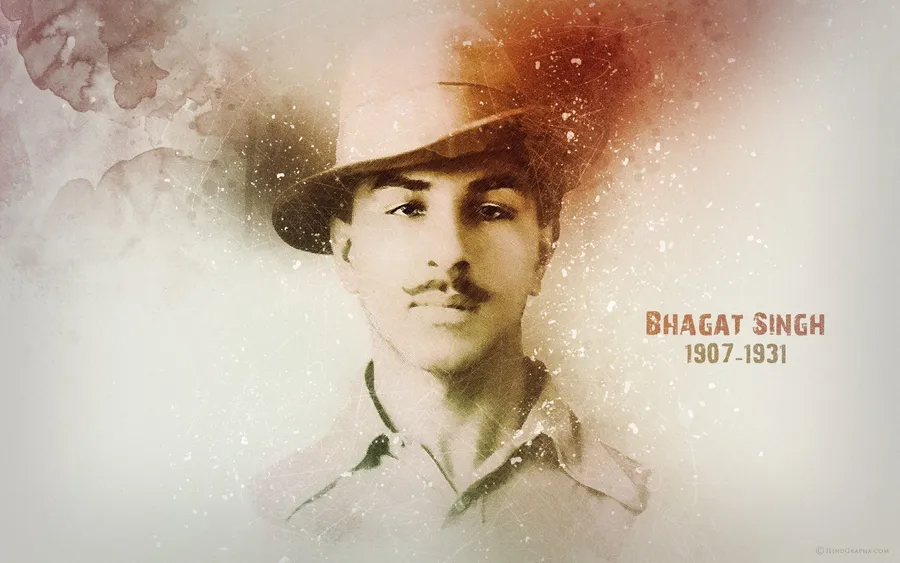
Bhagat Singh is one of the most celebrated revolutionaries in Indian history. Known for fearless courage, intellectual depth, and total sacrifice, he became the youthful face of resistance against British colonial rule. His slogan "Inquilab Zindabad" still echoes as a symbol of justice and freedom.
Quick Facts
Full Name: Bhagat Singh
Born: September 28, 1907 (Banga, Punjab, British India)
Died: March 23, 1931 (Lahore Central Jail)
Family: Parents Kishan Singh and Vidyavati; several siblings
Nationality: Indian
Field of Influence: Revolutionary Socialism, Anti-Colonialism, Political Thought
Occupation: Revolutionary, Activist, Writer
Known For: Assembly bombing, Saunders case, prison hunger strike
Golden Era: 1926–1931
Net Worth: Not Applicable
Primary Inspiration: Kartar Singh Sarabha, socialist thinkers, family activism
Famous Quote: "Inquilab Zindabad!"
Early Life
Bhagat Singh was born into a patriotic Sikh family deeply involved in anti-British activities. Politics and sacrifice surrounded him from childhood.
A major turning point came after the Jallianwala Bagh massacre (1919). Deeply shaken, the young Bhagat Singh visited the site and collected blood-soaked soil as a personal reminder of injustice.
Education
He studied at Dayanand Anglo-Vedic School and later National College, Lahore, founded by Lala Lajpat Rai.
Unlike colonial institutions, this college encouraged nationalist thought and debate.
Career Beginning
Bhagat Singh believed freedom required stronger resistance than petitions and compromise.
He joined the Hindustan Republican Association, later helping transform it into the Hindustan Socialist Republican Association (HSRA).
Rise to Revolutionary Fame
His influence grew rapidly among young Indians.
Turning Point
After Lala Lajpat Rai died from injuries caused during a police lathi charge in 1928, Bhagat Singh and comrades targeted police officer John Saunders in retaliation.
This made him one of the most wanted revolutionaries in British India.
Major Achievements
1. Youth Mobilization
Founded Naujawan Bharat Sabha to inspire young people.
2. Central Legislative Assembly Protest
Used non-lethal bombs and leaflets to protest colonial repression.
3. Prison Hunger Strike
Drew national attention to treatment of political prisoners.
4. Revolutionary Writings
Produced influential essays on freedom, atheism, and justice.
Biggest Struggles
Living underground under constant danger
Harsh prison treatment
Torture and confinement
Conflict between revolutionary and non-violent strategies
Facing execution at a young age
Habits and Personality
Highly intellectual and widely read
Courageous under pressure
Calm in danger
Strong debating skills
Rational and anti-dogma thinker
Charismatic youth leader
Fun Facts
Loved reading books on revolution and history
Enjoyed theatre and films
Maintained humor even during difficult times
Became a youth icon before age 24
Controversies
His use of armed resistance remains debated compared with non-violent methods. His socialist and atheist views also challenged many traditional leaders of his time.
Martyrdom
Bhagat Singh, Rajguru, and Sukhdev were executed on March 23, 1931.
He was only 23 years old, yet his death turned him into an immortal national symbol.
Legacy
Bhagat Singh is remembered as Shaheed-e-Azam (The Great Martyr). More than a fighter, he was a thinker who believed political freedom must include social and economic justice.
How the World Changed Because of Bhagat Singh
1. Youth Politics Expanded
Millions of young Indians became politically active.
2. Freedom Debate Deepened
People discussed justice beyond mere independence.
3. Revolution Became Intellectual
Ideas became as important as action.
4. Martyrdom Inspired Generations
His sacrifice motivated future movements.
Life Lessons From Bhagat Singh
1. Courage Has No Age Limit
Young people can shape history.
2. Read Deeply
Strong action needs strong ideas.
3. Principles Matter
Some values are bigger than fear.
4. Freedom Must Be Fair
Political freedom without justice is incomplete.
Final Verdict
Bhagat Singh lived only 23 years, yet achieved immortality through courage and conviction. He was not just a revolutionary with a gun, but a visionary with a mind far ahead of his time.
Free Download
Get The 2026 Tech Career Roadmap
A free PDF guide — the skills, salaries, and strategies to level up your tech career in 2026.
Drop your email and we'll send it straight to your inbox.