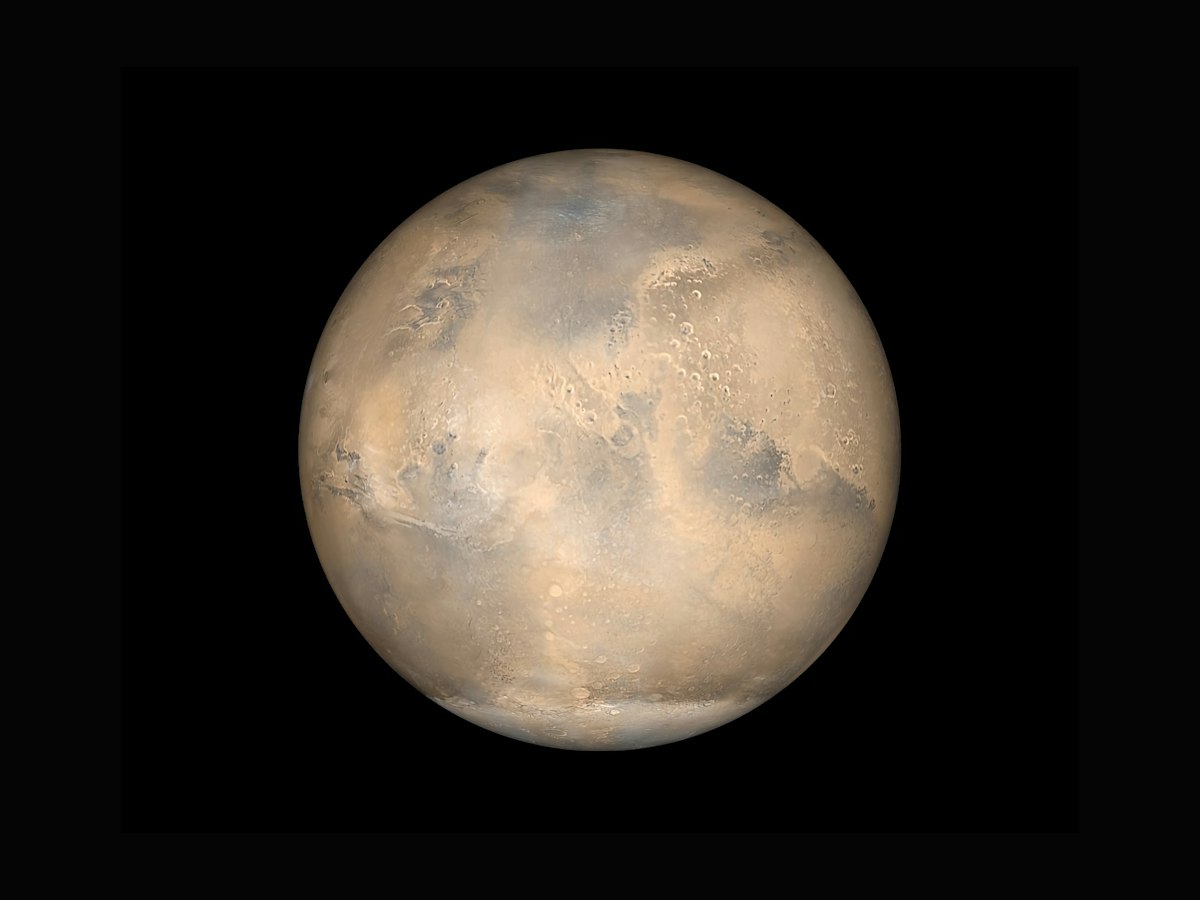
Mars Has Never Been Closer — Literally and Figuratively
Every 26 months, Earth and Mars align in a configuration that minimizes travel time between the two planets. This orbital window — called a Mars opposition — has governed every robotic mission we've ever sent to the Red Planet, from Viking in 1976 to Perseverance in 2021.
The 2026 window is shaping up to be the most consequential in history — not because of a single mission, but because of the of multiple programs, both public and private, that are simultaneously pushing toward the same goal: establishing a permanent human presence on Mars.
convergence
We're not just exploring Mars anymore. We're beginning the long, messy, astonishing process of becoming a multi-planetary species.
SpaceX Starship: The Vehicle That Changes Everything
SpaceX's Starship is the largest and most powerful rocket ever built — standing 121 meters tall (taller than the Statue of Liberty) and capable of lifting 150 metric tons to low Earth orbit. It's fully reusable, radically cheaper per kilogram than any previous launch vehicle, and explicitly designed for Mars.
After a series of increasingly successful test flights — including the first successful booster catch in 2024 and the first orbital refueling demonstration in 2025 — Starship is approaching operational status.
Elon Musk has stated that SpaceX plans to launch uncrewed Starship missions to Mars during the 2026 window. The objectives:
Test the Mars entry, descent, and landing sequence — Mars has a thin atmosphere, making landing heavy vehicles extraordinarily difficult. NASA has never landed anything heavier than the 1-ton Perseverance rover. Starship weighs over 100 tons.
Demonstrate in-situ resource utilization (ISRU) — extracting water from Martian ice and converting CO₂ from the atmosphere into methane fuel. If this works, future missions won't need to carry return fuel — they'll manufacture it on Mars.
Deliver cargo for future crewed missions — habitat modules, power systems, food supplies, and equipment pre-positioned years before humans arrive.
"The 2026 Mars window isn't about sending humans. It's about proving that we can — and about placing the first bricks of what could become humanity's second home." — Eric Berger, Ars Technica
NASA's Artemis-to-Mars Pipeline
While SpaceX grabs headlines, NASA has been quietly building the infrastructure and knowledge base that any Mars mission — public or private — will depend on.
The Mars Sample Return Mission, though repeatedly restructured and budget-challenged, represents one of the most scientifically significant space missions ever conceived. Perseverance has been caching carefully selected rock and soil samples in sealed titanium tubes on the Martian surface since 2021. Getting those samples back to Earth would be the first time material from another planet has been returned for laboratory analysis since the Apollo lunar samples.
In 2026, NASA is expected to finalize the mission architecture — potentially incorporating SpaceX's Starship as the Earth return vehicle, replacing the more expensive traditional approach.
The Lunar Gateway, currently under construction in partnership with ESA, JAXA, and CSA, serves as a testbed for deep-space habitation technologies. Life support systems, radiation shielding, autonomous operations, and crew health monitoring developed for the Gateway will directly transfer to Mars mission architecture.
Mars Ice Mapper, a proposed orbital mission, would use radar to map subsurface water ice deposits across Mars. Water is the critical resource — for drinking, for growing food, for manufacturing rocket fuel, and for radiation shielding. Knowing exactly where it is determines where humans land.
China's Tianwen-3: A Dark Horse Contender
China's space program has moved from ambitious to extraordinary in the space of a decade. The Tianwen-1 mission in 2021 achieved orbit, landing, and rover operations on Mars in a single mission — something no other nation had accomplished on its first attempt.
Tianwen-3, currently in development, aims to achieve Mars sample return before NASA — potentially as early as 2028-2030, with key hardware tests beginning in 2026. The mission architecture involves two separate launches: one to land on Mars, collect samples, and launch them into Martian orbit, and another to retrieve the samples and return them to Earth.
If China succeeds, it would be a geopolitical earthquake — demonstrating that the United States no longer holds unchallenged supremacy in planetary exploration.
The space race isn't just back. It's global, and the finish line is on another planet.
The Private Sector Explosion
SpaceX isn't the only private company with Mars ambitions:
Relativity Space is developing fully 3D-printed rockets designed for rapid iteration — a manufacturing approach that could eventually be used to build vehicles and structures on Mars using local materials.
Blue Origin is building New Glenn, a heavy-lift rocket that, while not Mars-specific, expands the commercial launch capacity needed to support interplanetary logistics.
Impulse Space is developing orbital transfer vehicles that could serve as "space tugs," moving cargo efficiently between Earth orbit and Mars transfer trajectories.
The ecosystem around Mars exploration is no longer a single-organization effort. It's an industry — with supply chains, competition, and market forces accelerating progress in ways that government programs alone never could.
The Human Question
All the technical progress in the world doesn't address the hardest challenge: keeping humans alive and sane during a Mars mission.
Radiation exposure: A round trip to Mars exposes astronauts to approximately 1.2 sieverts of cosmic radiation — well above the career limits set by most space agencies. New shielding materials and pharmaceutical countermeasures are in development but unproven.
Psychological isolation: A Mars crew would be 4-24 light-minutes from Earth, making real-time communication impossible. They would be the most isolated humans in history — for at least two years. Analog missions like NASA's CHAPEA (Crew Health and Performance Exploration Analog) are studying the psychological effects, but nothing can fully simulate the reality of being 225 million kilometers from home.
Medical emergencies: If an astronaut has a heart attack on Mars, they can't be evacuated. The crew must be capable of performing surgery, managing trauma, and treating illness with limited supplies and no external help. AI-assisted medical systems are being developed, but the responsibility ultimately falls on the crew.
Return is not guaranteed: Every plan for crewed Mars missions includes a return journey, but the honest reality is that the first crews will face risks comparable to — or exceeding — the early days of polar exploration and aviation. These will be volunteers who understand that survival is probable but not certain.
Why It Matters
Mars exploration isn't an escape plan. Earth will remain humanity's home for the foreseeable future, and solving our problems here — climate change, inequality, conflict — is non-negotiable.
But becoming a multi-planetary species is the single most important long-term project our civilization can undertake. Every species that has ever existed on Earth has eventually gone extinct. If humanity remains confined to a single planet, our long-term survival depends entirely on nothing catastrophic happening — no asteroid, no supervolcano, no self-inflicted catastrophe — for the rest of eternity.
That's not a bet any rational civilization should make.
2026 won't put humans on Mars. But it will be the year we prove — through hardware, through science, through sheer engineering audacity — that getting there is no longer science fiction.
It's engineering. And engineering is just a matter of time, money, and will.
Free Download
Get The 2026 Tech Career Roadmap
A free PDF guide — the skills, salaries, and strategies to level up your tech career in 2026.
Drop your email and we'll send it straight to your inbox.