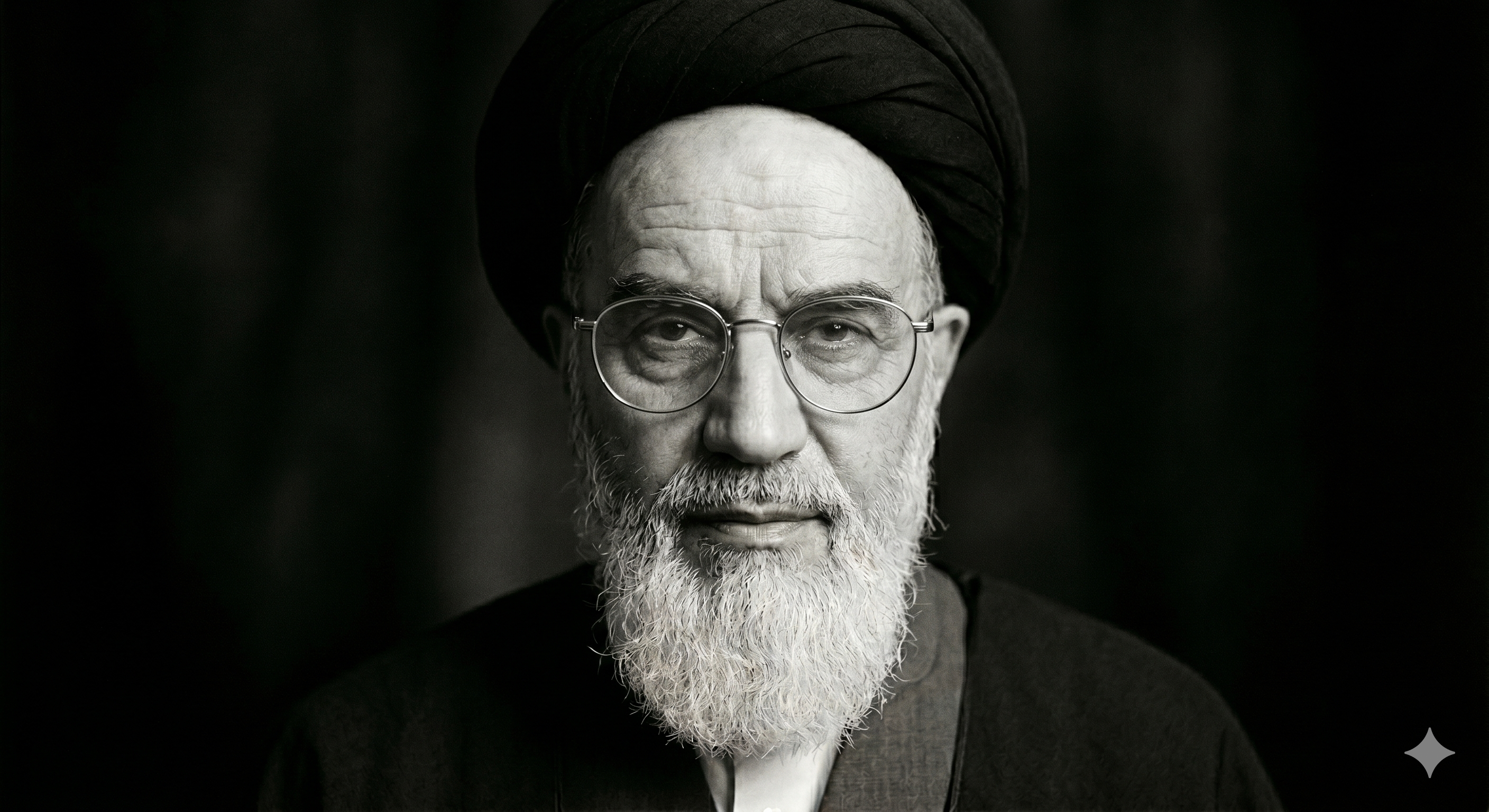
Ali Khamenei is one of the most powerful political and religious figures in the modern Middle East. As the Supreme Leader of Iran since 1989, he has guided the country’s political system, military strategy, and foreign policy for decades. His leadership has significantly shaped Iran’s role in global geopolitics.
Field of Influence: Religion, Politics, Geopolitics
Occupation: Supreme Leader of Iran, Shi'a Cleric
Known For: Supreme Leader since 1989, anti-Western foreign policy, oversight of IRGC
Golden Era: 1989–Present
Net Worth: Not Publicly Available
Primary Inspiration: Ayatollah Ruhollah Khomeini
Famous Quote: "The American government is the number one enemy of our nation."
Early Life
Ali Khamenei was born in Mashhad, Iran, into a religious family. His father was a respected cleric, and Khamenei was raised in an environment deeply connected to Islamic scholarship.
From a young age, he was immersed in theology and religious teachings.
Education
He studied in the seminaries of Mashhad and Qom, two major centers of Shi'a learning.
He was influenced by prominent scholars, especially Ayatollah Khomeini, whose revolutionary ideas later shaped Iran’s future.
Career Beginning
During the 1960s and 1970s, Khamenei opposed the rule of Shah Mohammad Reza Pahlavi.
His activism led to arrests, interrogations, and exile before the 1979 Islamic Revolution.
After the revolution, he quickly rose through the new political system.
Rise to Power
Khamenei held several important roles before becoming Supreme Leader.
Key Positions
Member of Revolutionary Council
Minister of Defence
President of Iran (1981–1989)
Supreme Leader (1989–Present)
Turning Point
In June 1989, after the death of Ayatollah Khomeini, Khamenei was selected as Iran’s second Supreme Leader.
This made him the highest authority in the country.
Major Achievements
1. Consolidated Political Control
Maintained the Islamic Republic’s structure after Khomeini.
2. Survived Heavy Sanctions
Iran remained politically stable despite decades of international pressure.
3. Expanded Regional Influence
Supported allied groups and networks across the Middle East.
4. Longest-Serving Regional Leader
One of the most enduring rulers in the region.
Biggest Struggles
Economic crises caused by sanctions
Domestic protest movements
Balancing reformists and hardliners
Nuclear tensions with Western powers
Regional military conflicts
Habits and Personality
Disciplined and austere lifestyle
Strategic and cautious decision-maker
Prefers indirect governance through institutions
Interested in poetry, literature, and arts
Reserved public image
Fun Facts
Plays the setar, a Persian instrument
Survived an assassination attempt in 1981
Known to read literature and memoirs regularly
Has a lasting injury to his right arm
Controversies
Khamenei’s leadership has faced strong criticism regarding:
Human rights restrictions
Suppression of protests
Nuclear program tensions
Regional proxy conflicts
Limits on political dissent
Legacy
Ali Khamenei is one of the defining architects of modern Iran. His rule institutionalized clerical authority and positioned Iran as a major regional power resisting Western influence.
How the World Changed Because of Khamenei
1. Iran Became a Major Regional Power
Expanded influence across Lebanon, Syria, Iraq, and Yemen.
2. Middle East Politics Shifted
Iran-West tensions reshaped alliances.
3. Nuclear Diplomacy Intensified
Iran became central to global security discussions.
4. Political Islam Remained Influential
His leadership sustained a theocratic governance model.
Life Lessons From His Era
1. Ideology Can Sustain Power
Strong belief systems can preserve regimes.
2. Sanctions Have Long-Term Costs
Economic pressure reshapes societies deeply.
3. Institutions Matter
Power often operates through networks, not personalities alone.
4. Geopolitics Shapes Daily Life
International conflicts affect ordinary citizens most.
Final Verdict
Ali Khamenei remains one of the most influential and controversial leaders of the 21st century. His decades in power have shaped Iran internally and transformed the geopolitical balance of the Middle East.
Free Download
Get The 2026 Tech Career Roadmap
A free PDF guide — the skills, salaries, and strategies to level up your tech career in 2026.
Drop your email and we'll send it straight to your inbox.