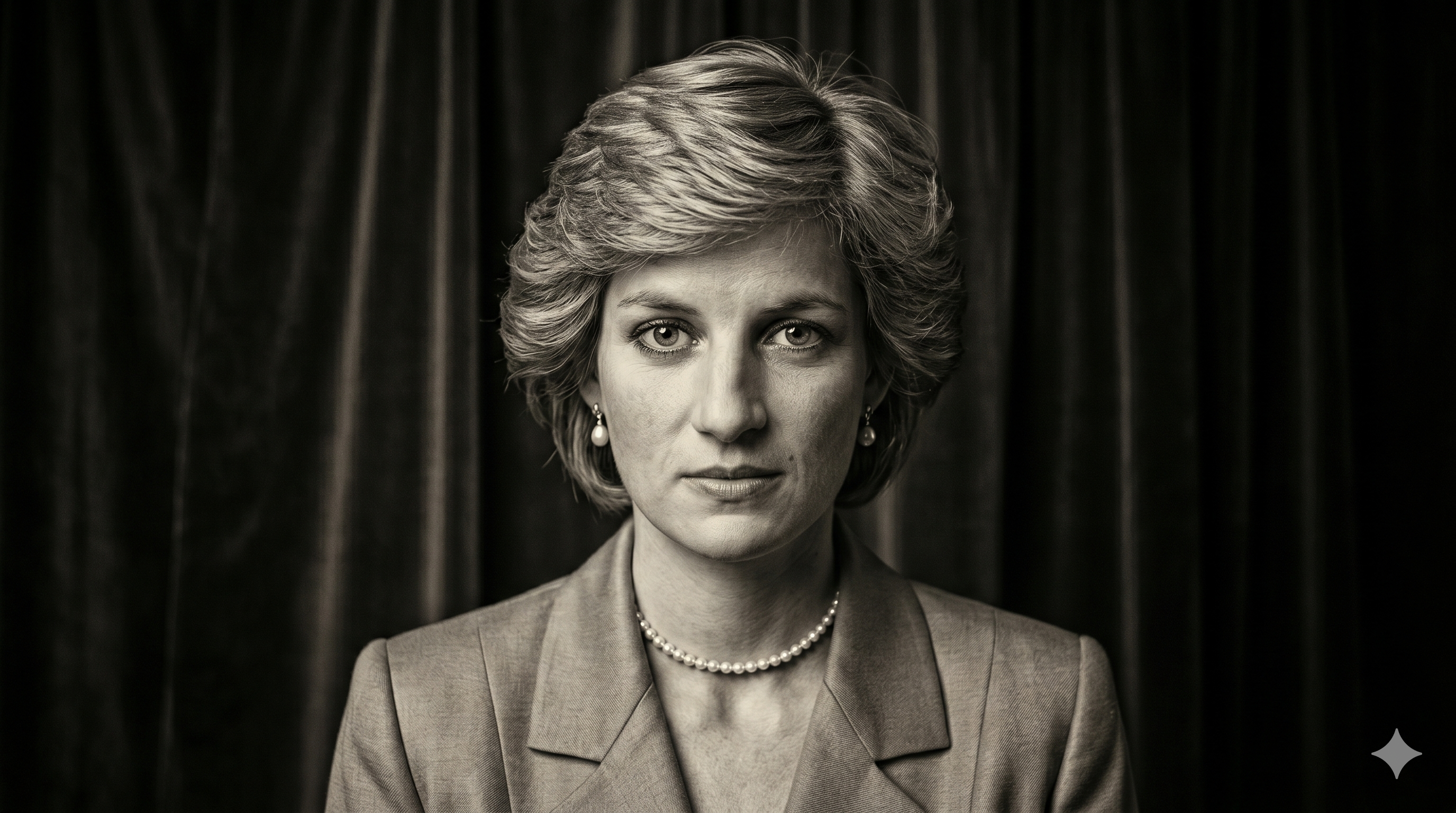
Princess Diana was one of the most admired and influential public figures of the 20th century. Known as The People's Princess, she transformed the image of royalty through empathy, openness, and humanitarian service. Her life combined glamour, pain, compassion, and a legacy that still shapes the modern monarchy.
Quick Facts
Full Name: Diana Frances Spencer
Born: July 1, 1961 (Sandringham, Norfolk, United Kingdom)
Died: August 31, 1997 (Paris, France)
Family: Parents John Spencer and Frances Shand Kydd; Children Prince William and Prince Harry
Nationality: British
Field of Influence: Royalty, Philanthropy, Humanitarianism, Fashion
Occupation: Princess of Wales, Philanthropist
Known For: Royal marriage, charity work, global popularity
Golden Era: 1981–1997
Net Worth: Approx. £21 million estate at death
Primary Inspiration: Compassion and service to ordinary people
Famous Quote: "I don't go by the rule book... I lead from the heart, not the head."
Early Life
Diana was born into the British aristocracy and grew up close to royal surroundings. Her childhood, however, was affected by her parents' difficult divorce and custody battles.
These early experiences influenced her sensitivity toward children, family struggles, and emotional pain.
Education
She attended Riddlesworth Hall, West Heath School, and later a finishing school in Switzerland.
Though not known as highly academic, Diana excelled in arts, music, sports, and social warmth.
Career Beginning
Before joining the Royal Family, Diana worked ordinary jobs including as a dance instructor and kindergarten assistant in London.
Her normal background made her relatable to the public.
Turning Point
In 1981, her engagement and marriage to Prince Charles placed her instantly on the global stage.
She became one of the most photographed women in the world almost overnight.
Rise to Global Influence
What made Diana different was not only royal status—it was how human she seemed.
She hugged patients, comforted children, spoke openly about pain, and broke rigid traditions.
Major Achievements
1. Humanized the Monarchy
Made the Royal Family appear warmer and more connected to people.
2. HIV/AIDS Awareness
Helped remove stigma by publicly shaking hands with AIDS patients in 1987.
3. Landmine Campaign
Brought global attention to anti-personnel landmines.
4. Charity Work
Supported causes involving homelessness, children, cancer, and mental health.
5. Fashion Influence
Became one of the world’s biggest style icons.
Biggest Struggles
Intense media intrusion
Bulimia and mental health battles
Public breakdown of marriage
Pressure of royal expectations
Loss of privacy
Habits and Personality
Highly empathetic
Emotionally expressive
Rebellious against rigid rules
Natural warmth with strangers
Protective mother
Strong intuition
Fun Facts
First Englishwoman in centuries to marry an heir to the throne
Worked with children before marriage
Global fashion trendsetter
Hugely popular across generations
Controversies
Her 1995 Panorama interview caused major controversy after openly discussing her marriage and palace life. It challenged royal secrecy and changed public expectations of transparency.
Legacy
Princess Diana remains one of the most beloved women in modern history. She changed what people expected from royalty: less distance, more humanity.
Her sons, William and Harry, continue many charitable causes linked to her influence.
How the World Changed Because of Diana
1. Public Figures Became More Human
People began expecting honesty and vulnerability.
2. Royal Institutions Modernized
The monarchy became more emotionally accessible.
3. Celebrity Activism Expanded
Famous people increasingly used fame for causes.
4. Taboo Issues Were Discussed
She helped normalize conversations around AIDS and mental health.
Life Lessons From Princess Diana
1. Empathy Is Power
Kindness can influence more than status.
2. Vulnerability Creates Connection
Honesty can inspire others.
3. Use Visibility for Good
Platforms should help others.
4. Grace Under Pressure Matters
Character shows during struggle.
Final Verdict
Princess Diana was more than royalty. She became a symbol of compassion in a formal institution and a reminder that true influence comes from heart, not title. Her legacy still lives across the world.
Free Download
Get The 2026 Tech Career Roadmap
A free PDF guide — the skills, salaries, and strategies to level up your tech career in 2026.
Drop your email and we'll send it straight to your inbox.