Science
Explore insightful stories, reflections, and entries about science.
The Summer Heat Dome: Why This Year's Extreme Weather Is Different — and More Dangerous

Entry Editorial
Jul 4, 2026
The Summer Heat Dome: Why This Year's Extreme Weather Is Different — and More Dangerous
A Weather Event Affecting Hundreds of Millions A massive heat dome has settled over large portions of the globe this summer, trapping hot air over huge geographic areas and pushing temperatures to dangerous, sustained extremes. Unlike a typical heat wave that lasts a few days, a heat dome can persist for weeks, creating compounding health, infrastructure, and economic risks across regions unaccustomed to such prolonged extremes. What Actually Causes a Heat Dome A heat dome forms when a strong area of high pressure traps warm air in place over a region, acting like a lid that prevents the usual atmospheric circulation that would otherwise disperse the heat. The longer the high-pressure system remains stationary, the longer the extreme heat persists — and this year's system has proven unusually stubborn, locking in place for far longer than typical seasonal patterns. Why This Year Feels So Much Worse Nighttime temperatures aren't dropping enough. One of the most dangerous aspects of this heat dome is minimal overnight cooling — a critical relief period the human body relies on to recover from daytime heat stress. Without it, cumulative heat exposure becomes far more dangerous, even for otherwise healthy individuals. Urban heat island effects are intensifying impact. Cities with dense concrete, limited tree cover, and heavy vehicle traffic are experiencing temperatures significantly higher than surrounding rural areas — turning already dangerous regional heat into acute, localized emergencies. Power grid strain is compounding the risk. As millions of households run air conditioning simultaneously, aging power infrastructure in several regions has buckled under demand, leading to rolling blackouts at precisely the moments when cooling is most medically necessary. > "We're not just experiencing hot weather. We're experiencing a public health emergency that happens to be caused by weather." — Climate and public health researcher commentary Who's Most at Risk - Elderly individuals, particularly those living alone without reliable access to air conditioning - Outdoor workers — construction, agriculture, delivery services — facing extended exposure with limited recovery time - Low-income households disproportionately lacking access to cooling infrastructure - Chronic illness patients, for whom extreme heat significantly elevates cardiovascular and respiratory risks The Bigger Climate Picture Climate scientists have been warning for years that as global average temperatures rise, extreme heat events won't just become more frequent — they'll become more intense and longer-lasting, exactly the pattern this heat dome represents. What was once considered a rare, generational weather event is increasingly becoming a recurring seasonal expectation. What You Can Actually Do - Check on elderly neighbors and relatives daily during extreme heat events - Identify community cooling centers before you need them, not during an emergency - Avoid strenuous outdoor activity during peak afternoon hours - Stay hydrated proactively rather than reactively — thirst is already a sign of dehydration This heat dome isn't an isolated weather anomaly. It's a preview of the new normal climate scientists have been warning about — and the systems we rely on, from power grids to public health infrastructure, are being tested in real time.
The New Space Race: Why 2026 Is the Most Important Year for Mars Exploration
Entry Editorial
May 30, 2026
The New Space Race: Why 2026 Is the Most Important Year for Mars Exploration
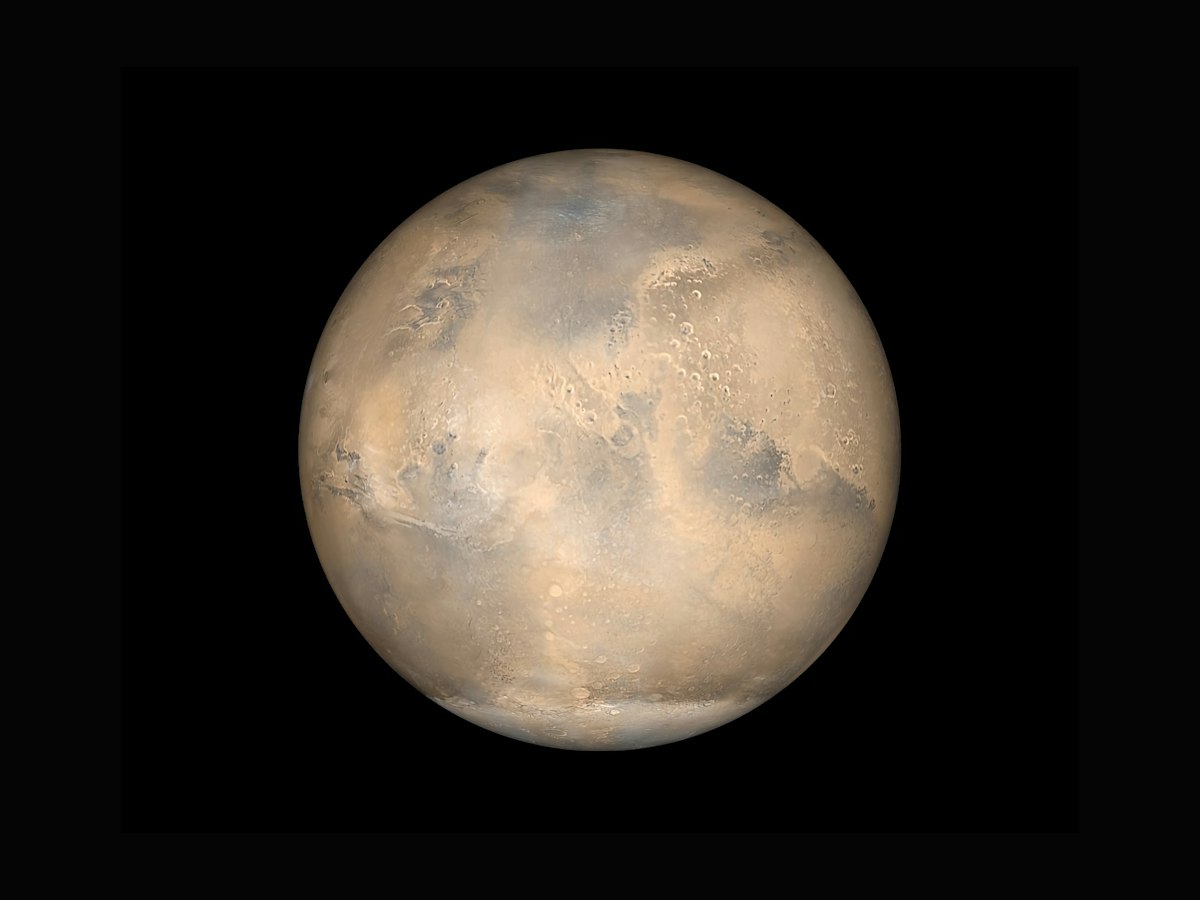
Mars Has Never Been Closer — Literally and Figuratively Every 26 months, Earth and Mars align in a configuration that minimizes travel time between the two planets. This orbital window — called a Mars opposition — has governed every robotic mission we've ever sent to the Red Planet, from Viking in 1976 to Perseverance in 2021. The 2026 window is shaping up to be the most consequential in history — not because of a single mission, but because of the convergence of multiple programs, both public and private, that are simultaneously pushing toward the same goal: establishing a permanent human presence on Mars. We're not just exploring Mars anymore. We're beginning the long, messy, astonishing process of becoming a multi-planetary species. SpaceX Starship: The Vehicle That Changes Everything SpaceX's Starship is the largest and most powerful rocket ever built — standing 121 meters tall (taller than the Statue of Liberty) and capable of lifting 150 metric tons to low Earth orbit. It's fully reusable, radically cheaper per kilogram than any previous launch vehicle, and explicitly designed for Mars. After a series of increasingly successful test flights — including the first successful booster catch in 2024 and the first orbital refueling demonstration in 2025 — Starship is approaching operational status. Elon Musk has stated that SpaceX plans to launch uncrewed Starship missions to Mars during the 2026 window. The objectives: - Test the Mars entry, descent, and landing sequence — Mars has a thin atmosphere, making landing heavy vehicles extraordinarily difficult. NASA has never landed anything heavier than the 1-ton Perseverance rover. Starship weighs over 100 tons. - Demonstrate in-situ resource utilization (ISRU) — extracting water from Martian ice and converting CO₂ from the atmosphere into methane fuel. If this works, future missions won't need to carry return fuel — they'll manufacture it on Mars. - Deliver cargo for future crewed missions — habitat modules, power systems, food supplies, and equipment pre-positioned years before humans arrive. > "The 2026 Mars window isn't about sending humans. It's about proving that we can — and about placing the first bricks of what could become humanity's second home." — Eric Berger, Ars Technica NASA's Artemis-to-Mars Pipeline While SpaceX grabs headlines, NASA has been quietly building the infrastructure and knowledge base that any Mars mission — public or private — will depend on. The Mars Sample Return Mission, though repeatedly restructured and budget-challenged, represents one of the most scientifically significant space missions ever conceived. Perseverance has been caching carefully selected rock and soil samples in sealed titanium tubes on the Martian surface since 2021. Getting those samples back to Earth would be the first time material from another planet has been returned for laboratory analysis since the Apollo lunar samples. In 2026, NASA is expected to finalize the mission architecture — potentially incorporating SpaceX's Starship as the Earth return vehicle, replacing the more expensive traditional approach. The Lunar Gateway, currently under construction in partnership with ESA, JAXA, and CSA, serves as a testbed for deep-space habitation technologies. Life support systems, radiation shielding, autonomous operations, and crew health monitoring developed for the Gateway will directly transfer to Mars mission architecture. Mars Ice Mapper, a proposed orbital mission, would use radar to map subsurface water ice deposits across Mars. Water is the critical resource — for drinking, for growing food, for manufacturing rocket fuel, and for radiation shielding. Knowing exactly where it is determines where humans land. China's Tianwen-3: A Dark Horse Contender China's space program has moved from ambitious to extraordinary in the space of a decade. The Tianwen-1 mission in 2021 achieved orbit, landing, and rover operations on Mars in a single mission — something no other nation had accomplished on its first attempt. Tianwen-3, currently in development, aims to achieve Mars sample return before NASA — potentially as early as 2028-2030, with key hardware tests beginning in 2026. The mission architecture involves two separate launches: one to land on Mars, collect samples, and launch them into Martian orbit, and another to retrieve the samples and return them to Earth. If China succeeds, it would be a geopolitical earthquake — demonstrating that the United States no longer holds unchallenged supremacy in planetary exploration. The space race isn't just back. It's global, and the finish line is on another planet. The Private Sector Explosion SpaceX isn't the only private company with Mars ambitions: - Relativity Space is developing fully 3D-printed rockets designed for rapid iteration — a manufacturing approach that could eventually be used to build vehicles and structures on Mars using local materials. - Blue Origin is building New Glenn, a heavy-lift rocket that, while not Mars-specific, expands the commercial launch capacity needed to support interplanetary logistics. - Impulse Space is developing orbital transfer vehicles that could serve as "space tugs," moving cargo efficiently between Earth orbit and Mars transfer trajectories. The ecosystem around Mars exploration is no longer a single-organization effort. It's an industry — with supply chains, competition, and market forces accelerating progress in ways that government programs alone never could. The Human Question All the technical progress in the world doesn't address the hardest challenge: keeping humans alive and sane during a Mars mission. - Radiation exposure: A round trip to Mars exposes astronauts to approximately 1.2 sieverts of cosmic radiation — well above the career limits set by most space agencies. New shielding materials and pharmaceutical countermeasures are in development but unproven. - Psychological isolation: A Mars crew would be 4-24 light-minutes from Earth, making real-time communication impossible. They would be the most isolated humans in history — for at least two years. Analog missions like NASA's CHAPEA (Crew Health and Performance Exploration Analog) are studying the psychological effects, but nothing can fully simulate the reality of being 225 million kilometers from home. - Medical emergencies: If an astronaut has a heart attack on Mars, they can't be evacuated. The crew must be capable of performing surgery, managing trauma, and treating illness with limited supplies and no external help. AI-assisted medical systems are being developed, but the responsibility ultimately falls on the crew. - Return is not guaranteed: Every plan for crewed Mars missions includes a return journey, but the honest reality is that the first crews will face risks comparable to — or exceeding — the early days of polar exploration and aviation. These will be volunteers who understand that survival is probable but not certain. Why It Matters Mars exploration isn't an escape plan. Earth will remain humanity's home for the foreseeable future, and solving our problems here — climate change, inequality, conflict — is non-negotiable. But becoming a multi-planetary species is the single most important long-term project our civilization can undertake. Every species that has ever existed on Earth has eventually gone extinct. If humanity remains confined to a single planet, our long-term survival depends entirely on nothing catastrophic happening — no asteroid, no supervolcano, no self-inflicted catastrophe — for the rest of eternity. That's not a bet any rational civilization should make. 2026 won't put humans on Mars. But it will be the year we prove — through hardware, through science, through sheer engineering audacity — that getting there is no longer science fiction. It's engineering. And engineering is just a matter of time, money, and will.
Neuroplasticity: Your Brain Can Rewire Itself at Any Age
Entry Editorial
May 29, 2026
Neuroplasticity: Your Brain Can Rewire Itself at Any Age
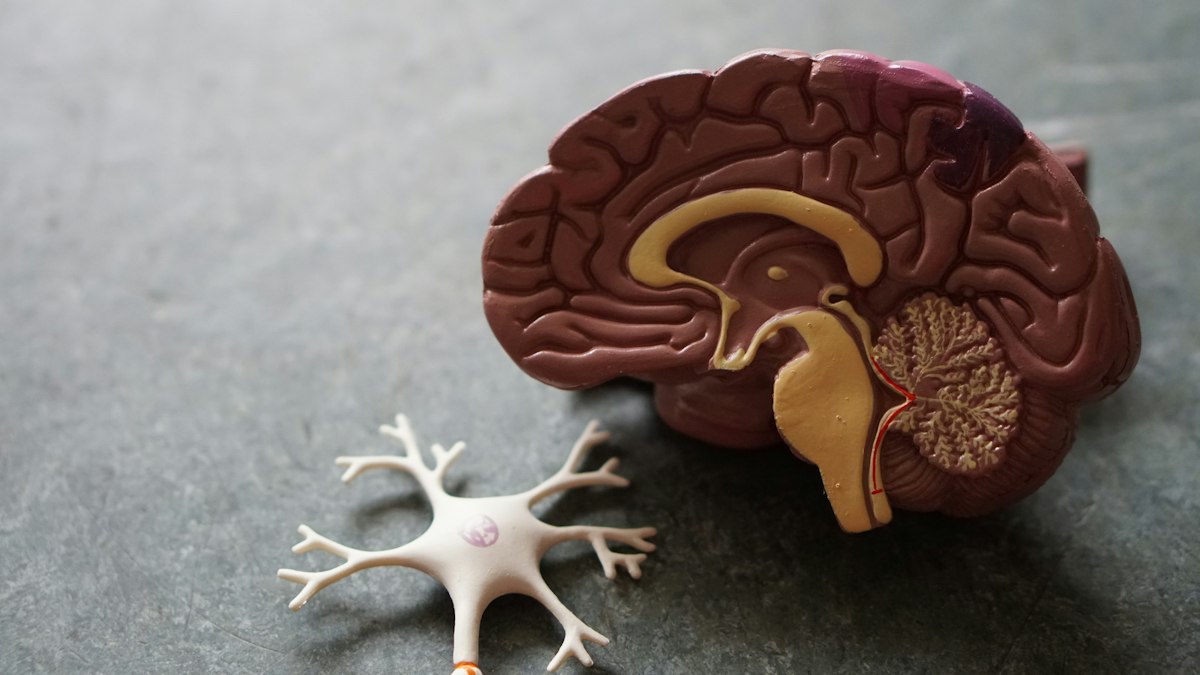
The Old Dogma Was Wrong For most of the 20th century, neuroscience operated under a grim assumption: the adult brain was fixed. You were born with a certain number of neurons, they wired themselves during childhood, and after adolescence, the structure was essentially set. Learning might slow. Recovery from injury would be limited. Decline was inevitable. This belief was called the static brain doctrine, and it dominated neuroscience for nearly a century. It was wrong. The Discovery That Changed Everything In the 1960s, neuroscientist Michael Merzenich began a series of experiments on owl monkeys that would overturn decades of dogma. He severed a nerve in a monkey's hand and then mapped the brain's somatosensory cortex — the region that processes touch. What he found was astonishing. The brain region that had previously responded to the severed nerve didn't simply go dark. Within weeks, neighboring brain regions had expanded to take over the unused territory. The brain had reorganized itself. Merzenich coined the term neuroplasticity — the brain's ability to physically restructure itself in response to experience, learning, and injury — throughout the entire lifespan. > "The brain is not a computer that simply runs pre-installed programs. It is a living organ that physically reshapes itself based on what you do, what you think, and what you pay attention to." — Norman Doidge, The Brain That Changes Itself How Neuroplasticity Works Synaptic Plasticity Every thought, movement, and sensation you experience activates specific neural pathways — chains of neurons connected by synapses. When a pathway is activated repeatedly, the synapses along it become stronger and more efficient. Neuroscientists summarize this as Hebb's Rule: "Neurons that fire together wire together." Conversely, pathways that aren't used weaken and eventually get pruned — a process called synaptic pruning. Your brain is constantly reinforcing the circuits you use and dismantling the ones you don't. Neurogenesis Perhaps even more remarkable: the adult brain grows new neurons. The hippocampus — critical for memory and learning — generates new neurons throughout life, a process called adult neurogenesis. Research by Fred Gage at the Salk Institute demonstrated that aerobic exercise, learning new skills, and environmental enrichment all increase the rate of neurogenesis. Conversely, chronic stress, sleep deprivation, and social isolation suppress it. What This Means Practically 1. Learning has no expiration date. The 60-year-old who starts learning piano is building new neural pathways just as a child does — perhaps more slowly, but no less genuinely. The brain doesn't stop growing; it just needs the right stimulation. 2. Habits are physical structures. Every habit you have — checking your phone, biting your nails, going for a morning run — corresponds to a reinforced neural pathway. Changing a habit isn't just a matter of willpower; it's a matter of building a new pathway and allowing the old one to weaken through disuse. 3. Attention shapes your brain. The brain disproportionately reinforces circuits that receive focused attention. This is why mindfulness meditation physically thickens the prefrontal cortex (associated with decision-making and self-regulation) and reduces volume in the amygdala (associated with fear and stress responses). What you attend to, you become. 4. Recovery from brain injury is possible. Stroke patients who were told they'd never walk again have regained function through intensive, targeted rehabilitation that exploits neuroplasticity. Constraint-induced movement therapy — forcing the use of an impaired limb — has produced remarkable recoveries by compelling the brain to rewire around damaged areas. 5. Trauma can be healed. PTSD, anxiety disorders, and phobias all involve overactive neural circuits. Therapies like EMDR (Eye Movement Desensitization and Reprocessing) and exposure therapy work by gradually weakening these circuits and building new, healthier ones. The traumatic memory doesn't disappear, but the brain's response to it fundamentally changes. The Responsibility of Plasticity Neuroplasticity is neutral. It strengthens whatever you repeatedly do — whether that's practicing an instrument or doom-scrolling social media. The brain doesn't distinguish between helpful and harmful repetition. It just builds what you give it. This means your daily choices aren't just lifestyle preferences. They're architectural decisions about the physical structure of your brain. Choose your inputs carefully. Your brain is listening — and building — whether you realize it or not.
The Fermi Paradox: Where Is Everybody?

Entry Editorial
May 29, 2026
The Fermi Paradox: Where Is Everybody?
A Lunchtime Question That Changed Everything In the summer of 1950, physicist Enrico Fermi was having lunch with colleagues at Los Alamos National Laboratory. The conversation turned to UFO reports — then, as now, a popular topic — and Fermi, with characteristic bluntness, asked a question that has haunted science ever since: "Where is everybody?" The question sounds simple. The implications are staggering. The Numbers The Milky Way galaxy contains between 100 and 400 billion stars. Current estimates suggest that roughly 20% of Sun-like stars have at least one Earth-sized planet in the habitable zone — the region where liquid water could exist. That means there are potentially billions of Earth-like planets in our galaxy alone. The universe is 13.8 billion years old. Earth is 4.5 billion years old, and technological civilization has existed for roughly 100 years. Even if intelligent life is extraordinarily rare — a one-in-a-million chance per habitable planet — the galaxy should be teeming with civilizations millions of years more advanced than ours. A civilization with even a modest rate of interstellar expansion would colonize the entire galaxy in about 1–10 million years. That's a blink in cosmic time. So: where is everybody? > "The apparent size and age of the universe suggest that many technologically advanced extraterrestrial civilizations ought to exist. However, this hypothesis seems inconsistent with the lack of observational evidence to support it." — The Fermi Paradox, formal statement The Leading Hypotheses The Great Filter: Something in the development path from simple chemistry to spacefaring civilization is extraordinarily unlikely — a "filter" that almost no species passes through. The terrifying question is whether that filter is behind us (making us extraordinarily lucky survivors) or ahead of us (meaning our extinction is probable). The Zoo Hypothesis: Advanced civilizations are aware of us but deliberately avoid contact, observing us the way wildlife researchers observe animals in a nature preserve — without interference. This presupposes a galactic consensus on non-interference, which raises its own questions. The Dark Forest Theory: Popularized by Chinese author Liu Cixin in The Three-Body Problem trilogy, this hypothesis proposes that the universe is full of civilizations that remain deliberately silent because broadcasting your existence to unknown neighbors in a universe with finite resources is suicidally dangerous. Every civilization hides. Every civilization that doesn't is eventually destroyed. The Rare Earth Hypothesis: Perhaps the conditions that produced complex life on Earth — a large stabilizing moon, plate tectonics, Jupiter acting as a cosmic shield against asteroids, our position in the galaxy — are so unlikely that Earth may be genuinely unique or nearly so. They're Already Here (In a Form We Don't Recognize): A sufficiently advanced technology would be indistinguishable from natural phenomena. Perhaps we're swimming in evidence of alien intelligence and simply lack the framework to recognize it. The SETI Silence Since 1960, the Search for Extraterrestrial Intelligence (SETI) has been scanning the sky for artificial signals. Radio telescopes, optical surveys, and — more recently — searches for megastructures and technosignatures have been running for over six decades. The result: silence. Not a single confirmed artificial signal from beyond Earth. This silence is data. What that data means is the greatest open question in human history. What the Paradox Really Asks The Fermi Paradox isn't really about aliens. It's about us. It forces us to confront the possibility that intelligence, consciousness, and civilization might be fragile, rare, or self-terminating. If we are alone — or effectively alone — then everything we build and know exists in a single, vulnerable spot in an incomprehensibly vast universe. That makes what we do here matter more, not less.
Dark Matter: The Invisible Substance Holding the Universe Together
Entry Editorial
May 29, 2026
Dark Matter: The Invisible Substance Holding the Universe Together
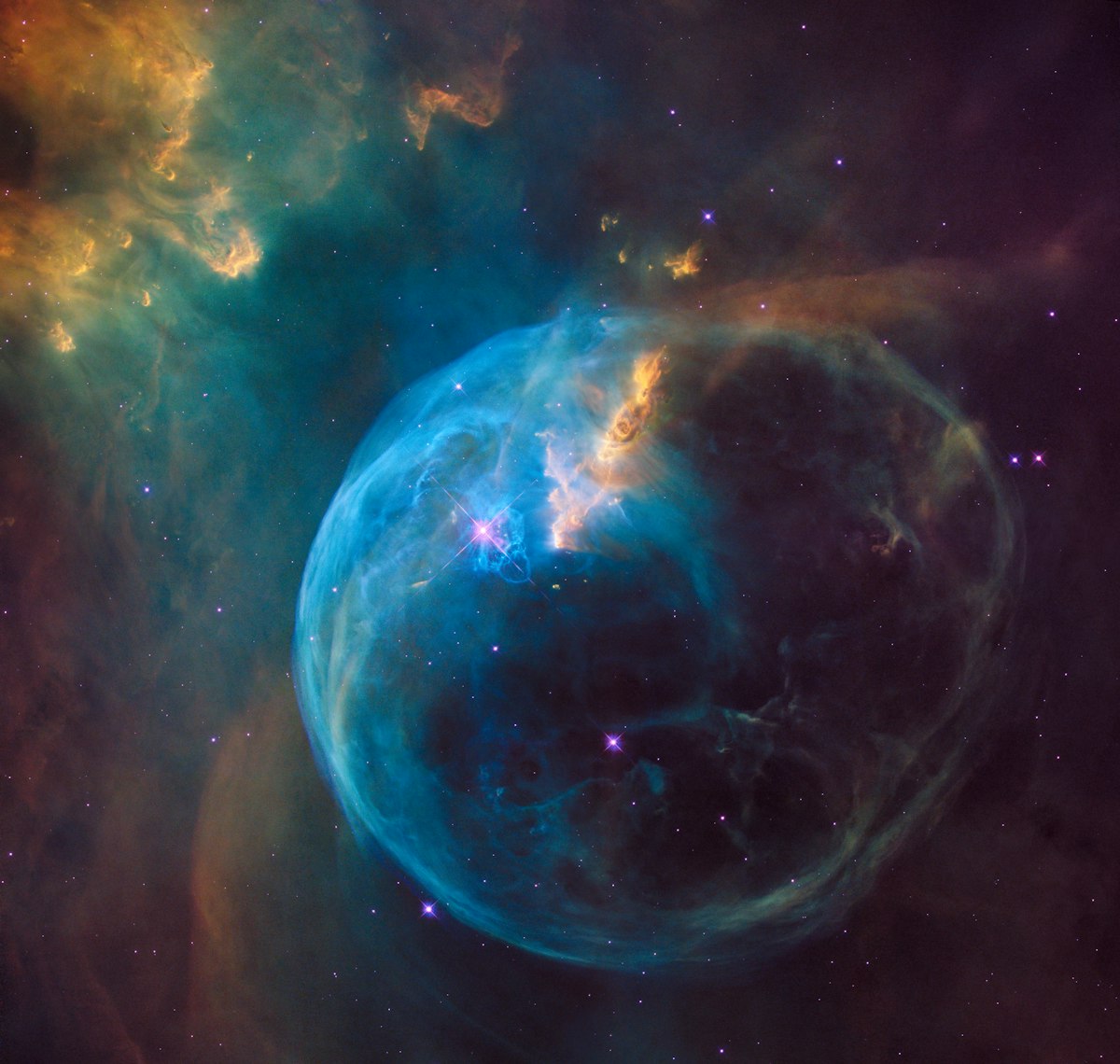
The Universe Has a Missing Mass Problem In 1933, Swiss astronomer Fritz Zwicky was studying a cluster of galaxies called the Coma Cluster when he noticed something deeply wrong. The galaxies were moving too fast. Based on the visible matter — the stars, gas, and dust he could observe — there wasn't nearly enough gravitational pull to hold the cluster together. The galaxies should have flown apart billions of years ago. Zwicky concluded that there must be enormous amounts of invisible matter providing the missing gravity. He called it dunkle Materie — dark matter. He was ignored for forty years. The Evidence Became Undeniable In the 1970s, astronomer Vera Rubin was studying the rotation of spiral galaxies when she found the same problem Zwicky had identified, but at a galactic scale. Stars at the edges of galaxies were orbiting just as fast as stars near the center. This violated everything Newtonian mechanics predicted — outer stars should have been moving far more slowly, the same way Pluto orbits the Sun more slowly than Mercury. Unless the galaxies were embedded in massive halos of invisible matter that extended far beyond the visible edges of the galaxy. > Rubin's observations were so clean, so repeatable, and so universal that they effectively ended the debate. Dark matter was real. We just couldn't see it, touch it, or detect it directly. What We Know Dark matter constitutes approximately 27% of the total mass-energy content of the universe. Ordinary matter — every star, planet, human being, and grain of sand — makes up just 5%. The remaining 68% is dark energy, which is an even deeper mystery. Here's what we know about dark matter: - It has mass. It exerts gravitational influence on visible matter, bending light through a phenomenon called gravitational lensing. - It doesn't interact with light. It doesn't emit, absorb, or reflect electromagnetic radiation at any wavelength. It's invisible in the most literal sense possible. - It doesn't interact with ordinary matter (except through gravity). It passes through walls, planets, and people as if they weren't there. - It's everywhere. Computer simulations show that dark matter forms a vast cosmic web — a scaffolding of filaments and nodes along which galaxies cluster like dew on a spider's web. The Hunt Physicists have been searching for dark matter particles for decades using three strategies: 1. Direct detection: Deep underground laboratories (like the XENON experiment in Italy and LUX-ZEPLIN in South Dakota) contain tanks of ultra-pure liquid xenon, waiting for a dark matter particle to collide with a xenon nucleus. After years of running, no confirmed detection. 2. Collider production: The Large Hadron Collider at CERN smashes protons together at nearly the speed of light, hoping to create dark matter particles. If produced, they would escape the detector, leaving a telltale gap in the energy balance. No confirmed signal yet. 3. Indirect detection: Space telescopes and gamma-ray observatories search for the products of dark matter particles annihilating each other in regions of high density. Tantalizing signals have appeared and then been explained by conventional physics. Why It Matters We are made of the minority substance in the universe. The thing that makes up most of reality is something we cannot see, cannot touch, and — after ninety years of searching — cannot identify. Dark matter is the largest unsolved problem in physics. Solving it will likely require new particles, new forces, or possibly an entirely new understanding of gravity itself. Somewhere in the universe, the answer is hiding in plain darkness. And someone — perhaps reading this right now — will be the one to find it.
The Next Pandemic Defense: Inside the AI Tools Racing to Catch Outbreaks Before They Spread
Entry Editorial
May 4, 2026
The Next Pandemic Defense: Inside the AI Tools Racing to Catch Outbreaks Before They Spread
Learning From the Last Pandemic — Before the Next One Arrives The global response to COVID-19 exposed a painful truth: by the time a novel pathogen is identified as a serious threat, it has often already spread far beyond the point of containment. In response, international health bodies and biosecurity researchers have spent recent years developing a new generation of AI-powered surveillance tools designed to catch dangerous biological threats in their earliest, most controllable stages — before they mutate into a global crisis. How AI Pandemic Detection Actually Works Genomic surveillance at scale. AI models can now scan enormous volumes of genetic sequencing data from wastewater, hospital samples, and agricultural sources simultaneously, flagging unusual mutation patterns that human researchers would take far longer to identify manually. Predictive mutation modeling. Rather than only reacting to pathogens that have already caused illness, machine learning models can simulate how existing viruses might mutate under various conditions, helping researchers anticipate dangerous variants before they emerge naturally. Global data integration. New international frameworks are attempting to link health surveillance data across borders in near real-time — a direct response to the reporting delays and information gaps that hampered early COVID-19 containment efforts. Supply chain and travel pattern analysis. AI systems are being trained to cross-reference disease surveillance data with global travel and shipping patterns, modeling how quickly a detected pathogen could spread internationally under different intervention scenarios. > "The goal isn't to predict the next pandemic with certainty. It's to shrink the window between 'something unusual is happening' and 'we know what to do about it' from months to days." — Global health security researcher The Coordination Challenge Technology alone doesn't solve pandemic preparedness — it requires unprecedented international cooperation on data sharing, something that proved politically fraught even during COVID-19's peak. Countries remain understandably protective of health data sovereignty, and building AI systems that require cross-border data flows means navigating serious privacy, security, and geopolitical trust concerns. The Biosecurity Double-Edged Sword The same AI tools capable of detecting dangerous mutations could theoretically help bad actors understand how to engineer more dangerous pathogens — a concern biosecurity experts take extremely seriously. This has led to careful, deliberate restrictions on how these detection models are trained, published, and shared, balancing the urgent need for pandemic defense against the risk of the same knowledge being misused. Why This Matters Even If You Never Notice It Working The best possible outcome for these systems is invisibility — a dangerous pathogen detected and contained so early that it never becomes a headline, never disrupts a single supply chain, never closes a single school. Success in pandemic prevention is measured by the crises that never happen, which makes sustained public and political support for funding these systems one of the hardest challenges in public health policy. As international tensions and travel volumes both continue rising, the race between pathogen evolution and detection technology has never been more consequential — and for the first time, AI is giving humanity a genuine chance to win that race before the next outbreak becomes the next pandemic.